- Joined
- Feb 5, 2010
- Messages
- 3,911
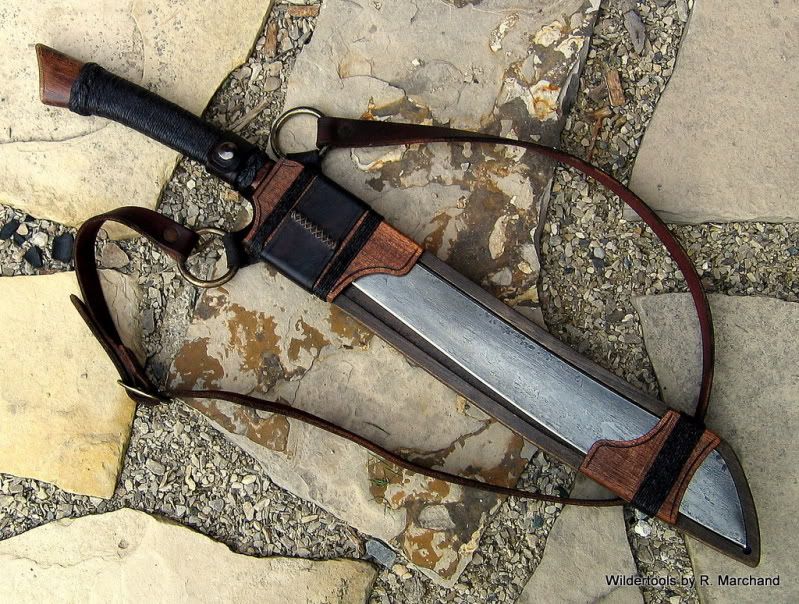
For one reason or another I recently started thinking about scabbords and how they are made. My understanding is that most are made from wood (custom routed to fit the blade) surrounded by leather or metal or both. The idea is to provide a protective covering for the blade.
But does it really work? Wood can retain moisture. Defnitely don't want moisture hanging around near the blade. And enclosed scabbords can retain dust and dirt, which again means moisture retention. Once the dirt gets inside a scabbord, how do you get it out?
So my mind wandered back to my youth and the plastics shop class I took in Jr. High. I was thinking of a scabbord made of two pieces of Plexiglass that are routed or molded to fit the blade. The two pieces would be hinged on one side, and have some closures on the other side (perhaps some of the small super strong magnets glued into the Plexiglas).
Advantages include no materials that retain moisture near the blade, and the ability to open it up for cleaning when needed. If you used clear Plexiglas you could even see the blade through the scabbord.
Anyone see any flaws in this approach?
But does it really work? Wood can retain moisture. Defnitely don't want moisture hanging around near the blade. And enclosed scabbords can retain dust and dirt, which again means moisture retention. Once the dirt gets inside a scabbord, how do you get it out?
So my mind wandered back to my youth and the plastics shop class I took in Jr. High. I was thinking of a scabbord made of two pieces of Plexiglass that are routed or molded to fit the blade. The two pieces would be hinged on one side, and have some closures on the other side (perhaps some of the small super strong magnets glued into the Plexiglas).
Advantages include no materials that retain moisture near the blade, and the ability to open it up for cleaning when needed. If you used clear Plexiglas you could even see the blade through the scabbord.
Anyone see any flaws in this approach?


 I'm a real pain about spelling and grammar; it comes from being raised by a poet. Which of course makes it even more funny when I goof up.