Scale Alignment at Ricasso?

TK Steingass

Troglodyte Knifemaker
Knifemaker / Craftsman / Service Provider
Joined
Oct 16, 2010
Messages
5,778
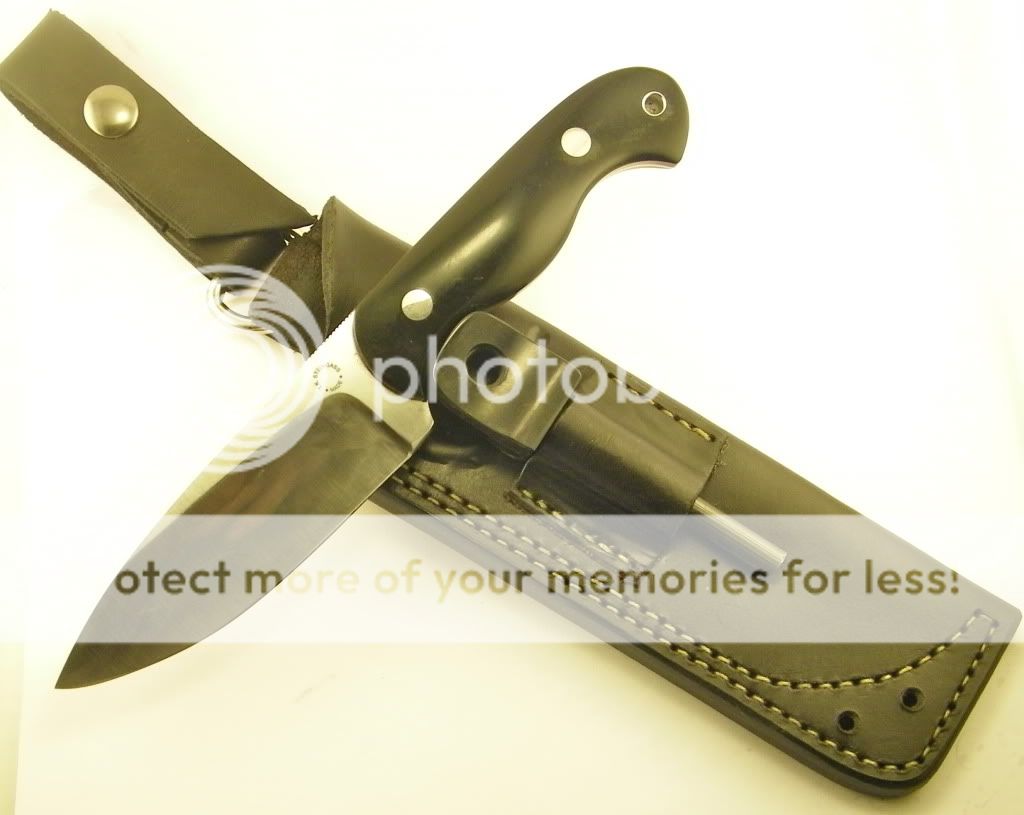
101_0071.jpg


Hi Fellas:

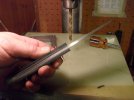
Every once in awhile I'll build a knife without bolsters or a guard like the one above. I always grind the front edges of the scales in pairs, taped together so they have the same radius. I'll glue one side at a time, drill, then bandsaw before gluing on the other side of the pair. The recurring problem I have is alignment at the ricasso - about 75% of the time one side is off from the other, only apparent after I have ground the scales to contour. The alignment isn't much but it drives me crazy after all that work and everything else is perfect.

Are there any tricks you guys use so that they're dead nuts in alignment with each other at the ricasso?
 
Here is what I do.
Put a couple of small drops of CA on the scale and attach to handle,drill pin holes,put some CA on other scale and attach to handle lining up the fronts as close as possibe, drill from other side,A small rap on a hard surface will pop the scales loose,put pins through holes in the scales and shape the front checking them on the knife.Finish the front of the scales and then assemble the knife.
Stan
 
I drill both scales and then use temporary pins to align while cutting, shaping the front of the scales. I use tight tolerance drill bits to closely match pins to scale holes so there is not much movement if any. On some of my newer knives I have two points I need to match (front of scale and back of bolster). This seems to work pretty well.

I think Johnathan Johnny and I are saying the same thing below is an example of what I am talking about and using this method they are dead nuts on.

I recently used the method Stan suggested and it worked equally well on some guarded Loveless patterns.

David Sharp
Sharpwerks

rsz_rp_ds_5562.jpg
 
Last edited:
I cut the scales slightly oversized, then drill the pin holes in both scales.

I then use old drill bits of the proper diameter to temporarily hold the scales together for grinding.

Grind the front of the scales however you want, then install on the knife to finish the rest of the handle.

Works well.
 
I'm with Johnathan on this. I bevel and finish the fronts of the scales before assembly. First I shape the very front of the scales with them held together with pins through the holes. Then separate them and grind whatever bevel is needed for that particular knife individually, then put them back together back to back again and finish the bevels and the front flats to full finish, then glue up my handles with pins installed, both sides at the same time, being sure to keep wiping away epoxy from the fronts of the scales. Once epoxy has set fully a day or two later I start my shaping/contouring. The bevels I set on the fronts may come down a bit lower as I rough shape the handles on the grinder, but the fronts will be aligned at the ricasso regardless of what else I do.
 
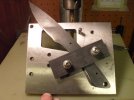
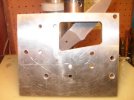
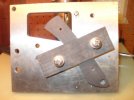
First off gorgeous knife posted, im glad i saw this im gonna be doing my first bolsters hopefully this week, and i feel i have the allignment issues i once struggled ironed out, i use all the above methods, and i have a jig (spot the set up window gives me a good visual) that helps me set everything up i posted pictures of the set up. I use corbys and that really helps in binding the scales together, tape/ca, etc,etc. The only time my process changes is when i use damascus, hence the need for super clean, near finish grade at damacus, i havent read or been told that etching damascus blades with scales attached is advisable. Anyhow great knives tk, wonderfull hollows, take care! GHaile
 

Attachments

  • knives 090.jpg
    knives 090.jpg
    47.4 KB · Views: 18
  • knives 089.jpg
    knives 089.jpg
    46 KB · Views: 16
  • knives 091.jpg
    knives 091.jpg
    43.1 KB · Views: 17
  • knives 092.jpg
    knives 092.jpg
    43.6 KB · Views: 16
Back
Top