

Nathan the Machinist
KnifeMaker / Machinist / Evil Genius
Moderator
Knifemaker / Craftsman / Service Provider
- Joined
- Feb 13, 2007
- Messages
- 18,264

This was some tricky machining, but it turned out slick. And Coop did a great job photographing it.
I meant to post this a while back with more pictures, but it is difficult to photograph and I soon got onto other projects.
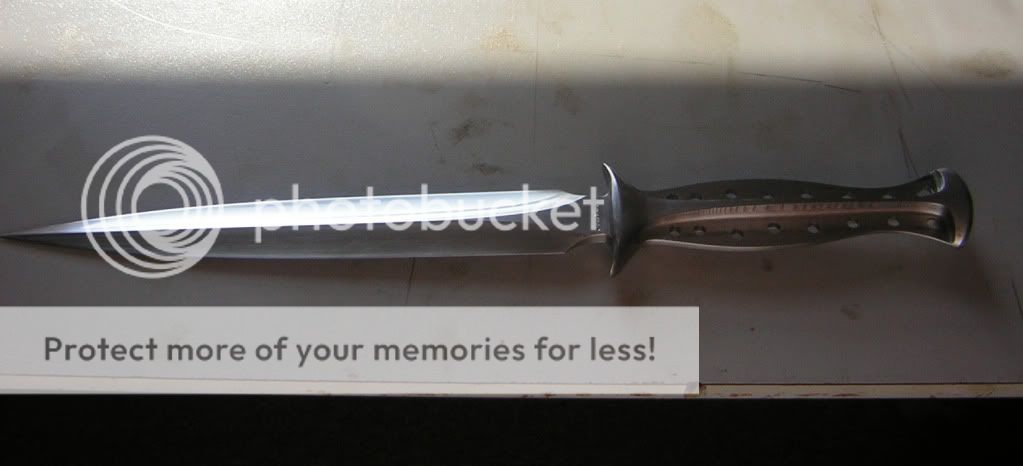
It is just under a foot in length. It is integral construction (a single piece of steel) of CPM 154. It weighs 5.1 oz. It balances on the first finger. It is 3/16" at the ricasso. The wood is stabilized double dyed maple burl by "Nicholas". About six hidden pins. It was machined on manual and CNC tools with aspects of this project going across about every machine in my shop. I'd be embarrassed to admit how many hours I put in this, much of it was spent shaping it and refining it with EDM stones which is a new technique for me. A special thank you to David Wesner and Billy Mace Imel for getting me started down that path.
Even though it is an "art knife", I wanted it to be a "real dagger" with correct geometry, strength and balance. I gave it a stout tall center section the length of the blade with gradual taper from ricasso to point and I wanted a stout point that could actually "dag" something.
It was made for a woman.
Some mind numbing detail:
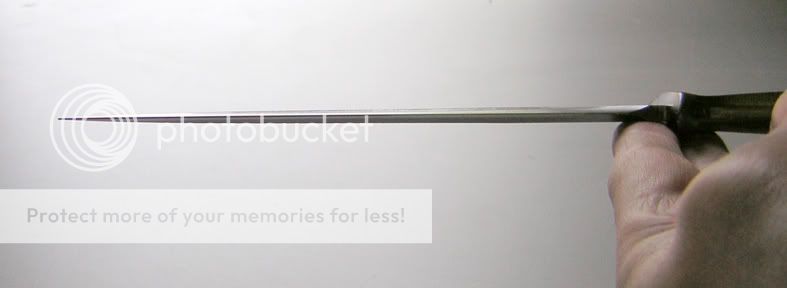
The natural tendency for a double grind like this is for the center section to taper proportionally with the width of the blade. The problem with that in this instance is the distal taper on this blade wouldn't really start until about half the blade length where the blade width really starts to narrow. And, the tip would be fragile at the intersection of the deep hollow grinds instead of the more stout section that I envisioned for the point. I addressed these issues of grind geometry by moving the grind profile in and out from the centerline of the blade while maintaining an even edge thickness by rotating the grind. Using this technique I created a gradual taper from ricasso to near the tip and finishing with a tall stout center section at the tip. I'm pointing all this out because it isn't obvious, but it was important to me and it didn't just happen by itself. I don't know if this level of detail is interesting to others, but it is to me.
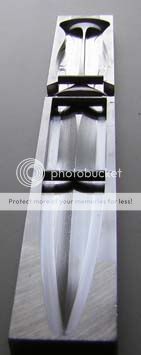
This was taken right after I'd finished machining it on one side and I was reinforcing it so I could finish machining it on the other side. Those little bars got tack welded to the steel on the sides (not the blade). I roughed both sides before finishing both sides to minimize distortion caused by any residual stress in the bar reliving during machining. I took an unusual approach here in that I kept a picture frame of steel with a web all around it to help stabilize everything while I was cutting on it. There was about two days of machining before I could start the hand work.
This is a side view of the blade while I was working on it that illustrates the shape.
This was taken during the stoning process. This might be 600 grit
The scales were 99% finished before I attached them to the dagger with epoxy and hidden pins. The holes in the handle were threaded (thread milled) 8-32 and I used 6-32 all-thread for the pins. I tweaked the threads a hair so the minor diameter of the 8-32 was the same as the major diameter of the 6-32. After they were attached I finished blending them in with a worn 800 grit slackbelt.
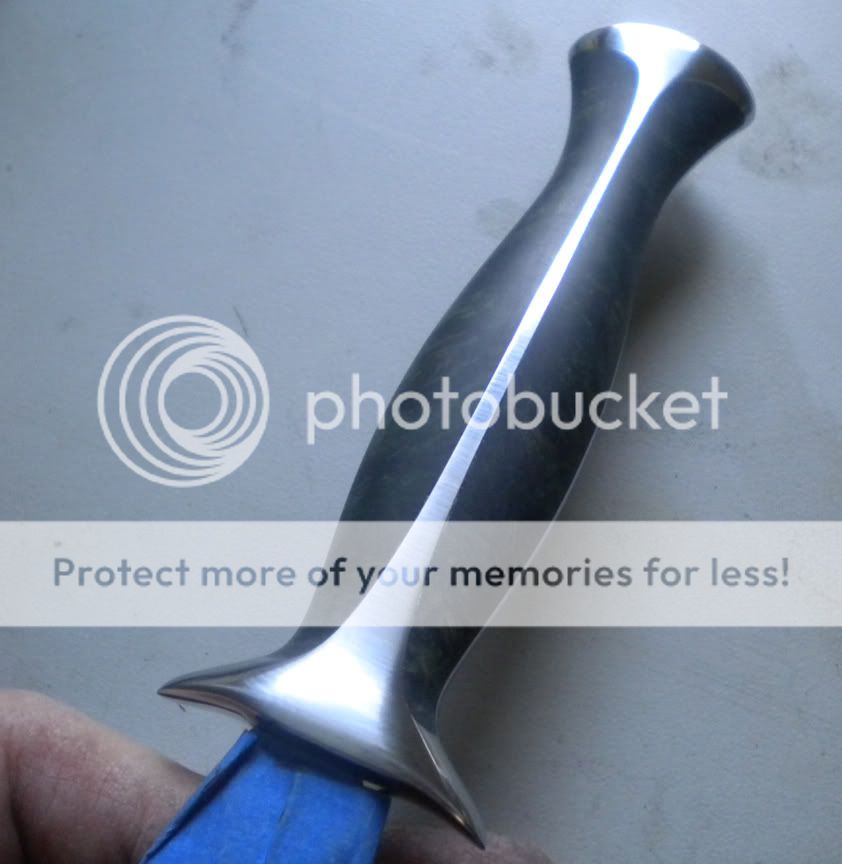
The finished Nicholas wood was really pretty, like a gem.

Thanks for looking.
Last edited:


