Sharpen a Knife with a Stone

Joined
Jun 19, 2011
Messages
38
I don't have access to a formal sharpening implement, but I do have several flat stones that I can use. Does anyone have any tips for sharpening with a stone? General technique for getting a sharp edge and the like? I'm completely new to sharpening.

Thanks in advance
 
I don't have access to a formal sharpening implement, but I do have several flat stones that I can use. Does anyone have any tips for sharpening with a stone? General technique for getting a sharp edge and the like? I'm completely new to sharpening.

Thanks in advance

go to you tube and type in knife sharpening - you'll find 1,000,000 rsults in video.
 
Okay so I can sharpen the length of the blade, but for some reason I can never get the tips sharpened. Like, the last half inch of the blade. Any tips?
 
If you're already following the curve of your edge, the best you can do is get a sharpie and practice.
 
I got it. Thanks y'all. There's something very satisfying with doing something right with low-tech gear. :)
 
I got it. Thanks y'all. There's something very satisfying with doing something right with low-tech gear. :)

That's not the advice I've been getting. Because of my extreme longevity (62 yrs OLD) I was advised to get paper wheels. I might be too senile though and get hung up in them and get injured. My life is being wasted on low tech gear. What the heck, God loves freehand sharpening. :D
 
Aside from suggesting that you practice with cheap kitchen knives(or perhaps a Mora, but I believe the bushcraft knives are sharpened differently than typical knives), I'm not sure there's much help people can offer.

I personally recommend finding the "sweet spot" where you use enough pressure to make sure the entire edge maintains contact with the stone, but not so much that you're bearing down on the stone. Sort of a "medium" touch to it. If you're not removing metal fast enough, your stone isn't coarse enough.

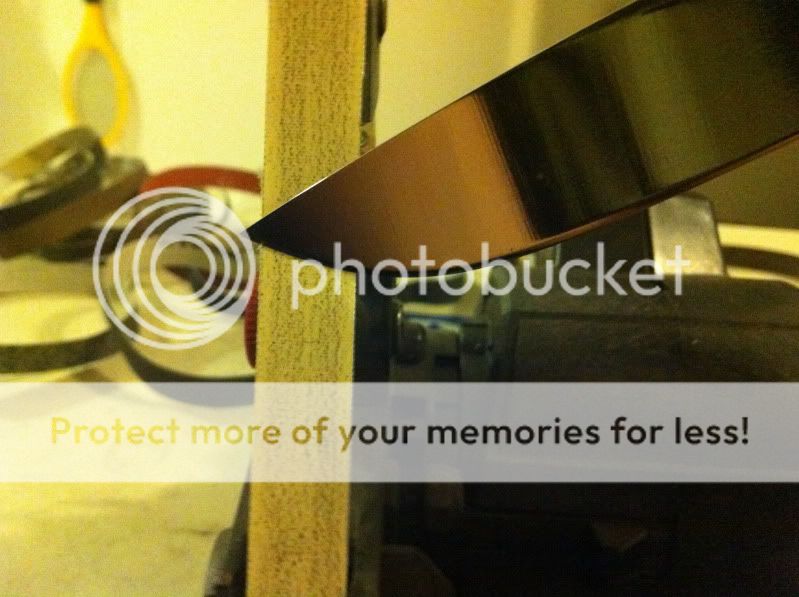
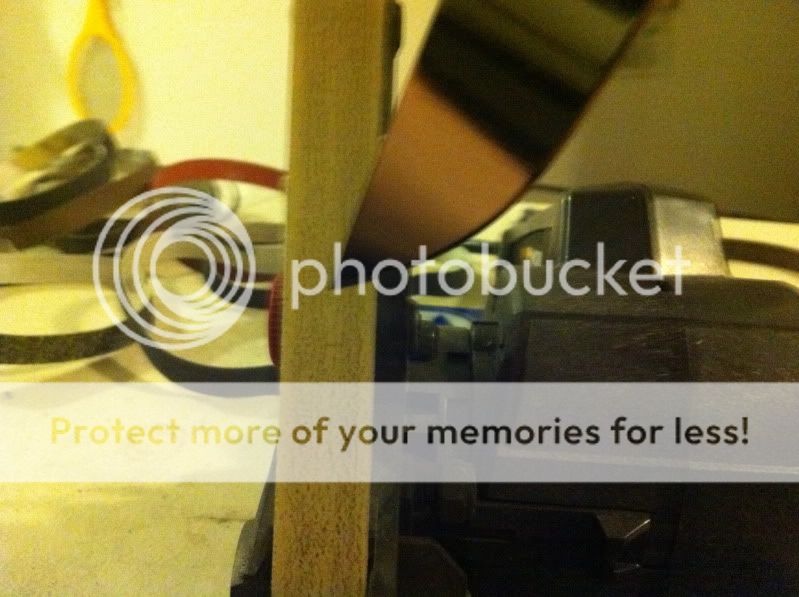
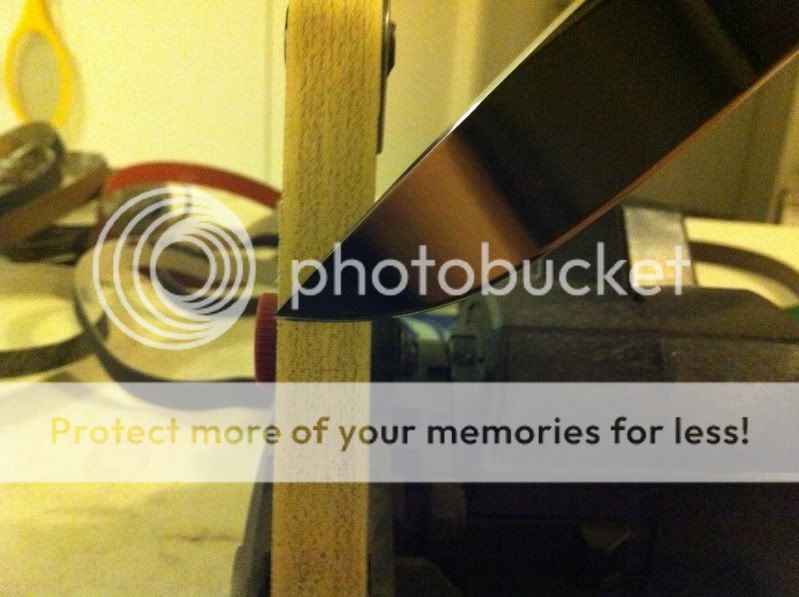
As for the tip issue, you need to follow the curve of the blade as others have said, but I believe this is better demonstrated with pictures. These pictures are with a mini-belt sander, but the idea is the same.

IMG_0120.jpg

This position will leave the tip untouched and over time will mess up the curve of the blade. This is what I suspect you're doing.

IMG_0119.jpg

This position will round or dull your tip.

IMG_0118.jpg

This is the "correct" position and will sharpen your tip without rounding it off or altering the curve of the blade.

The idea is to keep whatever part of the edge that is touching the stone perpendicular with the direction you're sharpening.

Though I'm no master freehander, as my hands are shakier than a drug addict's. Still, I hope to get it down someday. At the very least, while my edges aren't pretty, they're still damn sharp:thumbup:.

 
Sharpening is 95% skill, and 5% the tools used. Whether you use stones, rods, diamonds, sandpaper, etc, you can get a sharp edge. You first need to understand the theory of knife sharpening.

JGON
 
Sharpening is 95% skill, and 5% the tools used. Whether you use stones, rods, diamonds, sandpaper, etc, you can get a sharp edge. You first need to understand the theory of knife sharpening.

JGON
This might sound odd, but some people are just more comfortable with one sharpening tool than another. I found my Work Sharp to be easier to use freehand than the idiot-proof guided Edge Pro system or the Sharpmaker.
 
This might sound odd, but some people are just more comfortable with one sharpening tool than another. I found my Work Sharp to be easier to use freehand than the idiot-proof guided Edge Pro system or the Sharpmaker.

Whatever works for you - is the solution. Your "Work Sharp" takes skill since you are free handing, only at a much increased rate of strokes. I'd hate to see what could happen if you used that thing and hit your angle way too shallow for e.g. You'd have a badly scratched up blade in a split second. :eek:
 
Last edited:
The idea is to keep whatever part of the edge that is touching the stone perpendicular with the direction you're sharpening.

^That, in a nutshell, is the way I go about it. Especially when near the tip.

I'd recommend (HIGHLY) using a magnifier. At least 10X, and under very bright light. You can learn a whole lot about what's going on with your edge, simply by taking a very close look at it. Use a black marker to darken the bevel before you start, so you can see where the ink comes off and, therefore, where you're making flush contact with the bevel. Make sure to use that magnifier, when checking for the ink. The tip is probably the most likely place to miss making flush contact, because the edge angle is usually quite steep there. You'll keep seeing a thin line of ink near the edge, in spite of it being removed everywhere else. So, patient, observant persistence is key, when doing the tips.
 
not sure about that. and nt sure i'll be able to make a clear point in english but i'll try.

keeping the edge perpendicular to the direction of sharpening is important for the direction of the scratch pattern. but you can hold the edge 90° to your stroke and mess up the angle. it's not related at all. when sharpening on a stone i never have the edge 90° to the direction of the stroke. more 60-70 in the straight portion and i try to keep this angle when getting to the tip.

imho what's important is lifting the handle or when working on a vertical belt pulling it toward you. if you keep the edge 90° to the stroke/belt direction but don't lift the handle you tip won't contact the surface of the abrasive on the tip or just the corners. same if you lift it too much, you'll round the tip.
 
not sure about that. and nt sure i'll be able to make a clear point in english but i'll try.

keeping the edge perpendicular to the direction of sharpening is important for the direction of the scratch pattern. but you can hold the edge 90° to your stroke and mess up the angle. it's not related at all. when sharpening on a stone i never have the edge 90° to the direction of the stroke. more 60-70 in the straight portion and i try to keep this angle when getting to the tip.

imho what's important is lifting the handle or when working on a vertical belt pulling it toward you. if you keep the edge 90° to the stroke/belt direction but don't lift the handle you tip won't contact the surface of the abrasive on the tip or just the corners. same if you lift it too much, you'll round the tip.

This is why I always recommend inspecting the edge with a magnifier. At good, well-illuminated magnification, it becomes glaringly obvious if the angle isn't right, especially at the tips. Seeing the ink remain at the edge, while the shoulder gets slowly ground away, is the obvious indicator to lift the blade as you get nearer to the tip. In the early stages of learning how to sharpen, before one has developed a true feel for it, I truly believe that seeing is believing, in the sense that if you actually see the results of what you're doing, close up, correcting your errors in technique is much easier & intuitive. I know it was for me.
 
I found a chain of Japanese stores called Daiso. They are like a dollar store, but have Japanese products. Most items are$1.50 I got a 6" x 2" combination sharpening stone there. It seems to work just fine. They had a variety of grits available.

I don't know what area of California you are located in, but in the SF Bay area, there are several of them.


Ric
 
not sure about that. and nt sure i'll be able to make a clear point in english but i'll try.

keeping the edge perpendicular to the direction of sharpening is important for the direction of the scratch pattern. but you can hold the edge 90° to your stroke and mess up the angle. it's not related at all. when sharpening on a stone i never have the edge 90° to the direction of the stroke. more 60-70 in the straight portion and i try to keep this angle when getting to the tip.

imho what's important is lifting the handle or when working on a vertical belt pulling it toward you. if you keep the edge 90° to the stroke/belt direction but don't lift the handle you tip won't contact the surface of the abrasive on the tip or just the corners. same if you lift it too much, you'll round the tip.


Well said :thumbup:
 
Back
Top