Here is how I sharpen. I use different grades of Japanese water stones although Arkansas can do the same. I find the Japanese stones give a much better "feel" than Arkansas so it is easier to know when you are on the mark.
I was taught this by a Japanese friend who is a fulltime knives, planes and chisels fiend. Many Japanese knives use convex edges.
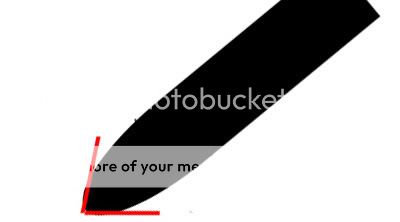
Please excuse my Photoshop work but the above diagram is of a blunt convex edge profile. At first I was a bit put out by the "curve" rather than "flat" edge, but I now know that it is only a matter of removing a little metal around the bottom, to sharpen the knife.
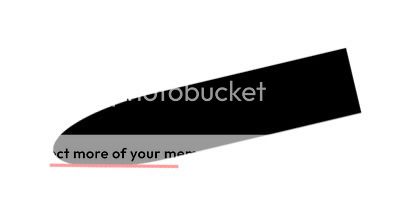
Above is what I am aiming for. By removing a little from each side I will have a sharp edge, and will retain the strength of the convex shape. That is, plenty of supporting metal behind the edge. (Please note that this diagram is exaggerated for clarity. The amount of required metal to be removed is much smaller than this indicates.)
The main thing is to concentrate and get a "feel" for when you are on track. Your eyes will tell you if you are going wrong so check often until to no longer need to. This takes practice.
In the above diagram the knife has been held at too flat an angle. This will remove metal from the shoulder above the edge, while leaving the edge untouched. You will see this easily and can adjust. Again, check often until you get the "feel" dialled in.
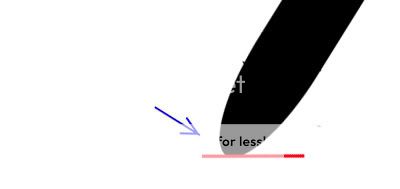
In the diagram above, the angle is too open. The edge is being removed but is being flattened rather than sharpened. As the arrow indicates, this is easily seen by checking the OTHER side to the one you are working on. This check will quickly show whether you need to adjust your angle or not.
Stones and grades of stones, as well as final stropping, are all a matter of preference. It is necessary to work slowly in a short back and forth motion across the edge and moving down the length of the blade.
I think the most important thing is to remember that you are actually removing a very, very small FLAT section of metal to reclaim the convex edge.
With practice you will get the feel of this and will not have to do sight checks very often at all. Ultimately of course, the whole edge, ie. cutting line and supporting metal, will need to be reprofiled but this will be after a LOT of sharpenings and is par for the course in the life of any "user" knife.
Please do not think I am advocating turning a convex edge into a V edge. This is not the case at all. Some people do this with edge sharpeners or stones, to make it "easier" on themselves but it is not necessary, (or even easier to sharpen for that matter). My diagrams may make it look like I am creating a V edge, but because of the fineness of the cutting edge I am making, it is still a fully convex edge. (Phew. This is so hard to explain)
Finally, I hope this helps. It was not so easy for me to explain but my attempt will have to do. I believe there are other treatments for convex edges so I guess it's a case of whatever works best for the individual.