Sharpmaker help!

Joined
Mar 4, 2010
Messages
1,093
I've had a sharpmaker for 3 weeks now...

I've seen all the instructional videos, watched youtube clips, and have been practicing my technique to keep a constant angle, and not too much pressure.

One of the things I am noticing is, I can get a knife sharp enough to cut paper and shave hair with the darker stones. But after I switch to the white stones, it seems to dull the blade more, and will no longer cut paper/shave hair. I am keep as constant of an angle as possible.

Any ideas?

Also is there a better/easier sharpening solution available?
What system should I be using to maintain the factory angles on my knives?

I'm also curious to know: How do I know if I should be using the 40 degree slots on the sharpmaker, or the 30 degree "back bevel" slots?

-Freq
 
Last edited:
I just got one and have not tried it yet. Never used anything other than a bench stone before. You've got me wondering about this one.
 
Greetings freq18hrz: Without knowing specifically which knife and steel you are sharpening the following POSSIBLE reasons for your concerns are general in their scope: A) You may in fact not have removed steel all the way to the extreme cutting edge. Alternating strokes on each rod prevents the creation of an obvious burr and makes confirming that the edge had been reached more difficult. Use the Sharpie marker trick. Examine the edge using a lens to confirm that you have not stopped even a tiny almost invisible fraction of a mm short. Examine both sides of the blade. Just because you use the same number of strokes on each side does not mean you have reached the edges on both sides. Sharpen at least ten full strokes more past the edge. The brown rods create the cutting edge ~ the white rods only refine and smooth it. You must FULLY reach the edges with the brown rods. A few "off angle" strokes that hit the very edge once or twice can create a sharp toothy edge in a few spots.

These spots created by the brown rods can make the edge feel sharp because it is toothy and it will easily saw it's way through paper. It will, however, not push cut the paper. Again look at it with a lens or try a slice cut vs. push cut through the same sheet of paper. The white (Fine) rods can smooth out these teeth and return the edge to it's not quite sharp enough condition.

B) Consistently maintaining almost perfect verticality of the blade when switching to the white rods is important. The blade/rod contact area is minute. A difference of two degrees when switching from the medium to the fine rods makes a difference in the end result. If you are two degrees more acute you will miss the extreme edge and be polishing the shoulder. If you are two degrees more obtuse you will remove the edge you just created.


The 40 degree setting is often a good choice for an initial sharpening. You can try a 30 degree edge with a 40 degree micro bevel later. This will likely require reprofiling which can be FRUSTRATING and time consuming with a Sharpmaker if you are not familiar with the process and results.

Certain steels, grinds and blade shapes are harder to Sharpen and maintain than others but most can be addressed successfully with the Sharpmaker. You know the Sharpmaker System works. Thousands of people use them and like the results.


There may be easier and faster ways of getting your knife sharpened. BUT, rather than throwing money at the problem you may wish to work on developing personal skills. Consistent technique, even contact pressure, and patience will serve you well no matter what method you use. You can always try other sharpen equipment as your needs and skills progress. OldDude1
 
I have a sharpmaker and will chime in with what I know and have expeienced.

Before I heard of the sharpmaker, I used the old ceramic crock sticks made by case, smiths, etc. To this day, I never checked their angles but they always worked okay for me.

When I saw the sharpmaker, I saw it as a modern, improved version of what I am already used too and have used for years.

I bought the regular sharpmaker set as well as the ultra fine rods. I watched the videos as well, but I personally find that using the flats of the rods work best for me. Nice slow "controlled" strokes. Keep the tip on the flat at the end of the stroke to keep that nice sharp tip. If you continously pull it off the stone, you will round the tip, something that is easy to do with the edges of the triangle rods or the old round ceramic rods.

I use the brown sticks for most of my sharpening, re-profiling. The brown rods put a serrated like edge on the knife, thats why it seems scary sharp. Its a sharp edge, but not a durable long lasting one. When you switch to the white rods, it removes those burrs so to speak and your left with the true refined edge. It takes time, but that hair popping edge will come back. The brown stones give you that ragged edge quickly, while the white ones take longer. After I get it hair shaving sharp, I sometimes go to my ultra fine rods and WOW. I had my umnumzaan so sharp, it would slice tissue paper. It might have taken me an hour to do this, but it was time well spent. Like I said though, I only use the flats. Also another tip is t clean the rods frequently. When you quit hearing that abrasive sound ( you can feel it as well when sharpening ), flip the rods end for end, once these fill up, rotate then and repeat. This will definately speed up the sharpening.

As for angles, I use the 40 degrees ( 20 degrees per side ) 99% of the time. This is a pretty standard angle. Nearly all of my collection is Chris Reeve Knives, so this works great for my sebenzas, mnandi, umnumzaan, and one piece knives. The only time I have used the 30 degrees is to sharpen my wifes kitchen knives and for fillet knves because of the very thin steel used. If I have a knife that I cannot get sharp, I use he sharpie trick ( with a black sharpie, color the blade edge, when you sharpen it, you can see where the steel is being removed ) Many times, I just end up re-profiling it to a 40 degree ( 20 degree each side ) edge. This works best for me.

I have also had many knives that I have seen that have a 20 degree on one side, and say a 23 degree on the other. This always drives me nuts.......lol. I work on the one side using the sharpie trick until both edges are uniform. I believe this is due to the hand sharpening done at the factories. If you right handed, you may be able to grind the edge on the right side easily, but when you go to the left edge, its off a little. This has been recently discussed and this is what I believe it is. This is why sometimes you will sharpen and sharpen and never seem to get anywhere, then I use the sharpie trick and see I have been sharping the top of the edge bevel instead of the actual edge....drives me buts sometimes.

I hope this helps.

 
Greetings freq18hrz: Without knowing specifically which knife and steel you are sharpening the following POSSIBLE reasons for your concerns are general in their scope: A) You may in fact not have removed steel all the way to the extreme cutting edge. Alternating strokes on each rod prevents the creation of an obvious burr and makes confirming that the edge had been reached more difficult. Use the Sharpie marker trick. Examine the edge using a lens to confirm that you have not stopped even a tiny almost invisible fraction of a mm short. Examine both sides of the blade. Just because you use the same number of strokes on each side does not mean you have reached the edges on both sides. Sharpen at least ten full strokes more past the edge. The brown rods create the cutting edge ~ the white rods only refine and smooth it. You must FULLY reach the edges with the brown rods. A few "off angle" strokes that hit the very edge once or twice can create a sharp toothy edge in a few spots.

These spots created by the brown rods can make the edge feel sharp because it is toothy and it will easily saw it's way through paper. It will, however, not push cut the paper. Again look at it with a lens or try a slice cut vs. push cut through the same sheet of paper. The white (Fine) rods can smooth out these teeth and return the edge to it's not quite sharp enough condition.

B) Consistently maintaining almost perfect verticality of the blade when switching to the white rods is important. The blade/rod contact area is minute. A difference of two degrees when switching from the medium to the fine rods makes a difference in the end result. If you are two degrees more acute you will miss the extreme edge and be polishing the shoulder. If you are two degrees more obtuse you will remove the edge you just created.


The 40 degree setting is often a good choice for an initial sharpening. You can try a 30 degree edge with a 40 degree micro bevel later. This will likely require reprofiling which can be FRUSTRATING and time consuming with a Sharpmaker if you are not familiar with the process and results.

Certain steels, grinds and blade shapes are harder to Sharpen and maintain than others but most can be addressed successfully with the Sharpmaker. You know the Sharpmaker System works. Thousands of people use them and like the results.


There may be easier and faster ways of getting your knife sharpened. BUT, rather than throwing money at the problem you may wish to work on developing personal skills. Consistent technique, even contact pressure, and patience will serve you well no matter what method you use. You can always try other sharpen equipment as your needs and skills progress. OldDude1

Great Post, I think both of us helped to answer his questions !
 
I appreciate the help...I'm considering purchasing a fallkniven, but want to get my sharpening technique down so I don't ruin it=)

Videos I've seen using whetstones seem to make more sense.

So with the sharmaker, it only matters if I tilt the blade side to side right? I need to keep the spine perfectly vertical, so as to retain the angle of the rod. But what about tilting the knife from the back of the tang/tip of the blade?

I start at the top of the rod at the heel of the blade (as close to the handle/choil as possible).

I then draw the knife backward towards the tip, while letting the knife slip down the surface of the rod, towards the bottom.

When I do this, must I keep the handle of the knife and the tip completely vertical, or is it ok to let the tip point towards the ground as I get to the bottom of each stroke?

Also, would you guys recommend a fixed whetstone styem such as the lanksy system, or a DMT aligner system over the sharpmaker?

Thanks!


-Freq
 
Last edited:
I appreciate the help...I'm considering purchasing a fallkniven, but want to get my sharpening technique down so I don't ruin it=)

Videos I've seen using whetstones seem to make more sense.

So with the sharmaker, it only matters if I tilt the blade side to side right? I need to keep the spine perfectly vertical, so as to retain the angle of the rod. But what about tilting the knife from the back of the tang/tip of the blade?

I start at the top of the rod at the heel of the blade (as close to the handle/choil as possible).

I then draw the knife backward towards the tip, while letting the knife slip down the surface of the rod, towards the bottom.

When I do this, must I keep the handle of the knife and the tip completely vertical, or is it ok to let the tip point towards the ground as I get to the bottom of each stroke?

Also, would you guys recommend a fixed whetstone styem such as the lanksy system, or a DMT aligner system over the sharpmaker?

Thanks!


-Christopher

Yes, keep the knife as perfect to verticle as you can. To me, this is the most important thing to get constant, even sharpening. I DO about half way through the stroke begin to point the tip down stopping the tip on the middle of the flat of the stone. If you keep it verticle though the entire stroke, you begin to remove metal aprox 1/4 behind the tip thus weaking the tip ( it looks awful as well ). I have seen many sebenzas ruined this way over the years. I wish I could find a pic to show you. This also depends on blade profile, the new CRK Insingo has a different blade profile and you would keep it more verticle. If the blade is curved more towards the tip, you would point the tip down more through the stroke, if its curves less at the tip, you would point down less. I hope I am explaining tht right ? Do not let the tip come off of the flat of the stone. If you do, after several strokes, you will begin to round the tip. Once its rounded, it takes alot of work to get back. Also, you do not need alot of pressure. Let the sharpmaker do the job, by pressing hard, your more inclined for the knife to slip ( the ceramic will scratch the blade ), and I have gotten a nice gash or two over the years also.

So, begin your stroke at the tip of the rod, about half way down, begin pointing the tip down through the rest of the stroke keeping it verticle the whole time. You wanna keep the blade edge on the ceramic rods, nothing else. Try on a couple of cheap knives first if you like. Heck, even a flea market special will do to perfect your technique. I have been using this style of sharpener for over 25 years, so I am used to it, I do feel the sharpmaker is by far the best of them.

As for the other sharpeners, I do not care for them. With the other systems, the EdgePro is supposed to be the best. I think its in the $150+ range. I have seen videos on youtube and just do not like it. My dad always used the crocksticks like I have and he bought a lansky. I asked him about it and he had sold it already as he stated the crocksticks work best.
 
Last edited:
I appreciate the help...I'm considering purchasing a fallkniven, but want to get my sharpening technique down so I don't ruin it=)

Videos I've seen using whetstones seem to make more sense.

So with the sharmaker, it only matters if I tilt the blade side to side right? I need to keep the spine perfectly vertical, so as to retain the angle of the rod. But what about tilting the knife from the back of the tang/tip of the blade?

I start at the top of the rod at the heel of the blade (as close to the handle/choil as possible).

I then draw the knife backward towards the tip, while letting the knife slip down the surface of the rod, towards the bottom.

When I do this, must I keep the handle of the knife and the tip completely vertical, or is it ok to let the tip point towards the ground as I get to the bottom of each stroke?

Also, would you guys recommend a fixed whetstone styem such as the lanksy system, or a DMT aligner system over the sharpmaker?

Thanks!


-Freq

you got the sharpmaker technique down in this way, but you better do not use it on a fallkniven, because they are convex ground, meaning the edge bevel is not in a V shape but more a rounded shape. If you would use the sharpmaker on a fallkniven you're up for a lot of reprofiling.

I just did a video review on the F1 by fallkniven, you'll be able to take a look at the edge there. see my signature.
 
Get an edge-pro and forget trying to keep the knife at the correct angle, it'll do it for you.
 
you got the sharpmaker technique down in this way, but you better do not use it on a fallkniven, because they are convex ground, meaning the edge bevel is not in a V shape but more a rounded shape. If you would use the sharpmaker on a fallkniven you're up for a lot of reprofiling.

I just did a video review on the F1 by fallkniven, you'll be able to take a look at the edge there. see my signature.


Thats another question I have...which types of grinds are ok for the sharpmaker? All these terms get thrown around like grind, profile, edge, its super confusing. I really don't understand the difference.

Zyhano the link in your signature is broken, youtube says its a malformed link. I found it by searching though. Im noticing that you have a RAT-3/4 sitting thereand an Izula in the review. Could you pretty please do a comparison vid?? I'm debating either the F1 or the RAT-3/4, Izula. Would love to see a size by side comparo. Thanks!!!


EDIT: well I'm watching the vid, and it looks like you already did that =) Is there a way you could spend some more time showing the RC-3 and Izula?

-Freq
 
Last edited:
I love my sharpmaker but only after I thin the egde with a guided rod system ( lansky , edge pro ect...) down to like 15degrees per side.. After that a few strokes on the 40 on the sharpmaker for the microbevel makes any blade sing!!! Good luck
 
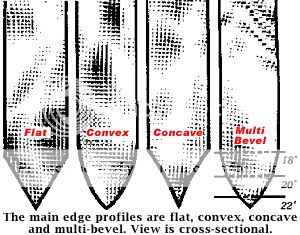
grind: the form/the way in which the different sides of the blade are (convex, chisel, flat, hollow, scandi etc)
bevel: the final shape of the edge where the left side comes together with the right side of the blade (the V shape that makes the edge sharp, a hard V or a rounded off V (convex) )
microbevel: a small bevel (micro) that sits on top of the bevel and has the edges come together (optional)
 
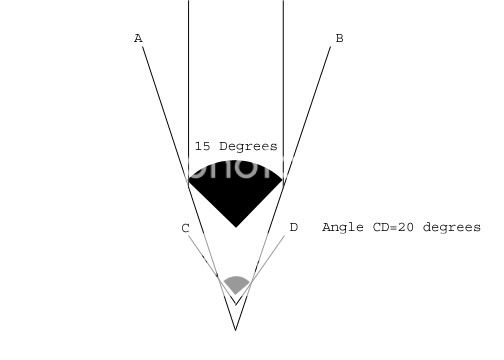
I found some pics for you, let me know if this helps. I personally do not like doing a micro bevel because your taking steel away above the edge though its not much, but I still dont like doing it. The times I have used a micro bevel, it made it tougher to re-sharpen. It takes a little longer to sharpen with the striaght 40 degrees but I feel it gives you a tougher edge. Let me know if the pics help ?

sharpen5.jpg

sharp2.jpg
 
I'm also curious to know: How do I know if I should be using the 40 degree slots on the sharpmaker, or the 30 degree "back bevel" slots?

-Freq
If you look on the base near the screw holes it will be written "30 degree Back Bevel". On the other side it will be marked "40 degree Edge".
 
I found some pics for you, let me know if this helps. I personally do not like doing a micro bevel because your taking steel away above the edge though its not much, but I still dont like doing it. The times I have used a micro bevel, it made it tougher to re-sharpen. It takes a little longer to sharpen with the striaght 40 degrees but I feel it gives you a tougher edge. Let me know if the pics help ?

sharpen5.jpg

sharp2.jpg

Pics definitely helped! Thanks! I also found a lot of great info at http://www.jayfishercom

So is the microbevel, another set of angles, right above the very tip of the edge? So basically if you had a flatground blade, the microbevel would be another tiny set of angles right before the the two side of the blade meet for the edge?

-Freq
 
Back
Top