Small diameter reamers

Joined
Jun 20, 2007
Messages
1,361
Where can I find reamers for small diameters?

I need to find them for use with small diameter pins from 1/16”, 1/8”, 1/4”.

How is the best way to use them, by hand or in a power driven machine such as drill press?

I asked that last question becuause, I am basically trying to make a pocket to accept the head of a peened pin. In the past I have used a slightly larger drill bit in the drill press. The problem there is if the bit catches the material it will suck into or thru it before you can stop the drill press.:mad:
Even when fastened down or with a stop it sometimes grabs the material and then you got a mess that I usally end up throwing away and starting over. That can get real expensive real quick!!!!!!!!!
 
I bought my reamers from Jantz. A countersink bit will help with your pin heads.
 
on the subject of counter sinks and reamers , why is it important to counter sink tang holes ? I don't have any countersinks but I do have a set of step up drill bits that I've never used ( don't know how ) that I bought because they were on sale.
 
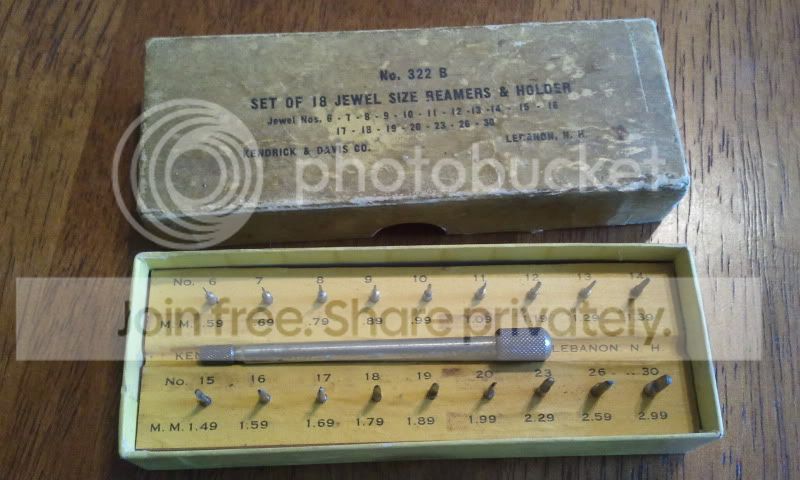
I have a set of tapered reamers designed for jewelery making. My understanding is that you can get tapered reamers in almost any size you want in increments of .0005 or so. Here is my set...

2011-06-11144329.jpg


I use mine by hand because they are so small. I found mine second hand, but a quick google for tapered reamers should yield results.


-Xander
 
Even if I don't know where to get them, :confused: I can tell you why it is important duffy99. When you peen pins if you do a countersink it alllows somewhere for the the mushrrom that you get when you peen to sink into. Not onlly do you get the mushroom on the surface but you willl get a slight one on the bottom side or against the handle material. With materials that split this will often keep it from spliting. But you do got to learn when to quit peening. Also in the case of pins in bolster and pommels it will allow for expansion so you don't get that shadow line around the pin. But again you have to be careful with the peening and now when to stop on the sanding of the bolsters and pommels. Hope this makes sense as I am typing it without my glasses!!:eek::D
 
Even if I don't know where to get them, :confused: I can tell you why it is important duffy99. When you peen pins if you do a countersink it alllows somewhere for the the mushrrom that you get when you peen to sink into. Not onlly do you get the mushroom on the surface but you willl get a slight one on the bottom side or against the handle material. With materials that split this will often keep it from spliting. But you do got to learn when to quit peening. Also in the case of pins in bolster and pommels it will allow for expansion so you don't get that shadow line around the pin. But again you have to be careful with the peening and now when to stop on the sanding of the bolsters and pommels. Hope this makes sense as I am typing it without my glasses!!:eek::D


That makes perfect sense , but just why countersink handle holes when you're gonna use corby or loveless bolts? I read something about doing it for the heat treating? Anyone use step drill bits? I read the explanation of them ie to cut multiple diameter holes with one bit but does anyone use these or have experience with them?
 
Where can I find reamers for small diameters?

I need to find them for use with small diameter pins from 1/16”, 1/8”, 1/4”.

How is the best way to use them, by hand or in a power driven machine such as drill press?

I asked that last question becuause, I am basically trying to make a pocket to accept the head of a peened pin.

In the past I have used a slightly larger drill bit in the drill press.
The problem there is if the bit catches the material it will suck into or thru it before you can stop the drill press.:mad:

Even when fastened down or with a stop it sometimes grabs the material and then you got a mess that I usally end up throwing away and starting over. That can get real expensive real quick!!!!!!!!!

A reamer will cut the diameter of a through hole to a smooth acurate size.

3 different types.
A tapered reamer is fully tapered for a tapered pin or such..
A machine reamer -chucking reamer- has just a short chamfer on the end to help start the hole.
A hand reamer has a longer chamfer lead in to help start it easier and straighter.
None of them will really plunge cut.

Chucking reamers are most common and work with a drill press.


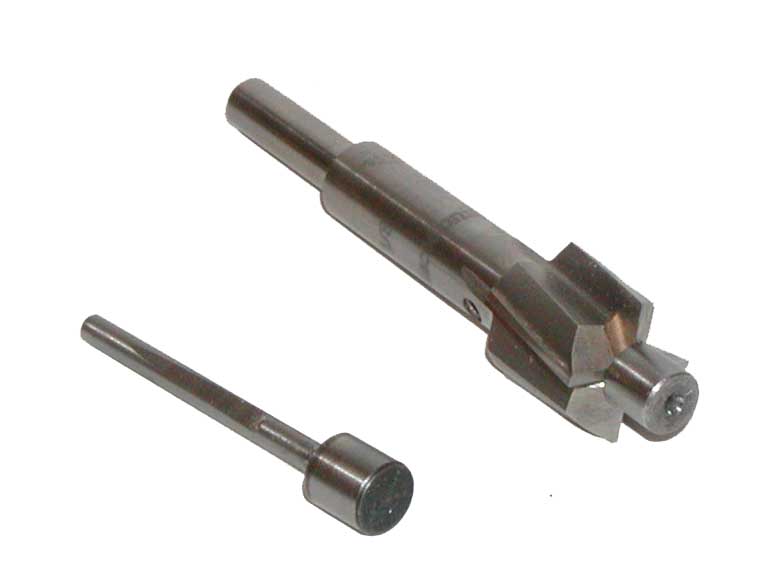
If you wanted to plunge to a blind hole with nice flat bottom, I would use a counterbore.

Drill the small hole first, follow with a counterbore that has a pilot to center the tool.
different sized interchangable pilots are available.

http://en.wikipedia.org/wiki/Counterbore

counterbore.jpg
 
counter sink is done on tang holes to prevent stress risers during heat treating.

On the subject of reamers, If your drill press runs very true like .001 tir or less, and you are doing a through hole then I would use your drill press. If your Total Indicator Runout (tir) is greater than .001 you can cause what is called bell mouthing that can cause problems, then do it by hand very carefully. If you are trying to make a pocket for your pins I would recommend either a countersink, or as the count pointed out, a counterbore. A reamer is not the right tool for that process.
 
OK thanks Chuck, I guess I need to be looking for small diameter counterbores then because that is more what I had in mind. I am tired of trying to do it with a drill bit and it catching the material and sucking into it and messing something up. That is basically what I was wanting it for was making a pocket for the pins!nThe only counterbores I have right now are to large for use with pins!
 
I think you can use a reamer to make a few thousands over pocket to peen into without it self feeding like a drill bit might (?) want to. You might also try the point of a standard wood spade bit. It's shaped pretty good for putting a slight tapered flare at the top of your pin hole. It's a helpful tip I got from Don Robinson. I just thought it's something you might have around already, because the counterbore you're thinking of may be expensive, tough to come by and probably fragile.

Good luck however it goes, Craig
 
Duffy, If you check the cutlery FAQ on Peter's Heat Treat website, they reccomend de-burring all corners and counter-sinking all holes before HT. The physics behind it may be beyond me to explain but it reduces the chance of a stress riser forming and starting a crack. It is related to the volume change and other stresses that occur during the quench cycle.
 
OK I guess its true you never too old to learn something new! I have been talking about making pockets for the pins but what you all are talking about is countersinking holes to reduce stress at the holes that makes sense I guess I really never thought about it! The tip about the wood bit is good I never thought of that one either! :thumbup:

duffy sorry if I inadvertently was steering you in the wrong direction we were talking apples to oranges or two different subjects!:D
 
No problem I was hijacking your thread anyways , anyone use stepped drill bits or unibits and if so for what applications,
 
Back
Top