
-
The BladeForums.com 2024 Traditional Knife is available! Price is $250 ea (shipped within CONUS).
Order here: https://www.bladeforums.com/help/2024-traditional/
You are using an out of date browser. It may not display this or other websites correctly.
You should upgrade or use an alternative browser.
You should upgrade or use an alternative browser.
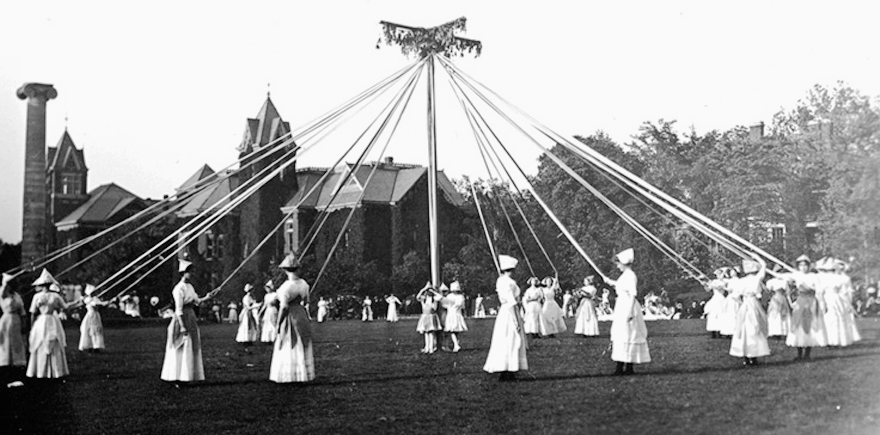
So Who Got Out the INFI and Danced Nekkid Round the May Pole?
- Thread starter Guyon
- Start date


- Joined
- May 31, 2005
- Messages
- 6,860
I hear a pile of illegals did. 

- Joined
- Mar 10, 2002
- Messages
- 19,808
me ME ILL DO "IT":thumbup:

- Joined
- Mar 15, 2000
- Messages
- 45,835
me ME ILL DO "IT":thumbup:
We only want to see pics if you're joined by pillowfighting cheerleaders.


jimmyjones
Gold Member
- Joined
- Jan 16, 2005
- Messages
- 4,080
[SIZE=-1]Happy Walpurgisnacht !
[/SIZE]
[/SIZE]


- Joined
- Mar 15, 2000
- Messages
- 45,835
Isn't that primarily nowadays considered a commie celebration??
sez who? what?
jimmyjones
Gold Member
- Joined
- Jan 16, 2005
- Messages
- 4,080
Isn't that primarily nowadays considered a commie celebration??
Yes, last year I had to fly back the wrong way from China on May 1, everyone in Asia was traveling, there weren't any seats available around the Pacific.
Next to Chinese new year, its the big one, national holiday.
I'll avoid making any anti-communist statements :barf:
- Joined
- Mar 15, 2000
- Messages
- 45,835
Learn something new every day...
Source link: http://en.wikipedia.org/wiki/May_day
Wikipedia said:May Day is May 1, and refers to any of several holidays celebrated on this day. May 1 was a traditional summer holiday in many pre-Christian European pagan cultures, and many elements of these holidays are still celebrated on May 1 today, such as the Maypole. While February 1 was the first day of Spring, May 1 was the first day of summer: hence, the summer solstice on June 25 (now June 21) was "midsummer."
In the Roman Catholic tradition, May is observed as Mary's month, and May Day is usually a celebration of the Blessed Virgin Mary. In this connection, Mary's head (in works of art, school skits, etc.) will often be adorned with flowers. Another May Day tradition (fading in popularity since the late 20th century) is the giving of May baskets, small baskets of candy and/or flowers, usually left anonymously on neighbors' doorsteps.
May 1st is also the optional Feast of St. Joseph the Worker. The feast was established by Pope Pius XII in 1955 in order to Christianize the concept of labor and give to all workers a model and a protector.
In the United States, May Day is officially observed as Loyalty Day.
May Day also refers to various socialist and labor movement celebrations conducted on May 1, unrelated to the traditional celebrations, to commemorate the Haymarket martyrs of 1886 and the international socialist movement generally. The latter event is an important holiday in Communist and Socialist countries.
In addition, May Day in the United States is commonly regarded — at least by certain groups — as a commemoration of the execution of the Haymarket martyrs who were arrested after the Haymarket Riot of 1886 in Chicago, Illinois, which occurred on May 4, but was the culmination of labor unrest which began on May 1. The date consequently became established as an anarchist and socialist holiday during the 20th century, and in these circles it is often known as International Workers' Day or Labour Day. In this form, May Day has become an international celebration of the social and economic achievements of the working class and labor movement.
The earliest May Day celebrations appeared in pre-Christian Europe, as in the Celtic celebration of Beltane, and the Walpurgis Night of the Germanic countries. Although the pagan-oriented celebrations faded as Europe became Christianised, a more secular version of the holiday continued to be observed in the schools and churches of Europe well into the 20th century. In this form, May Day may be best known for its tradition of dancing the Maypole and crowning of the Queen of the May. Today many Neopagans, especially Wiccans, celebrate reconstructed versions of the old pagan holidays on May 1.
Source link: http://en.wikipedia.org/wiki/May_day