

- Joined
- Oct 27, 2010
- Messages
- 8,721
Today was overcast and drizzled most of the day. No work right now, waiting on bids. Took a drive out to my Sailing Club with about 50' of light cord, my old Boker TL29, and an idea.
In the thread I started asking about a traditional marlin spike knife, someone showed a picture of a working deckhands lanyard and tether for a knife. I liked it, compared to my normal high-tech tethers I use when racing, this one had some character.
I always had an urge to make myself a fancy lanyard for when working aloft. So today I did. Really put my skills (and memory!) to use. Most of these knots and braids I learned while aboard the T.S. Californian some 10 years ago. My goal was to try some less oft used patterns in this.
I used the following; three plait braid, three strand Matthew Walker knot (6 total), six strand flat french sinnet, six strand half-round french sinnet, single wall knots (stacked), double wall knot, double finish crown, luggage tag loop, and a five point star button knot. All this is attached to a nickel plated clip with an adjustable rope toggle designed into the lanyard for attaching to various belts/harnesses.
Here is the finished product clipped to my Boker TL29...
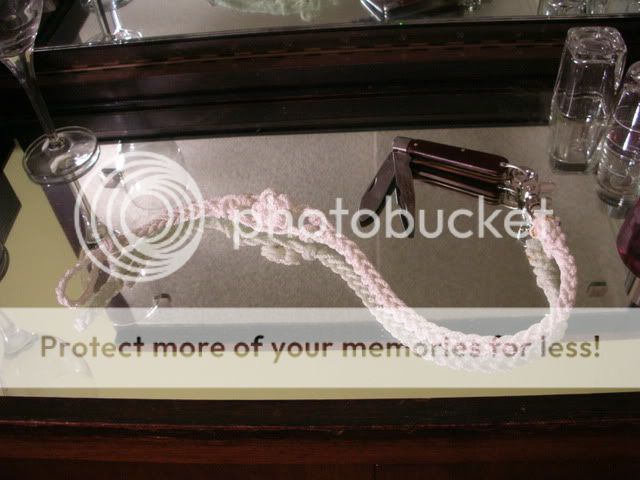
From the clip going back knots are as follows: 2 luggage tag loops, double finish crown, stacked single wall knots, double wall knots, and half round french sinnet...
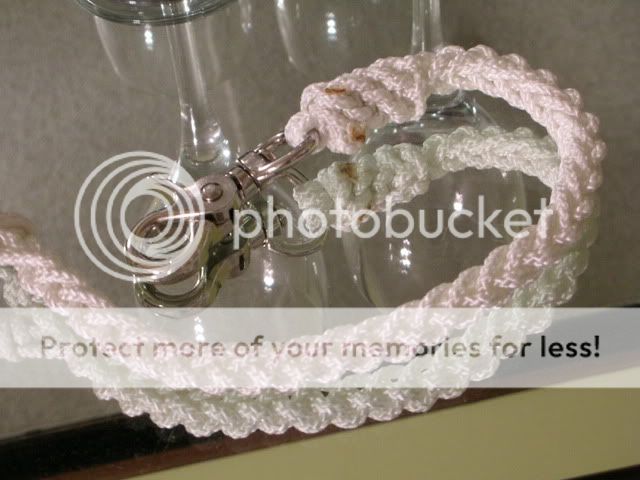
From right to left continuing up the lanyard: other end of half round french sinnet, two (2) 3-strand M.W.K., two (2) three plait braid, 5-point star button knot (slides on braid behind for adjustment), two (2) more M.W.K.'s, combined into 6-strand flat french sinnet...

Again, from right to left: other end of 6-strand flat french sinnet, two (2) more M.W.K.'s, combined into three plait braid loop...
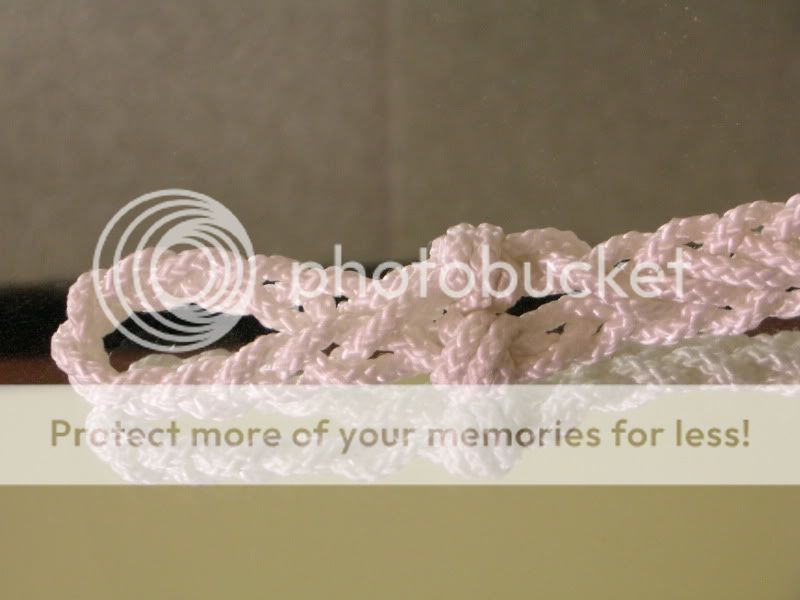
This one shows how to use an adjustable rope toggle: take your loop and pass it through your hard point (belt, rail, taught line, etc.) and then slip your button knot through the loop and cinch it up. The button knot slides up and down to adjust for different size hard points...

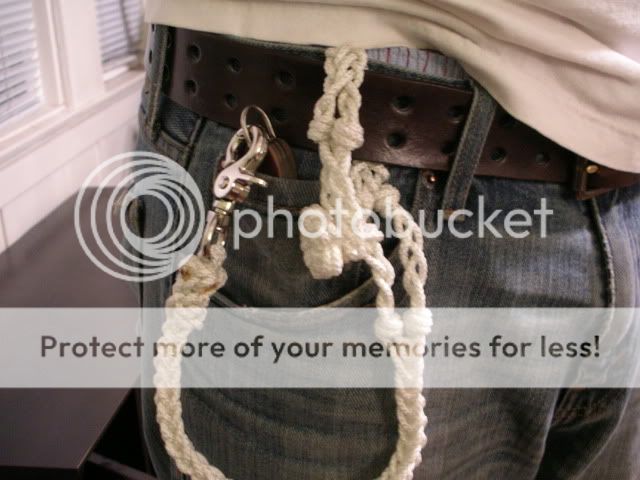
Finally, this is how it looks when attached to a knife and carried in the watch pocket. I don't even notice it as it weighs almost nothing and doesn't swing or bounce like a metal chain does...
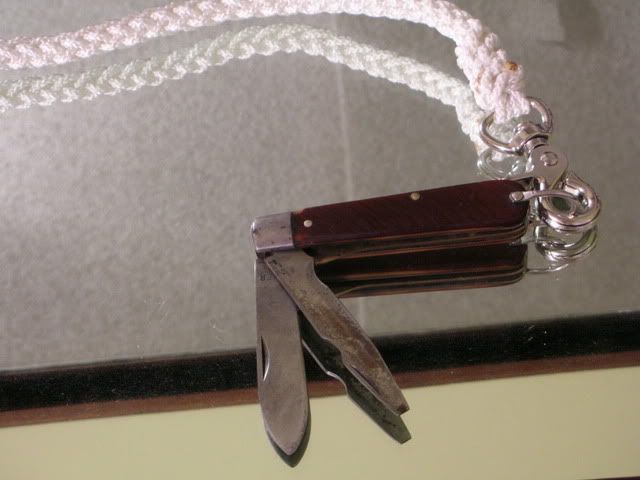
And here is my old, beat up, Boker TL29...
Some of the transitions on this lanyard are less than ideal, and I should of used a six strand Matthew Walker knot instead of splitting into two 3-strand M.W.K.'s, but that knot has eluded me for almost 15 years since I first learned about it. I tried it maybe a dozen times today and just could not get it.
Even with fits of frustration and some cursing, well, like a sailor, I still managed to enjoy myself thoroughly. Not to mention a couple of fine brews as well!
You ask what manly thing you did or cut up with your traditional knife today, and I ask you what traditional thing did you do or cut up with your traditional knife today.
-Xander
USA 1096 I-14 RIOT!
USA 70 Contender RAMPAGE
USA 150 Contender WILDFIRE
In the thread I started asking about a traditional marlin spike knife, someone showed a picture of a working deckhands lanyard and tether for a knife. I liked it, compared to my normal high-tech tethers I use when racing, this one had some character.
I always had an urge to make myself a fancy lanyard for when working aloft. So today I did. Really put my skills (and memory!) to use. Most of these knots and braids I learned while aboard the T.S. Californian some 10 years ago. My goal was to try some less oft used patterns in this.
I used the following; three plait braid, three strand Matthew Walker knot (6 total), six strand flat french sinnet, six strand half-round french sinnet, single wall knots (stacked), double wall knot, double finish crown, luggage tag loop, and a five point star button knot. All this is attached to a nickel plated clip with an adjustable rope toggle designed into the lanyard for attaching to various belts/harnesses.
Here is the finished product clipped to my Boker TL29...
From the clip going back knots are as follows: 2 luggage tag loops, double finish crown, stacked single wall knots, double wall knots, and half round french sinnet...
From right to left continuing up the lanyard: other end of half round french sinnet, two (2) 3-strand M.W.K., two (2) three plait braid, 5-point star button knot (slides on braid behind for adjustment), two (2) more M.W.K.'s, combined into 6-strand flat french sinnet...
Again, from right to left: other end of 6-strand flat french sinnet, two (2) more M.W.K.'s, combined into three plait braid loop...
This one shows how to use an adjustable rope toggle: take your loop and pass it through your hard point (belt, rail, taught line, etc.) and then slip your button knot through the loop and cinch it up. The button knot slides up and down to adjust for different size hard points...
Finally, this is how it looks when attached to a knife and carried in the watch pocket. I don't even notice it as it weighs almost nothing and doesn't swing or bounce like a metal chain does...
And here is my old, beat up, Boker TL29...
Some of the transitions on this lanyard are less than ideal, and I should of used a six strand Matthew Walker knot instead of splitting into two 3-strand M.W.K.'s, but that knot has eluded me for almost 15 years since I first learned about it. I tried it maybe a dozen times today and just could not get it.
Even with fits of frustration and some cursing, well, like a sailor, I still managed to enjoy myself thoroughly. Not to mention a couple of fine brews as well!
You ask what manly thing you did or cut up with your traditional knife today, and I ask you what traditional thing did you do or cut up with your traditional knife today.
-Xander
USA 1096 I-14 RIOT!
USA 70 Contender RAMPAGE
USA 150 Contender WILDFIRE


