Thanks all,
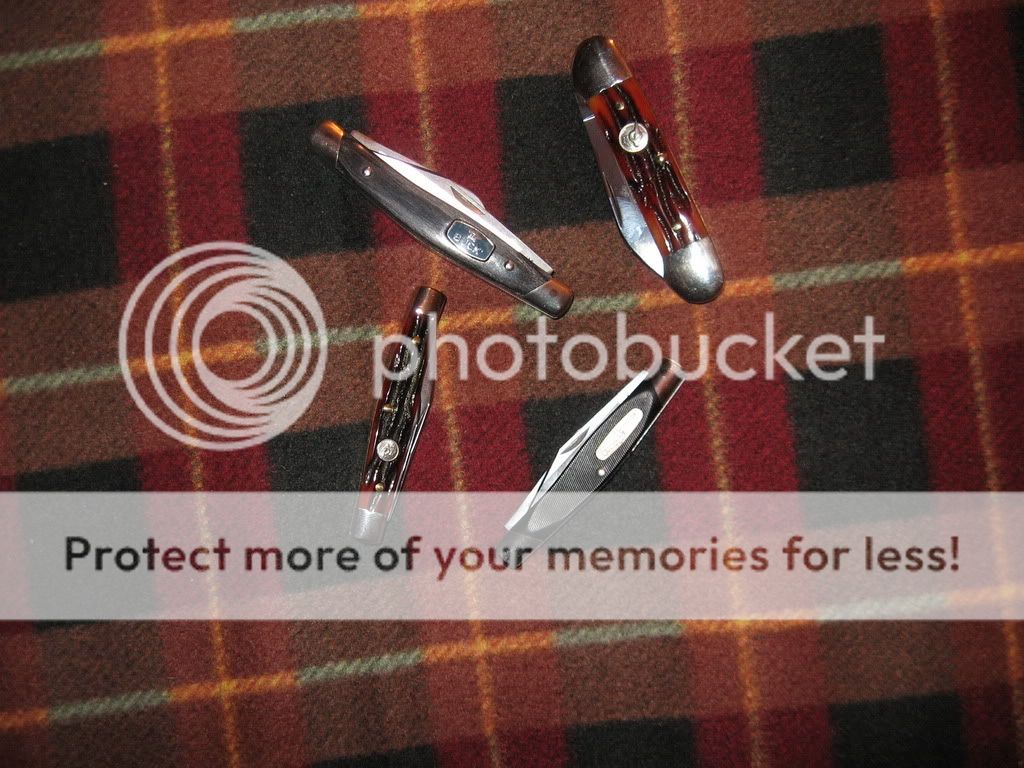
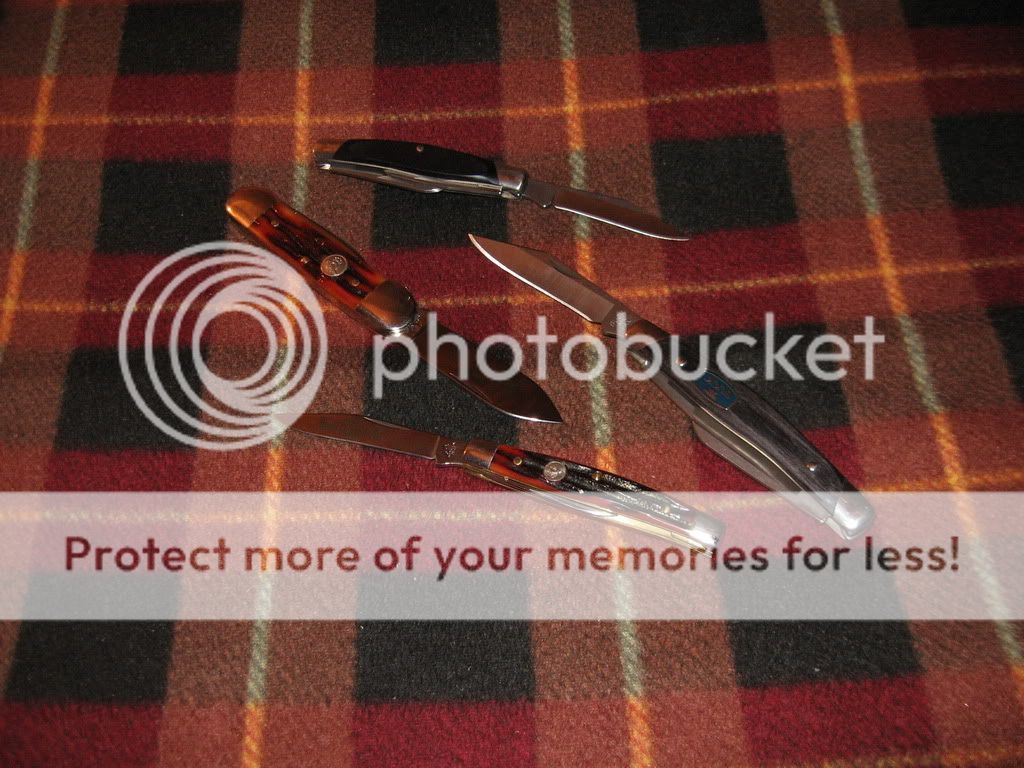
So, on with the knives I bought, and some more thoughts.
Ill consider the peanut as a reference, as it sports attributes like small package, easy to carry around , 2 inch primary blade, and a formidable slicer with that thin blade. And, not to forget is has a very fine point, for delicate work. It even has a cult…
The downsides of the peanut would be the small handle, as it allows only a two or three finger grip.
Then, there is the pinch..i like my traditional folders to be “pinchable”, as in to be able to open at least one blade with the fingers, without using the nail nick. The peanut is just there, it can be done, though not as easy as one could pinch a case stockman sheeepsfoot blade, which rides pretty high anyway.
Number of blades.. the stockman is just great with three blades, able to have a general use, dirty rough scraping use, and a razor sharp use blade. With the peanut, there are just two blades, so one use of the above mentioned will be sacrificed. You pick the combination. But I say most of the time, two blades are enough.
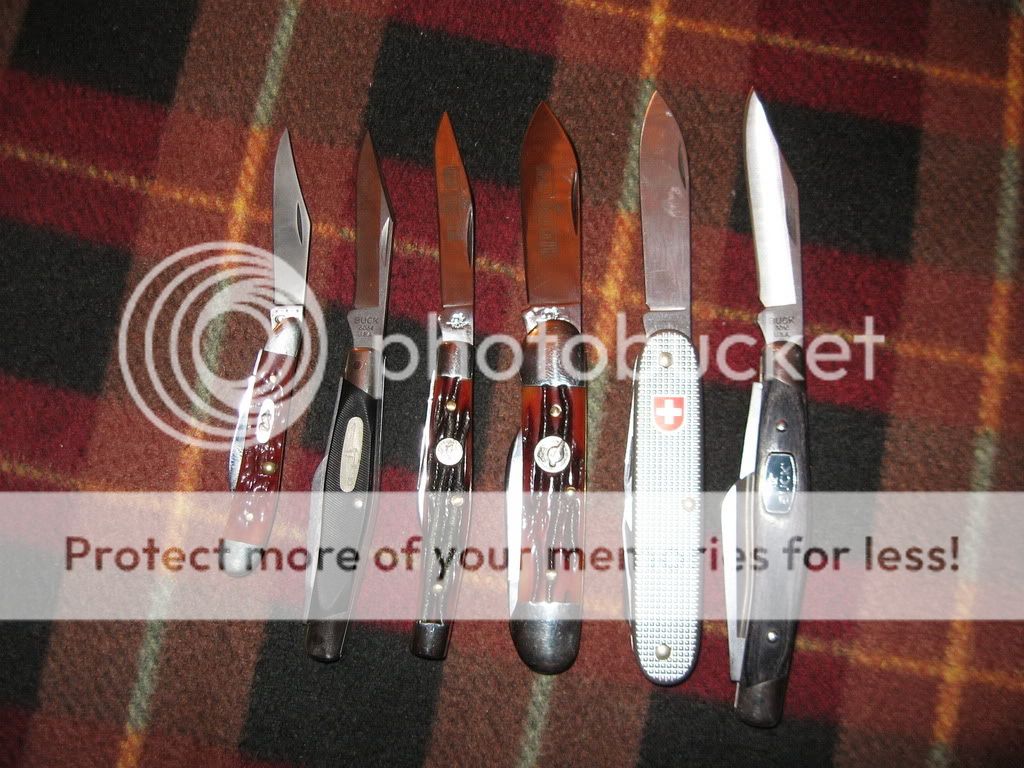
Ill start with the buck stockmans, the big, mighty 301 and the small, the cadet 303.
The 303 has the primary blade as big as a peanut, but thicker. Then there are the other two, sheepsfoot and spey, both thick and robust. The spey is different from the one found on case stockmans, with a smaller belly to it. Handle is comfortable, longer than the peanut, and to the fact that it has three springs, one for each blade, plus the thicker blades, it is thicker overall.
The blades all have sabre hollow combination as grinds, so this would be more of a personal preference, but the peanut does slice better, being flat, thinner, and slightly hollow.
The 303 is a small tank of a knife, strong, well built, no gaps, and the blades are very close to each other, almost touching, and rubbing a bit when opening, but is no problem, the design is like that, and this is a work knife after all.
Blades are sharpened with a bit of a recurve, especially the small ones, but even, and the spring tension is moderate, not very strong, but not light either.
The 301, is the bigger version of the two, having much more thicker blades, longer, wider, and appears to be just as strong, if not even stronger than its smaller brother. To the peanut, there really isn’t any comparison, this one is very thick, and very big, a whole other class. A true work knife, heavier, and bigger, capable of all your cutting needs. An outdoor pocket friend. The main blade is a bit longer than one found on the 91 mm alox models from victorinox, thicker, and is not crinked. Plus, is a clip point, giving the advantage of a fine tip. The spey blade has the proud tip, sitting on top of the scales, but there is no danger of any harm in real use.
But, none of the blades found on those two are able to be pinched. I found that to be weird for a stockman.
Steel used is buck’s 420HC, high carbon I think it means, a good steel, easy to sharpen, and stainless, making it a good choice for a wet environment. Scales are dymondwood on the 301 I have, and valox/delrin on the 303, both of which can stand a few drops, well, even more, being virtually indestructible. But most of those knives can be had or modded to different handle materials, be it the stronger delrin or G10, or just plain beautiful in bone, stag, and so on. Both main blades have a half swedge, just one one side, don’t know why is that.
There are no half stops, blades are centered, and the handles are curved, similar to the serpentine shape, which I like.
Passing on the queen side now..
First is the serpentine jack, with bone made to look like stag, very good looking, well made, and a true classic of jack knives.
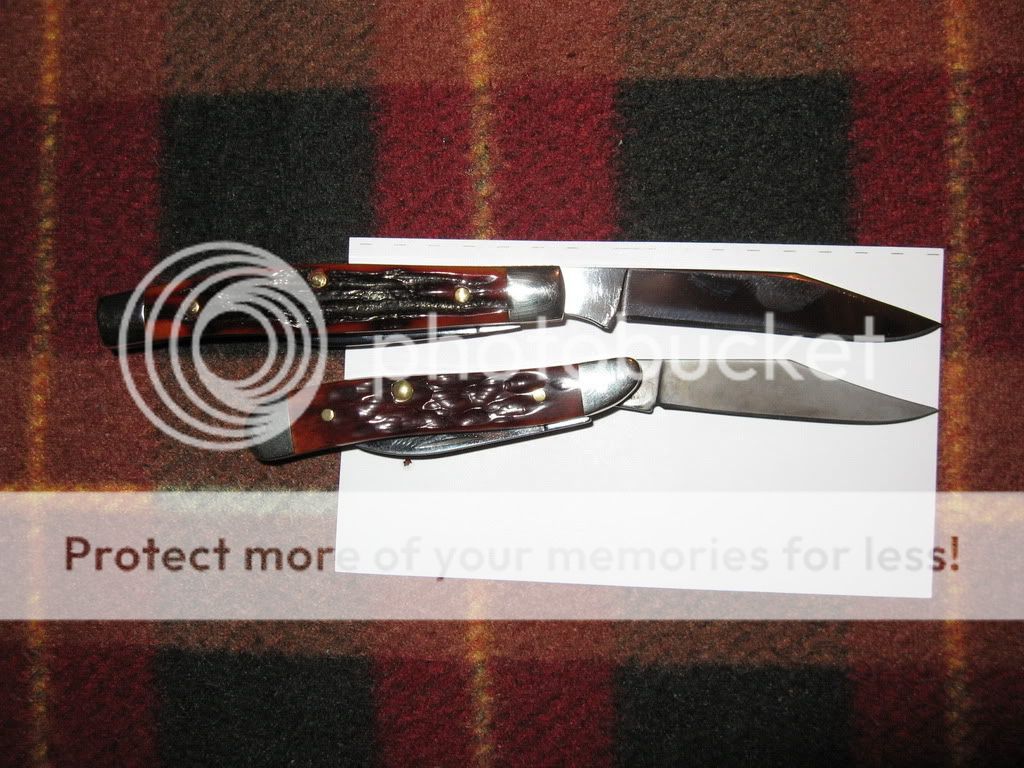
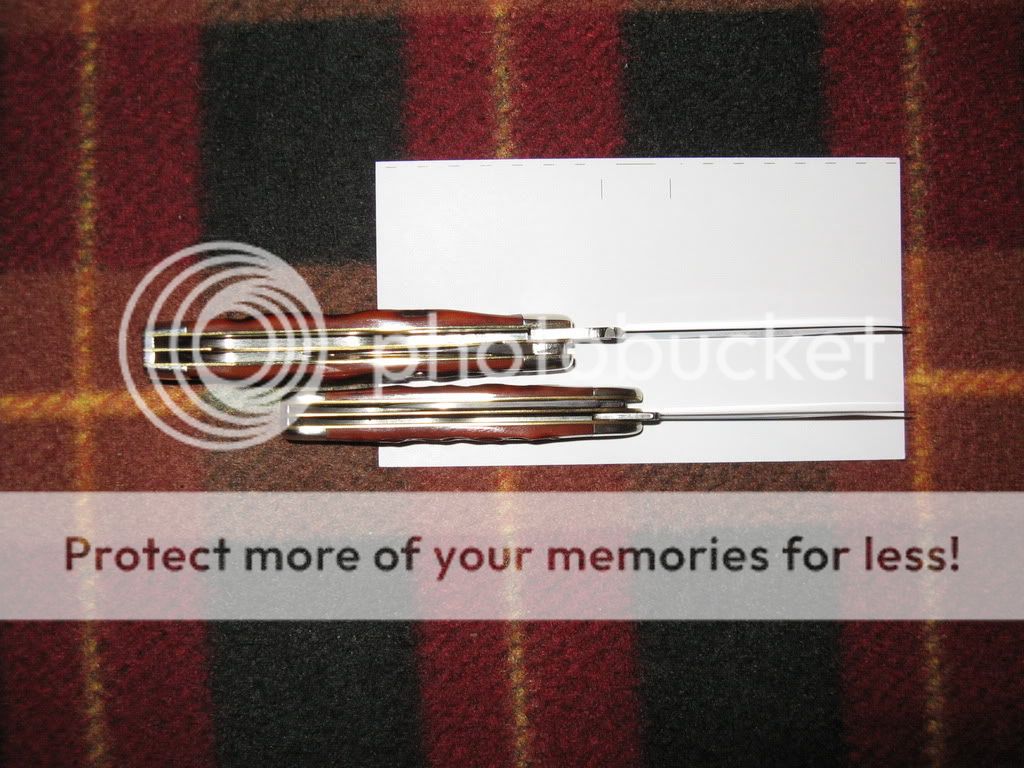
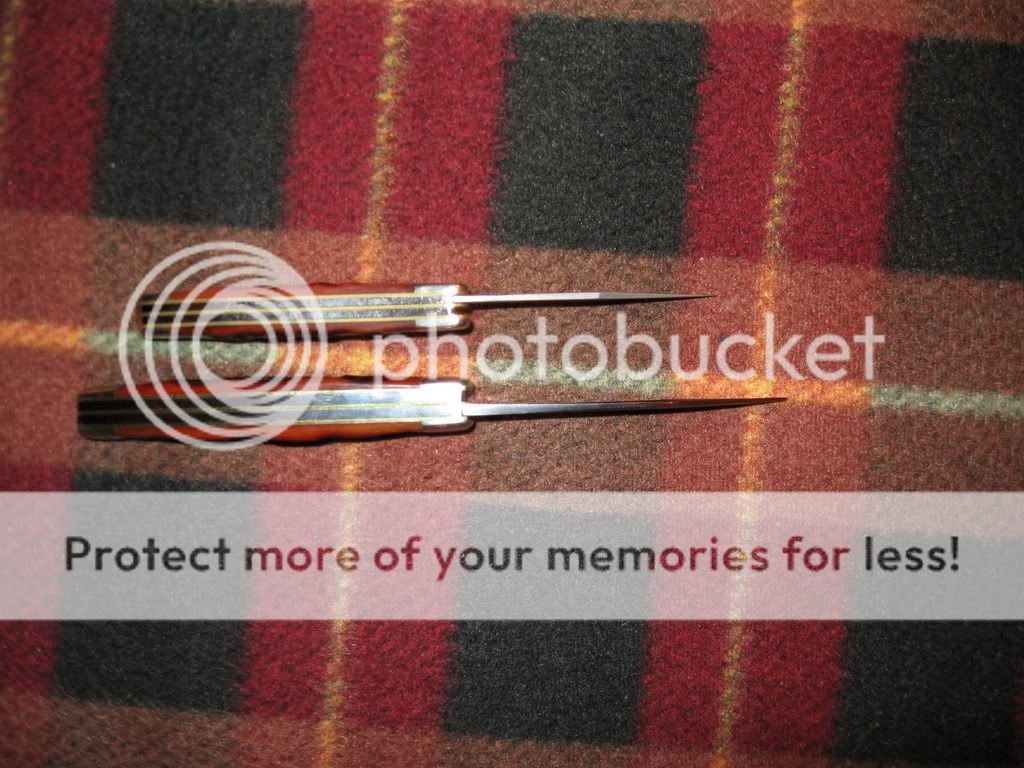
This one is similar to the peanut, but longer, both in blade and handle, and thicker, a bit heavier. This knife is the peanut’s contender, with its longer main blade flat grind, and the full grip handle. And there is one more advantage, or disadvantage if you will, and that is the steel, in this case being a tool steel, named D2, which has high abrasion resistance, and will hold an edge for longer than the carbon steel from the case peanut, or the stainless 420HC, but will be somewhat harder to sharpen.
The edge on this particular one is a bit uneven close to the tip on the main blade, and maybe just a bit too high for such a good steel, but sharp nevertheless. This is easily remedied though, and the knives will all be sharpened eventually, according to the users preferences and intended uses. The good thing on this one, the main blade, clip point can be pinched, while the secondary is no harder to open than the pen blade of a regular peanut, if you know what I mean. The blades have a bit of a half stop, not as pronounced, and what is flat on the peanut tang, here is rounded a little. And, the blades are centered, with the nail nicks on the same side.
Walk and talk, stronger than the bucks, but no nail breaker.
The bolsters are not rounded as in the peanut, but it still is a serpentine shape, hence the name, which I like very much on a pocket knife, as mentioned before

If the peanut is too small for some, but still like the idea of a small jack knife, this might just be it. (of course, the options are endless, there are many like this one, as the texas jack from case, but ill stick for now with what I have here) As for me, is too soon to tell, being just the first day with the knives described here.
And the last of the bunch, the queen canoe, is one hell of a pocket knife. With the main blade wider and almost as long as a sak alox soldier, thicker, still crinked though, the wide handle, the very thick backspring, looks like a very capable knife, be it hard or light use, and still be a nice, good looking, and beautiful just to take out of the pocket knife, to look at.
Again, D2 steel, this time even edges, but some small gaps in the liners, not very noticeable, only when checked in light. Scales are nice, bone, darkened, with deep grooves, as the serpentine jack.
The main blade is a strong, hard use one, and the small blade, which is very thin, a good slicer and precision cuter. No very fine point here, both blades being spear, so in this regard, the clip point knives win.
The spring tension is strong, the walk and talk great, opens easy, and the closing is similar to an alox sak, which is plenty strong.
Anyway, I like the canoe, it is somewhat heavy, and wide, but is not that big that it would tear up a pocket, and with the single spring design, and wide shape, its very pocket friendly. And, the main blade is “highly” ‘pinchable’, a big plus for me.
The canoe is a very different knife than the peanut, as it feels and looks like a “real” knife from the “get go”, (im trying to be objective here), while the peanut looks to many like a joke, even though the joke is on them, and almost always takes time to get used to it.
The canoe seems to be a good design for general use, including food, and outdoor tasks as well.
Best fit and finish has to go to the buck, the 301 stockman, the blades meet the springs at just right, followed very close by the 303 cadet, which is second only because of the slight recurved edge.
Then there are the queen knives, again very good fit and finish, the serpentine jack loses at the uneven sharpening on the main blade, and both this one and the canoe don’t meet with the spring at the tang in a perfect way, don’t know the exact term for that, but is like in a victorinox, where the spring is not flushed with the blade spine, being a little proud to the tang, only in the queen knives, this is happening just a little bit, just a hint of space remaining on the spring to be seen, near the tang.
But, the peanuts I have are not perfect either, and I like them just fine.
Will any of those knives replace the peanut from my pocket ? I don’t know, but even if they won’t, the peanut will have free days because of them, and I believe it will remain the most pocketable, small package/big enough blade there is out there, and there are no real threats to that throne. Not any that I know of.
And now, please don’t kick me out of the cult, the peanut is still very close to my reach, far from the knives drawer.