split drive rolling mill

Joined
Jan 1, 2007
Messages
54
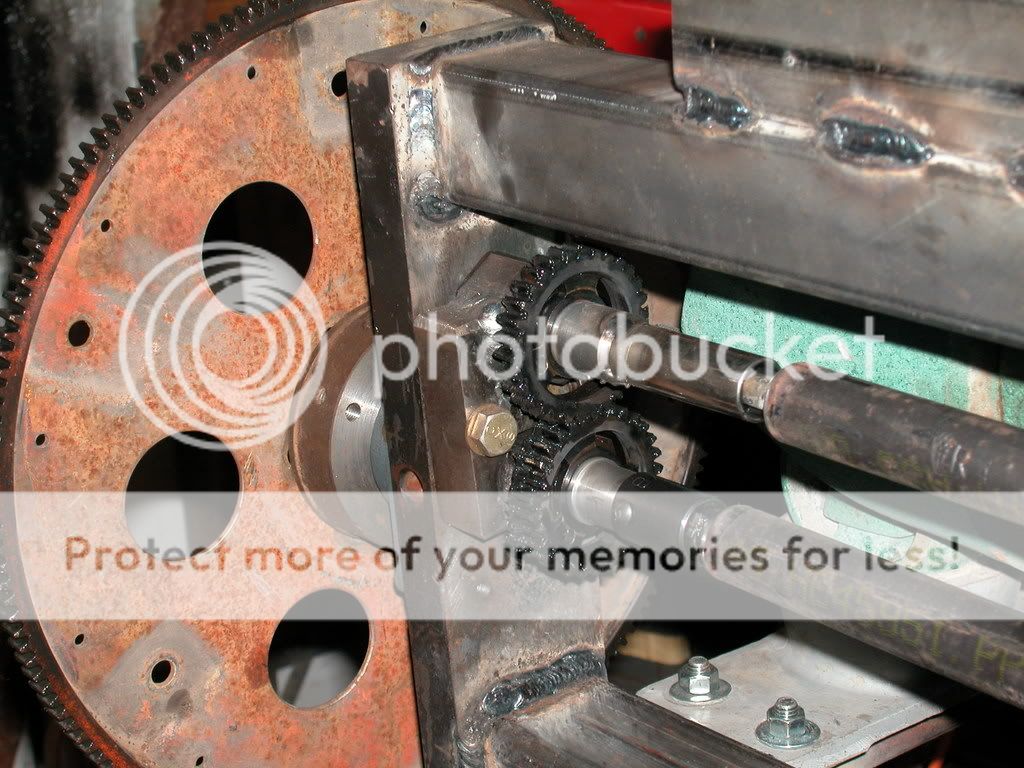
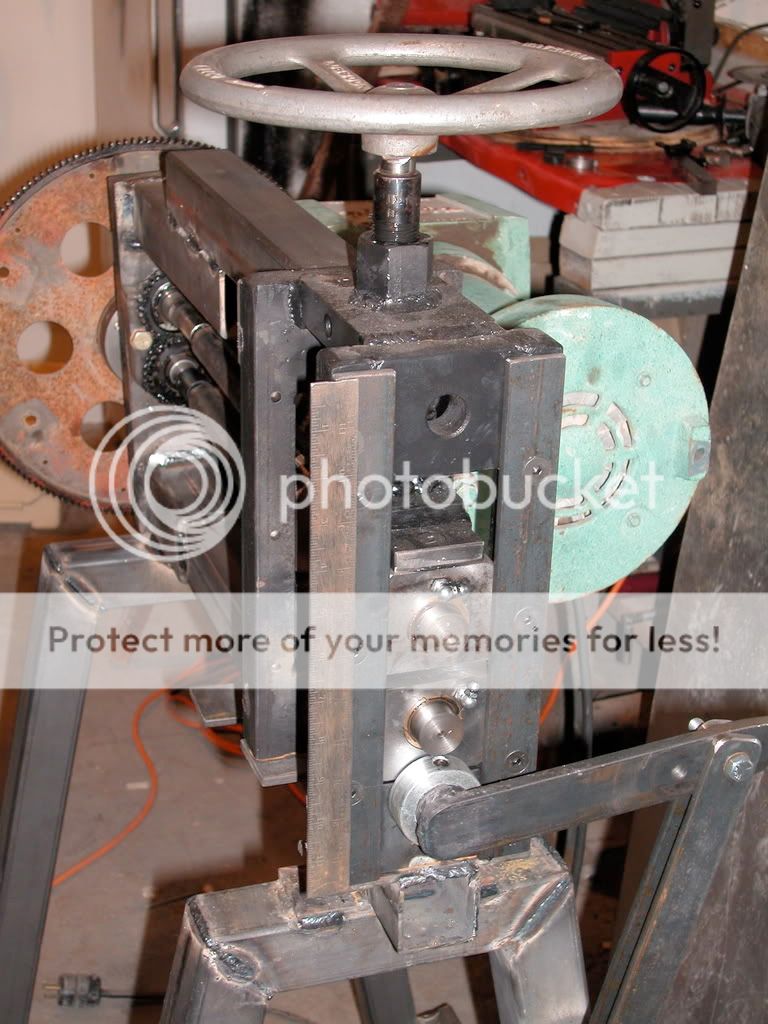
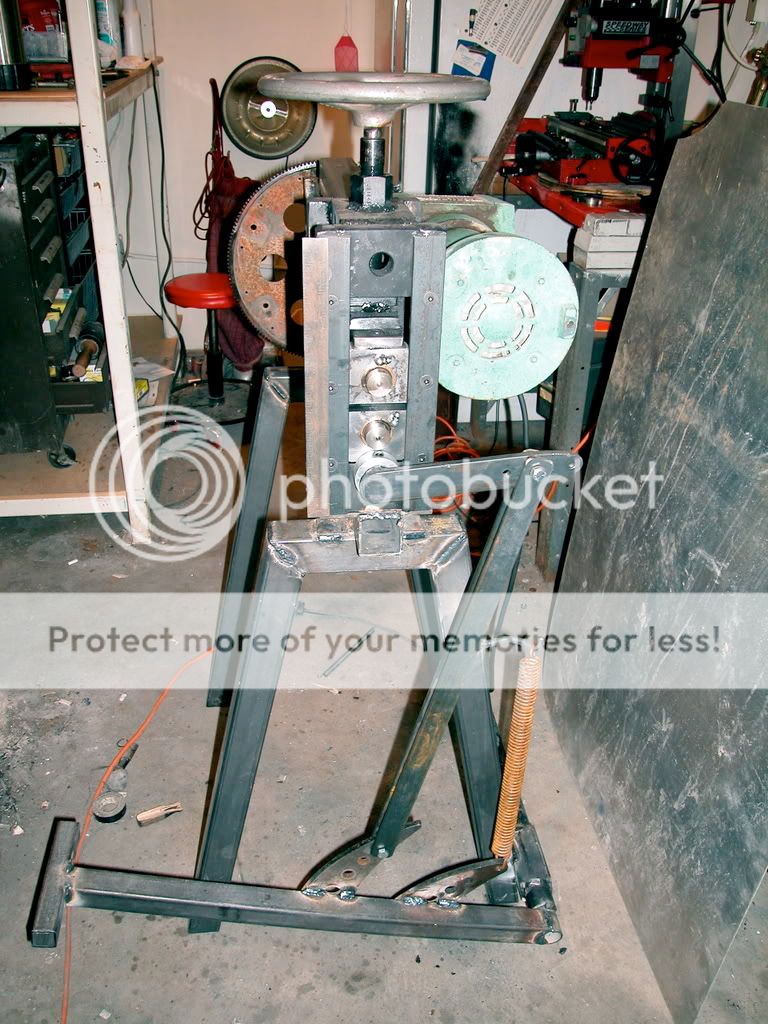
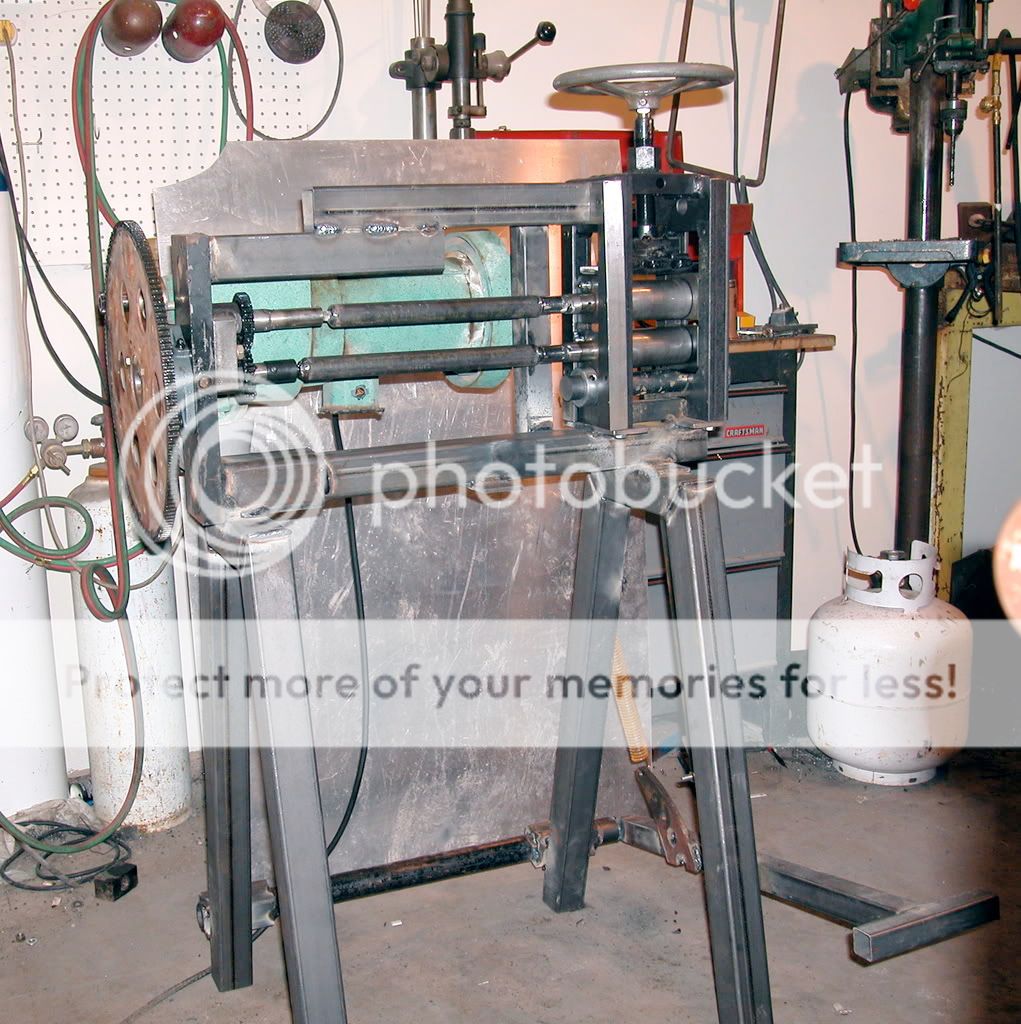
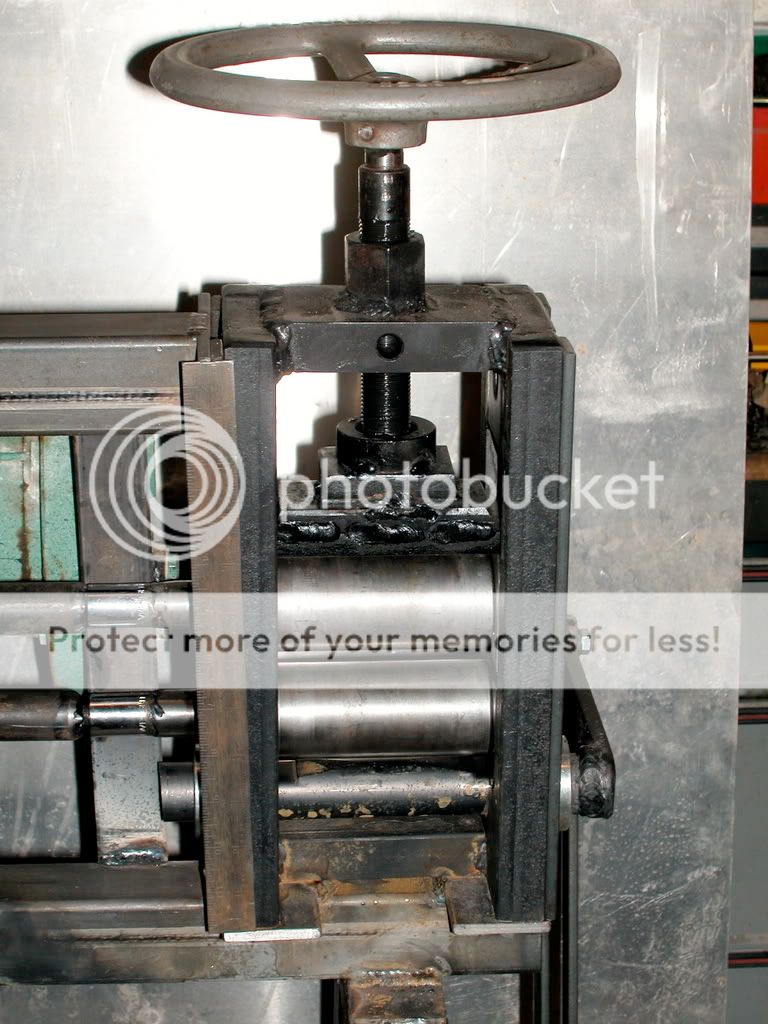
This is my proto type rolling mill. works good, (next one will be more powerful).
Thought I would post it so anyone making one could have a chance to look at it.
The split drive is nice for keeping your bars straight.

There are no guards in the pics so you can see the works!

Thanks for looking
J.C.Stetter
DSCN0866_0008roll.jpg


DSCN0871_0012roll.jpg


FH000011roll.jpg


FH000010roll.jpg


DSCN0868_0009roll.jpg
 
That looks like a very nice setup.:thumbup: :thumbup: Please keep us posted on how it works out.:D
 
T.C. What kind of arrangement are you using for you feed petal. Is the lever turning a shaft with a pair of cam lobes to raise the lower driven roller?

Jim Arbuckle
 
T.C. What kind of arrangement are you using for you feed petal. Is the lever turning a shaft with a pair of cam lobes to raise the lower driven roller?

Jim Arbuckle

jim your right on the money its a twin cam :D setup.
 
I'm going to show my ignorance and ask the question; How do you use this corntrapshun in knifemaking? I know what it does and what it's used for but why(maybe how) do you use it? This is me being serious now. :)
 
I am going to build a rolling mill with a friend But I keep changing the design. We have some of the parts so some of the design is in the works but this looks interesting. Kind of in our line of thinking. When we get the first done we will build a second so we both have one. Nice to see working modle. You say you are going to bulid another. Any improvments or changes and why.

Thanks
Larry
 
I'm going to show my ignorance and ask the question; How do you use this corntrapshun in knifemaking? I know what it does and what it's used for but why(maybe how) do you use it? This is me being serious now. :)

Kerry,
It's used to roll hot steel down to narrower and narrower thickness. Same as a power hammer or hydraulic press squishes the metal to make it longer and thinner.

The foot pedal allows you to have two different gaps between the rolls. When the foot pedal is not depressed, the gap is larger than the thickness of the steel. The hot steel is put through the rolls to the far side. The forger then pushes his/her foot down on the pedal, forcing the rolls closer together. The rolls grab hold of the steel, which is not thicker than the gap between the rolls and rolls it out from one side of the mill to the other side (forcing the steel narrower and longer at the same time). This is a good tool for those of us who do not have room for a power hammer or a hydraulic press.
 
I am going to build a rolling mill with a friend But I keep changing the design. We have some of the parts so some of the design is in the works but this looks interesting. Kind of in our line of thinking. When we get the first done we will build a second so we both have one. Nice to see working modle. You say you are going to bulid another. Any improvments or changes and why.

You gonna let some of us other locals in on this one Nowicki? I think I've got some rolling mill plans around someplace if you'd be interested in seeing them.

-d
 
You gonna let some of us other locals in on this one Nowicki? I think I've got some rolling mill plans around someplace if you'd be interested in seeing them.

-d

I kind of figured We would probably get arround to 4 or 5 of them before it is said and done.
 
I'm going to show my ignorance and ask the question; How do you use this corntrapshun in knifemaking? I know what it does and what it's used for but why(maybe how) do you use it? This is me being serious now. :)

Kerry,
It's used to roll hot steel down to narrower and narrower thickness. Same as a power hammer or hydraulic press squishes the metal to make it longer and thinner.

The foot pedal allows you to have two different gaps between the rolls. When the foot pedal is not depressed, the gap is larger than the thickness of the steel. The hot steel is put through the rolls to the far side. The forger then pushes his/her foot down on the pedal, forcing the rolls closer together. The rolls grab hold of the steel, which is not thicker than the gap between the rolls and rolls it out from one side of the mill to the other side (forcing the steel narrower and longer at the same time). This is a good tool for those of us who do not have room for a power hammer or a hydraulic press.

Thank You:) Scottickes

Kerry this is the "how" down to the letter. The Why for me is to roll out my billets of patteren welded steel in preep for and conjuntion with applying the finnal pattern. rolling let you maintain your layers and hold a pattern as you make bar stock to a size you can use.

plus its a lot more fun than I should be allowed:D
 
Machines :D :D :D

A few things that might help, this roller was made so that the rolls could be changed quickly, (shaped rolls )
the rollers are made of hollow Cummings rest pins press fit with the shafts then trued up in a four jaw on the lathe. (harded and ground by Cummings):D
the splitter gears are out of a motorcycle and are a match set from one transmission.(about three sets in that one bike)
drive shafts are heavy wall tube and grade eight bolt on each end, fit in threads for ajustment and then pre-heat and weld.
recivers are sockets (proto:D ) some are deep wall and welded some are machined fit.(all will me machined on the new mill) the deep walls have spring and stops inside to maintain spaceing.
primary drive is a gm flywheel and starter gear(this was some what of a fix):o
rpm is 22 at the rollers
base HP 1/3
it is set up with bushings and grease(same on the new one)
the new roller has a forward and revers and more power, not too many changes.:D :D
all togather not unplesant to run:D
 
I've used a rolling mill at a local blacksmiths shop and love it. It does stretch out the pattern differently than a press or power hammer does. Sometimes you'll get oval patterns in a ladder billet, and it appears to be difficult to get the straight lines of a ladder that I enjoy from time to time.

The rolling mill tends to not widen the billet very much compared to other methods. I personally like the way a rolling mill performs. I'm looking at different plans right now, and will be building one eventually.
 
Thank You:) Scottickes

Kerry this is the "how" down to the letter. The Why for me is to roll out my billets of patteren welded steel in preep for and conjuntion with applying the finnal pattern. rolling let you maintain your layers and hold a pattern as you make bar stock to a size you can use.

plus its a lot more fun than I should be allowed:D

ahHA! Thanks for the details Scottickes and J.C. Makes alot of sense NOW.
 
So you can pattern weld with a Rolling Mill ? or are you simply flattening pattern welded billets?
 
I have been wanting one of these for years now,I do have a motor for one but that is a far as I have gotten....
Someday I will get around to building one,Thanks for the look at yours and making me think about one again.
Bruce
 
I do the initial welds by hand. Once I have the initial weld done, then I roll it out. When I cut and reweld it, or fold it and reweld it, I do this weld by hand also. Think of a rolling mill as an alternative to a hydraulic press or power hammer.

By the way, I was at Ray Richards shop to experiment with some large spherical roller bearings (52100 steel). They were 1.25 inch in diameter by about 2" long. Using 12 pound and 8 pound sledge hammers, I was Rays "Power Hammer". I'm now cured of hand pounding out thick stock!!! I will have a rolling mill in the near future.
 
Back
Top