
Cliff Stamp
BANNED
- Joined
- Oct 5, 1998
- Messages
- 17,562
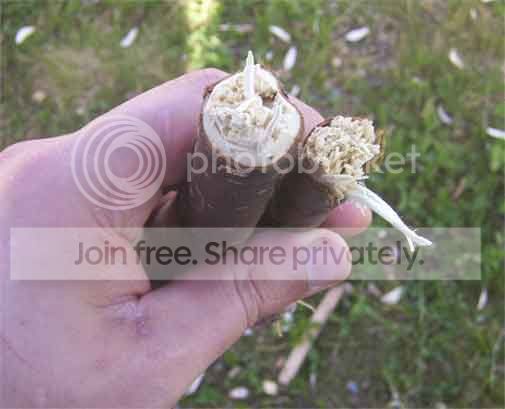
This is a really lightweight knife, 0.1" thick stock, hollow ground, very acute and thin edge and a needle like point. Direct batoning it out as is any significant prying. I started out with some Alders as they are soft wood and easy to cut with the knife, just bend them and slice across the part under tension. To cut them to length just work around the piece making little notches and then crack it readily by bending. Youc an just crack it without the notches but the wood splinters and you waste a lot of time getting rid of the splinters. Can you see the difference :
With the alders shaped to wedges the first cut is made by releasing the lock on the Horn and batoning it lightly into the wood with a section of Alder :
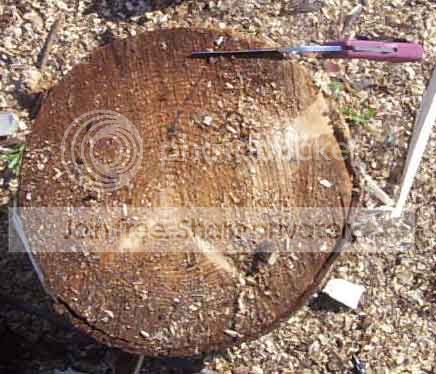
This is seasoned wood and is cracked already across the face in multiple places but the alder wedges are far too weak to use to try and crack the main body of the wood, they will actually just compress themselves if they have solid wood on both sides. However if you start on the side the wood the alder wedges can break off a thin slab and once this happens the problem is pretty much solved :

Carve the slabs into wedges and the rest of the wood can be broken apart :
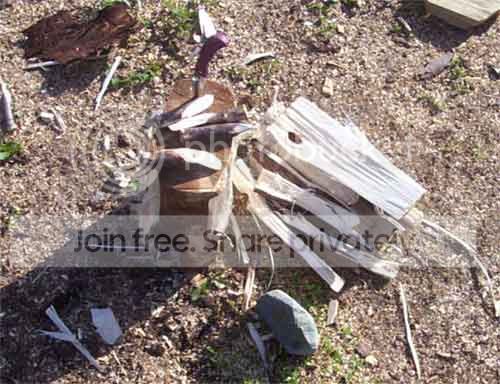
The rock was the baton on the wedges and the alder stubs on the top of the round were the initial wedges. The Horn can then peel/slice the slabs into very thin strips which can be shaved very thin if necessary :

Most deadfall isn't cut in nice rounds of course, however the procedure is the same on broken woods of irregular ends. The process is much faster if you have nice hardwood wedges to start with as then you can just crack the round right in half. Most deadfall though is poor wedge material and the first wedges you would make locally tend to be useful only for making better wedges.
-Cliff
With the alders shaped to wedges the first cut is made by releasing the lock on the Horn and batoning it lightly into the wood with a section of Alder :
This is seasoned wood and is cracked already across the face in multiple places but the alder wedges are far too weak to use to try and crack the main body of the wood, they will actually just compress themselves if they have solid wood on both sides. However if you start on the side the wood the alder wedges can break off a thin slab and once this happens the problem is pretty much solved :
Carve the slabs into wedges and the rest of the wood can be broken apart :
The rock was the baton on the wedges and the alder stubs on the top of the round were the initial wedges. The Horn can then peel/slice the slabs into very thin strips which can be shaved very thin if necessary :
Most deadfall isn't cut in nice rounds of course, however the procedure is the same on broken woods of irregular ends. The process is much faster if you have nice hardwood wedges to start with as then you can just crack the round right in half. Most deadfall though is poor wedge material and the first wedges you would make locally tend to be useful only for making better wedges.
-Cliff