
Cliff Stamp
BANNED
- Joined
- Oct 5, 1998
- Messages
- 17,562
Most of the firestarting I have been doing lately has been with cardboard/wax bundles of various types, and properly prepared they make firestarting fairly easy even in difficult conditions as they produce enough heat to even burn wet boughs and you can get massive flame even when everything is covered in snow and ice with very little prep work on the wood. Recently I started working without tinder of any sort again to get more practice for unexpected situations, not that I ever think this is a realistic senario, I don't imagine ever being so unprepared, but its knife work outside in the woods which doesn't really take much reasoning to make me want to do it anyway.
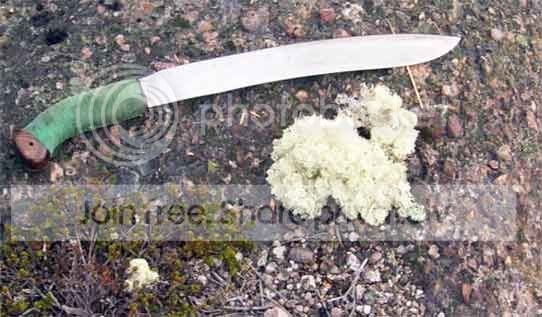
I passed lots of birch and pine pitch trees on a hike, which is kind of amusing, when you don't want it you trip over it. I check this moss, which is wet, but is very airy by nature and it actually burns (match). You can hear the water burn out of it. I ignore that and find a large piece of deadfall and pry it apart and then hack out a large chunk. It is wet for a good ways inside and I eventually end up with a small piece similar to a deck of cards which I split up into really fine sticks and then I feather a few :
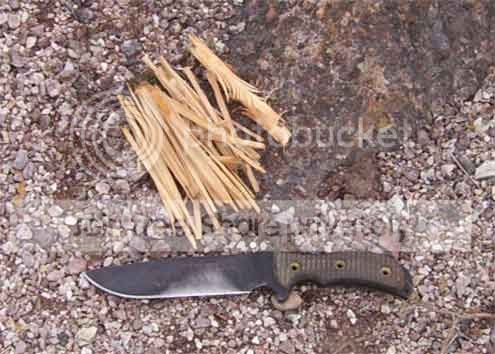
This is really dry and enough to get the small diameter wood which is just damp burning which I gather by poking around under cover and avoiding the really wet wood, being careful not to hit the large branches and send down a shower of drops which make everything more wet. There is lots of dead wood around, and it takes about a half an hour to gather up enough. Generally you prepare tinder last but in this case the sun was up and overhead and I was hoping it would dry out the small splits even further as I had them spread out on the rock.
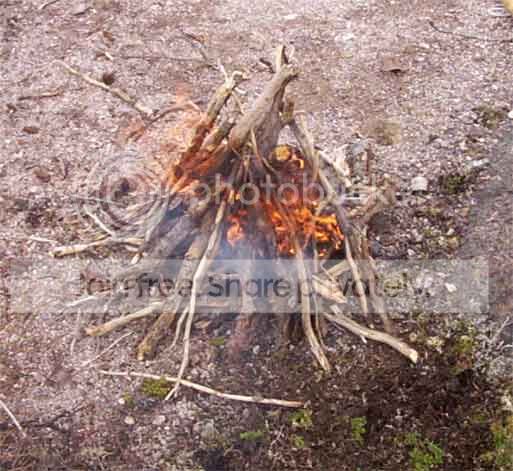
This fire was decent then and once all that wood burned down to coal it was providing enough heat so that it would burn freshly split fir :
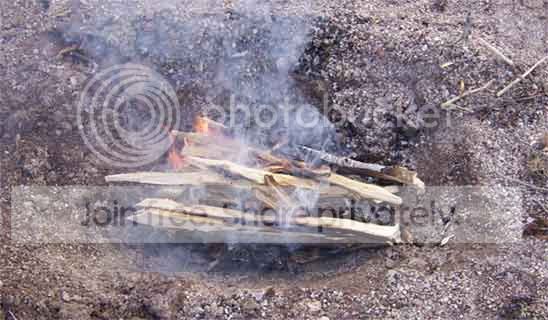
The wood was spitting and cracking, lots of water in it, but it was burning. There was also lots of heat for it to serve as a signal fire :
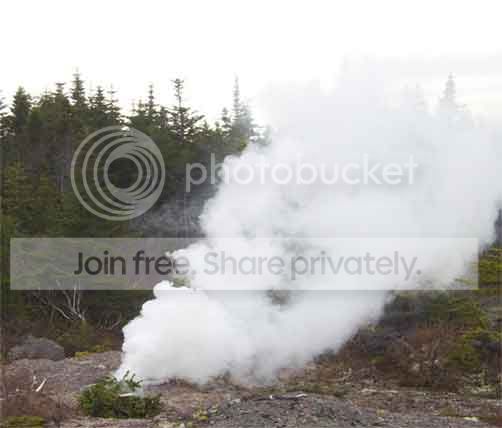
The boughs were wet, but most of the water had been knocked off them when they were limbed off the trunk anyway. All of that eventually burned right down to coal. This is a lot easier and faster with the right wood. It is really easy if you get lucky and find something like this :
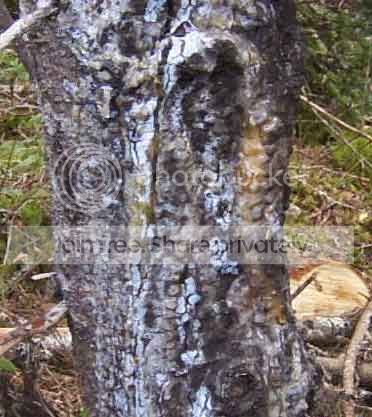
The pitch was over one inch thick in places, combine this with some birch bark to get it going and :
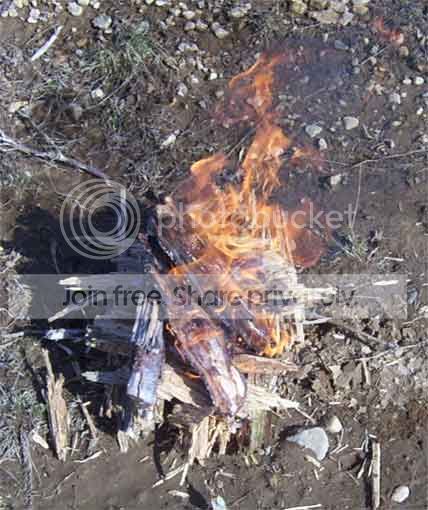
The bark is on a rotted log which I just tore down and used the knife to pry apart and form a base on the mud. It was far too wet to burn, but was more productive that letting all the sap to run into the ground and was not that wet that it would not dry out once the bark started pumping out the heat. This gets hot fast, it is only a few minutes once the handful of birch bark is lit that you can't get close to the fire to add more wood to it.
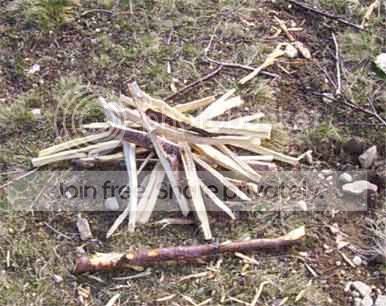
That is a bunch of birch, freshly split, that is horrible wood to burn, it pretty much ignores flame, it is dense and holds lots of water, but it can't stand up to the flames from the heavy pitch bark and the splits and all the limbs from the birch go on the fire :
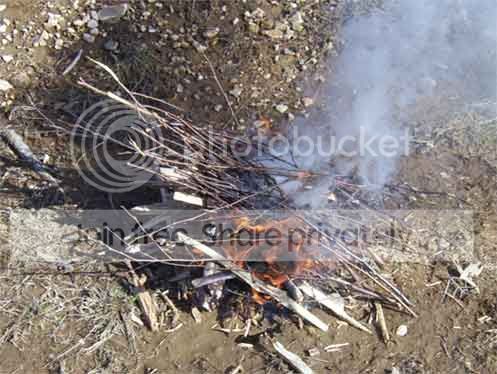
The wood is even blackening is is resisting burning so strongly, but eventually it dries out and does burn, though it produces little heat in doing so because of the high water content. Birch is great for bark to start a fire, but horrible to try to keep a fire going with the actual wood. Eventually though, the bark wins out. About two minutes to gather the bark, will burn hot and heavy for quite some time and dry out even really wet wood :
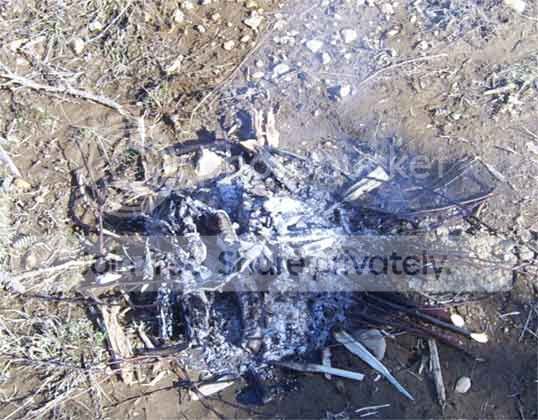
If you look closely you can see a piece of unsplit birch in the middle of the coals which pretty much ignored all the fire around it. Note none of the small limbs burned outside of the main coal, way to wet for the flame to travel down their length. If I was needing to keep a fire going for some time I would have a lot more wood cut down before the fire started and split and use all the heat from the fire to dry it out. Split wood which is exposed to that level of heat can produce a summers worth of seasoning in just a few days and be fairly burnable even in a day.
-Cliff
I passed lots of birch and pine pitch trees on a hike, which is kind of amusing, when you don't want it you trip over it. I check this moss, which is wet, but is very airy by nature and it actually burns (match). You can hear the water burn out of it. I ignore that and find a large piece of deadfall and pry it apart and then hack out a large chunk. It is wet for a good ways inside and I eventually end up with a small piece similar to a deck of cards which I split up into really fine sticks and then I feather a few :
This is really dry and enough to get the small diameter wood which is just damp burning which I gather by poking around under cover and avoiding the really wet wood, being careful not to hit the large branches and send down a shower of drops which make everything more wet. There is lots of dead wood around, and it takes about a half an hour to gather up enough. Generally you prepare tinder last but in this case the sun was up and overhead and I was hoping it would dry out the small splits even further as I had them spread out on the rock.
This fire was decent then and once all that wood burned down to coal it was providing enough heat so that it would burn freshly split fir :
The wood was spitting and cracking, lots of water in it, but it was burning. There was also lots of heat for it to serve as a signal fire :
The boughs were wet, but most of the water had been knocked off them when they were limbed off the trunk anyway. All of that eventually burned right down to coal. This is a lot easier and faster with the right wood. It is really easy if you get lucky and find something like this :
The pitch was over one inch thick in places, combine this with some birch bark to get it going and :
The bark is on a rotted log which I just tore down and used the knife to pry apart and form a base on the mud. It was far too wet to burn, but was more productive that letting all the sap to run into the ground and was not that wet that it would not dry out once the bark started pumping out the heat. This gets hot fast, it is only a few minutes once the handful of birch bark is lit that you can't get close to the fire to add more wood to it.
That is a bunch of birch, freshly split, that is horrible wood to burn, it pretty much ignores flame, it is dense and holds lots of water, but it can't stand up to the flames from the heavy pitch bark and the splits and all the limbs from the birch go on the fire :
The wood is even blackening is is resisting burning so strongly, but eventually it dries out and does burn, though it produces little heat in doing so because of the high water content. Birch is great for bark to start a fire, but horrible to try to keep a fire going with the actual wood. Eventually though, the bark wins out. About two minutes to gather the bark, will burn hot and heavy for quite some time and dry out even really wet wood :
If you look closely you can see a piece of unsplit birch in the middle of the coals which pretty much ignored all the fire around it. Note none of the small limbs burned outside of the main coal, way to wet for the flame to travel down their length. If I was needing to keep a fire going for some time I would have a lot more wood cut down before the fire started and split and use all the heat from the fire to dry it out. Split wood which is exposed to that level of heat can produce a summers worth of seasoning in just a few days and be fairly burnable even in a day.
-Cliff
 Doc
Doc