
I have had a loving relationship with sticks for a long time. I guess one reason is my martial arts training; I used to train escrima many years ago. This art uses sticks as a both a training weapon, but it is also a weapon in its own right. The Filipino stick is usually short, around 60-70 cm long but it can be longer, up to a man’s length pole.
Still my favorite is a walking stick length, around 90 cm, sometimes a bit longer. There is just something positive and reliable in a good, stout stick. If it is well made, of good wood and if you take even some care of it, it will serve you a lifetime. It can do many jobs, from self-defense to supporting you in rough terrain. It is the mankind’s oldest tool, still useful today.
From self-defense point of view the walking stick is unsurpassed, but still it has some limitations. The first and most important thing is that you must be of certain age to be able to carry a stick or police might take a dim view of both you and your stick. If you are of suitable age, no one will really notice that you have a walking stick. Of course, the stick should match your dress to make a proper impression. There are many kinds of sticks available, from gentleman’s silver-knobbed sticks to the most usual, the crooked handle walking stick usually seen in the hands of older people. You could get away by explaining that you have bad knee if you are not of proper age.
I will not get into details about how you could use your stick to defend yourself or others; I just make a passing remark to a fictional character, Sherlock Holmes. There is no incidence of Holmes using an actual sword on any of his cases, but one of his other noted athletic pursuits does in fact derive from the usage of the blade. Singlestick, also sometimes referred to as cudgel-play, was a method of fencing that simulated the use of the broadsword and sabre, and was to these weapons somewhat as the foil is to the rapier or court (small) sword. Practiced as it was with a round wooden rod about forty inches in length, skills acquired in this game could be immediately applied to defending oneself with the gentleman’s walking stick. In “The Adventure of the Illustrious Client”, Holmes goes up against multiple assailants and despite his singlestick expertise, comes off second best:
“I’m a bit of a single-stick expert, as you know. I took most of them on my guard. It was the second man that was too much for me.”
Teddy Roosevelt himself said: “Speak softly, and carry a big stick”. Roosevelt, by the way, also practised singlestick. With that I can leave this point.
When you want to make yourself a stick things get interesting if you are a knife collector and like to use knives for whittling. That brings us to my favorite type of walking stick, the Irish Shillelagh with the knob and the shaft made of one piece of wood.
I have made some sticks of the wood I could find from the forest. If you plan to cut down a suitable tree, make sure that you have landowner’s permission to do so if you are not a landowner. The trees that are suitable for that use are usually those that are not used in forest industry so they have little value.
To start a process of making a stick you need very few things. You need a small axe, most definitely a good knife for whittling and some sandpaper. If you really want to indulge yourself you can get a rasp. For finishing and protecting the stick you need wood oil, I use teak oil.
The most important thing is finding a suitable tree. I choose two trees that are native to my homeland, the Birch and the Mountain Ash. Of these two birches are lighter but not as though as mountain ash, so I prefer the latter. When you search the proper wood look at these things: the straightness, the diameter of the wood and don’t forget to look at the roots, because those are used to make the knob. The best trees are those that started their life growing a little crooked, but as they grew they straightened themselves, leaving a curve and a root knob in the ground.
Now you might have to dig out the root knob so a small spade might be useful but not absolutely necessary. You can get your hands dirty and remove some earth just by hand. Use the axe to cut through the roots and take care not to harm the knob. Then cut the tree to slightly longer length that you want to use.
Now you need your knife. You peel the bark off the tree and start whittling the stick to rough shape. After that you will need a lot of patience because the wood has to dry for some time. Don’t take shortcuts in drying, because forcing the process might split the wood. Some splitting is to be expected. The trick is to leave the stick longer than you plan to use and leave some bark in place in the ends of the stick. You could put some glue or paint on the ends; those are easy to take off later. Put the stick in a dry place where it is not in direct sunlight and wait. It will take up to a year for the wood to dry properly so don’t hurry!
After this you can again take your knife and start shaping your stick. There is something very soothing in working the wood with hands and a knife. It is like meditation, there are just you, your sharp knife and the wood. It is an exhilarating moment when the stick you are whittling is finally starting to get the shape you want. Remember that it is easy to take off wood but impossible to put it back, so go slow. What type of knife you use is irrelevant, as long as it works. I have used a small Finnish puukko, you might use your trusty pocket knife as well. Use what you are most familiar with, that is part of the charm of this process.
The knob is most important for your comfort so take your time to try it in your hand once in a while. When you have reached the shape you want you can start to use the sandpaper. You put the final shape and finish on the wood by sanding it, fine tuning the knob to your taste.
Now you are ready to cut the stick to preferred length. Now is also your chance to ruin the whole thing! My preference is to put on the shoes I will use with this stick, so I have to know if I am using the stick in forest or in the city. I take a relaxed standing position with my legs straight but not locked, arms hanging down, put the knob on the ground beside my leg and make a small mark where the shaft of the stick reaches my wrist. I cut the stick carefully with a fine-toothed saw (yes, you need that too) to this length. After that you just oil the stick and leave to dry for a night.
It is a good idea to put a rubber ferrule on the end to protect the wood. After this your stick is ready. You can make leather or cord loop and attach it to your stick to hang it from your wrist.
Your stick can be part of your personality, your history. My father found a very old stick made by a German soldier in Lapland. The stick had carvings on it. There was sun shining on a farmhouse, Edelweiss and a text “Heimat”, homeland, on the shaft. Can you imagine the homesickness the poor young man must have felt when he was carving this stick? I hope he survived to see his home again.
If you are really into this you can fine-tune the balance. You must take different grips of the stick, swing it like a sword, take small walks with it and feel how the stick responds. Then you can put more taper to the stick if you want. At this point you are like a sword smith, who must have intimate knowledge of his craft to make a truly fine sword.
My sticks I use mostly when walking through the forest to give me support. The day may come when I must use them also in the city for that. May the day never come when I have to use them to defend me or my loved ones, but I am sure they are ready also for that.
Still my favorite is a walking stick length, around 90 cm, sometimes a bit longer. There is just something positive and reliable in a good, stout stick. If it is well made, of good wood and if you take even some care of it, it will serve you a lifetime. It can do many jobs, from self-defense to supporting you in rough terrain. It is the mankind’s oldest tool, still useful today.
From self-defense point of view the walking stick is unsurpassed, but still it has some limitations. The first and most important thing is that you must be of certain age to be able to carry a stick or police might take a dim view of both you and your stick. If you are of suitable age, no one will really notice that you have a walking stick. Of course, the stick should match your dress to make a proper impression. There are many kinds of sticks available, from gentleman’s silver-knobbed sticks to the most usual, the crooked handle walking stick usually seen in the hands of older people. You could get away by explaining that you have bad knee if you are not of proper age.
I will not get into details about how you could use your stick to defend yourself or others; I just make a passing remark to a fictional character, Sherlock Holmes. There is no incidence of Holmes using an actual sword on any of his cases, but one of his other noted athletic pursuits does in fact derive from the usage of the blade. Singlestick, also sometimes referred to as cudgel-play, was a method of fencing that simulated the use of the broadsword and sabre, and was to these weapons somewhat as the foil is to the rapier or court (small) sword. Practiced as it was with a round wooden rod about forty inches in length, skills acquired in this game could be immediately applied to defending oneself with the gentleman’s walking stick. In “The Adventure of the Illustrious Client”, Holmes goes up against multiple assailants and despite his singlestick expertise, comes off second best:
“I’m a bit of a single-stick expert, as you know. I took most of them on my guard. It was the second man that was too much for me.”
Teddy Roosevelt himself said: “Speak softly, and carry a big stick”. Roosevelt, by the way, also practised singlestick. With that I can leave this point.
When you want to make yourself a stick things get interesting if you are a knife collector and like to use knives for whittling. That brings us to my favorite type of walking stick, the Irish Shillelagh with the knob and the shaft made of one piece of wood.
I have made some sticks of the wood I could find from the forest. If you plan to cut down a suitable tree, make sure that you have landowner’s permission to do so if you are not a landowner. The trees that are suitable for that use are usually those that are not used in forest industry so they have little value.
To start a process of making a stick you need very few things. You need a small axe, most definitely a good knife for whittling and some sandpaper. If you really want to indulge yourself you can get a rasp. For finishing and protecting the stick you need wood oil, I use teak oil.
The most important thing is finding a suitable tree. I choose two trees that are native to my homeland, the Birch and the Mountain Ash. Of these two birches are lighter but not as though as mountain ash, so I prefer the latter. When you search the proper wood look at these things: the straightness, the diameter of the wood and don’t forget to look at the roots, because those are used to make the knob. The best trees are those that started their life growing a little crooked, but as they grew they straightened themselves, leaving a curve and a root knob in the ground.
Now you might have to dig out the root knob so a small spade might be useful but not absolutely necessary. You can get your hands dirty and remove some earth just by hand. Use the axe to cut through the roots and take care not to harm the knob. Then cut the tree to slightly longer length that you want to use.
Now you need your knife. You peel the bark off the tree and start whittling the stick to rough shape. After that you will need a lot of patience because the wood has to dry for some time. Don’t take shortcuts in drying, because forcing the process might split the wood. Some splitting is to be expected. The trick is to leave the stick longer than you plan to use and leave some bark in place in the ends of the stick. You could put some glue or paint on the ends; those are easy to take off later. Put the stick in a dry place where it is not in direct sunlight and wait. It will take up to a year for the wood to dry properly so don’t hurry!
After this you can again take your knife and start shaping your stick. There is something very soothing in working the wood with hands and a knife. It is like meditation, there are just you, your sharp knife and the wood. It is an exhilarating moment when the stick you are whittling is finally starting to get the shape you want. Remember that it is easy to take off wood but impossible to put it back, so go slow. What type of knife you use is irrelevant, as long as it works. I have used a small Finnish puukko, you might use your trusty pocket knife as well. Use what you are most familiar with, that is part of the charm of this process.
The knob is most important for your comfort so take your time to try it in your hand once in a while. When you have reached the shape you want you can start to use the sandpaper. You put the final shape and finish on the wood by sanding it, fine tuning the knob to your taste.
Now you are ready to cut the stick to preferred length. Now is also your chance to ruin the whole thing! My preference is to put on the shoes I will use with this stick, so I have to know if I am using the stick in forest or in the city. I take a relaxed standing position with my legs straight but not locked, arms hanging down, put the knob on the ground beside my leg and make a small mark where the shaft of the stick reaches my wrist. I cut the stick carefully with a fine-toothed saw (yes, you need that too) to this length. After that you just oil the stick and leave to dry for a night.
It is a good idea to put a rubber ferrule on the end to protect the wood. After this your stick is ready. You can make leather or cord loop and attach it to your stick to hang it from your wrist.
Your stick can be part of your personality, your history. My father found a very old stick made by a German soldier in Lapland. The stick had carvings on it. There was sun shining on a farmhouse, Edelweiss and a text “Heimat”, homeland, on the shaft. Can you imagine the homesickness the poor young man must have felt when he was carving this stick? I hope he survived to see his home again.
If you are really into this you can fine-tune the balance. You must take different grips of the stick, swing it like a sword, take small walks with it and feel how the stick responds. Then you can put more taper to the stick if you want. At this point you are like a sword smith, who must have intimate knowledge of his craft to make a truly fine sword.
My sticks I use mostly when walking through the forest to give me support. The day may come when I must use them also in the city for that. May the day never come when I have to use them to defend me or my loved ones, but I am sure they are ready also for that.
Last edited:


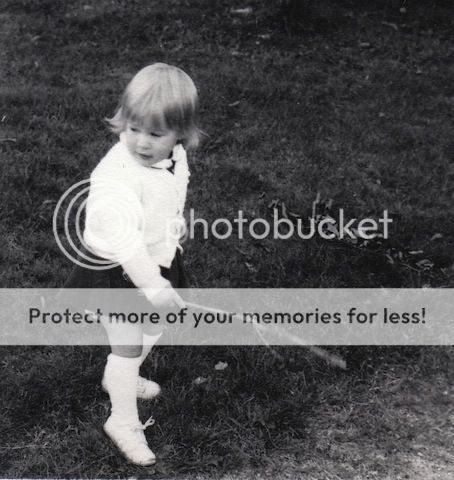


 Many years ago my oldest son used one in a Christmas play at school. He was one of the shepherds.


