"Stropping" on a stone

Joined
Mar 24, 2009
Messages
622
Looking for some insight from those of you that exclusively convex your blades. I've always saved convexing for my choppers and V edges for my edc blades bc I like being able to take them to a pocket stone while I'm out and repair/maintain them. I've decided to convex my edc but I'm wondering if it's possible to strop the edge on my pocket stone/diomond steel to keep the edge maintained while I'm out? I've seen vids of diamond hones being used but does it work? I'm trying to avoid carrying an emory board or sandpaper strop everywhere I go. Also if it is possible, would you strop at the same angle on the stone that you would on sandpaper? Thanks.
 
Last edited:
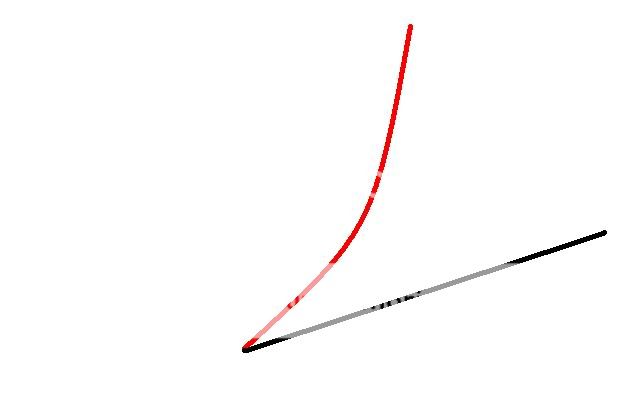
I do convex for a lot of blades with my belt sander. You really have to think about the shape of a convex edge to understand the answer to this question. You need to sharpen the very edge convex or V. If you try to sharpen convex in the technique you would for a V (just for touch up work), you are going to have to go in at more of an angle due to the shape. The best thing to do if this doesn't make sense is look at a diagram of a convex grind and draw a straight line from the very edge upward and look at what angle you will get due to the convex curve of the edge contacting your stone or rod. You can, and I have out in the field. It works. But I don't suggest it unless you need to.
 
Carry a piece of leather with your compound of choice, and cut & size it to simply lay it atop your favorite hone. Or, a larger piece could be used, laid atop any flat surface that happens to be convenient.

You can also strop on paper, cardboard, linen (blue jeans), etc. Again, take a little compound with you, and apply it to whichever media is convenient. A strop really only needs to be relatively smooth, when used with compound, to be effective. I've been using (occasionally) some simple printer/copier paper with compound applied, and laid on top of a magazine, phone book, or other backing with enough 'give' to match the convex of your blade. Works quite well.
 
For example. I keep my machete with a convex edge. Normally I just keep it up on my leather belt/compounds on my belt sander. But when I go out and really put it work for a day I take an old diamond stick with me. I can keep the edge touched up when it dulls and realign any dents if I hit wire fence or rocks. I mean this when i use it for extensive work and I don't want to come back to the house to power strop and manual stropping just will not cut it.

Kevin
 
I get the diamond stick for the machete, I do the same thing. I was just wondering how plausible it would be to keep up and edc blade on a stone between sander sessions.
 
I get the diamond stick for the machete, I do the same thing. I was just wondering how plausible it would be to keep up and edc blade on a stone between sander sessions.

Then you need to try to understand what I tried to explain in my first post.
 
convex.jpg


I just played with paint for a second. Think of the red line as the convex and the black line as your stone. The entire convex edge is varying in angle. It is not straight. To touch the edge for a light touch up look at the angle you would need. This is drastic in all ways to demonstrate a point. The simple answer is you will be jumping back and forth IMO. Touch it up with a stone and then you will have to re-establish your convex at the very edge. Making any more sense?
 
Just convex with the stone. With each stroke change your angle a bit, starting low and moving high usually works better.
 
Just convex with the stone. With each stroke change your angle a bit, starting low and moving high usually works better.

I've stopped using sandpaper entirely. The last two convex conversions I've done were completely with a stone (and some judicious stropping of the blade face to put on that satin finish. Practice on a beater or two and you'll be surprised at how easy it is to convex on a stone. After a couple of field sharpenings your cosmetics might not look as nice as, but the edge will be every bit as convex. As stated above, start out on the curve and work your way to the apex - only hard part is not cutting into the apex too much resulting in making the edge more obtuse as you go. Not difficult. I just use a normal stroke and change the pitch every few passes. Any residual boundary lines are easily erased with a few passes on a strop.
 
I've stopped using sandpaper entirely. The last two convex conversions I've done were completely with a stone (and some judicious stropping of the blade face to put on that satin finish. Practice on a beater or two and you'll be surprised at how easy it is to convex on a stone. After a couple of field sharpenings your cosmetics might not look as nice as, but the edge will be every bit as convex. As stated above, start out on the curve and work your way to the apex - only hard part is not cutting into the apex too much resulting in making the edge more obtuse as you go. Not difficult. I just use a normal stroke and change the pitch every few passes. Any residual boundary lines are easily erased with a few passes on a strop.
When you are "changing pitch" are you being careful not to exceed the edge angle that you would normally use with sandpaper. My bark river is about 13 deg per side right now. Is that my max angle? Sorry for all the questions, this aspect of sharpening is new to me.
 
you can take a used abrasive belt and load the backside up with compound and take that with you (you can roll the belt up small enough to fit in your pocket). if you need to work up a burr, you hook the belt over a branch or tie it to a tree while holding the other end in your hand. flip the belt over to use it as a strop.
 
Absolutely, that's what I meant when I said not to cut into the apex too much. You'll feel when you're on the peak. I generally spend a little extra time on the curve just beneath the apex and then very gently hit the apex itself. Unlike a flat bevel, there's very little metal that needs to be removed with the stone to completely refresh the edge. Then I just raise and lower the spine to hit the rest of the curve and every now and then gently hit the peak. You're right to be concerned about making the edge more obtuse, but it doesn't take much practice to deal with it no problems. As with any new technique, practice on a beater first, and use a Sharpie. My first attempt was a bit haggard but by the time I finished the second volunteer felt like I was ready for prime time. My first two "good" knives were a TOPS C.A.T. that I'd converted on a belt sander and my Bark River Bravo Necker 2. Both turned out just fine and I haven't looked back since - great edges and visually smooth - no different from sandpaper. I used an old strop and overloaded it a little bit with compound to polish the face of the blade - staying away from the cutting edge, and then used a good strop just like I would have off the sandpaper. Since I seldom have to take a convex edge back to the sandpaper, I seldom have to take it back to the stone either, so no inconvenience. Also, I find I have a much easier time removing the burr when working with a stone compared to edge-trailing on sandpaper, so no loss of time even with the extra cosmetic TLC. If its an EDU, I don't even bother with the cosmetics.
 
Depends on use - for EDU stuff I generally stop at the fine side of an AlumOx stone or a fine Diamond, about 600 grit, strop on black compound and maybe a few swipes on the yellow compound. Will shave arm hair and the stubble off my jaw, but not my cheek. If I'm playing a bit I'll move on to the fine DMT and then to the Spyderco ceramic stone and that produces a tree-topping edge pretty reliably. I've also stopped at a coarse diamond and stropped on 220 SiC compound - very toothy edge that holds up to some tough use for a long time. If I stop at the coarse stone I'll still polish the back bevel so the blade has that satin look.
 
Back
Top