
Super high polish convexed edges

Joined
Jul 10, 2009
Messages
3,094
So I ordered a belt sander from grizzly and a variety of belts from lee valley ranging from 60 grit (not for knives) to 15 micron to leather loaded with lee valleys veritas honing compound. UPS says it will be here tomorrow along with my sander. Now the question, how do I go about getting that crazy looking convexed edge that everyone seems to be getting? I'm talking like this - (Not my image, I just google imaged convexed edge)
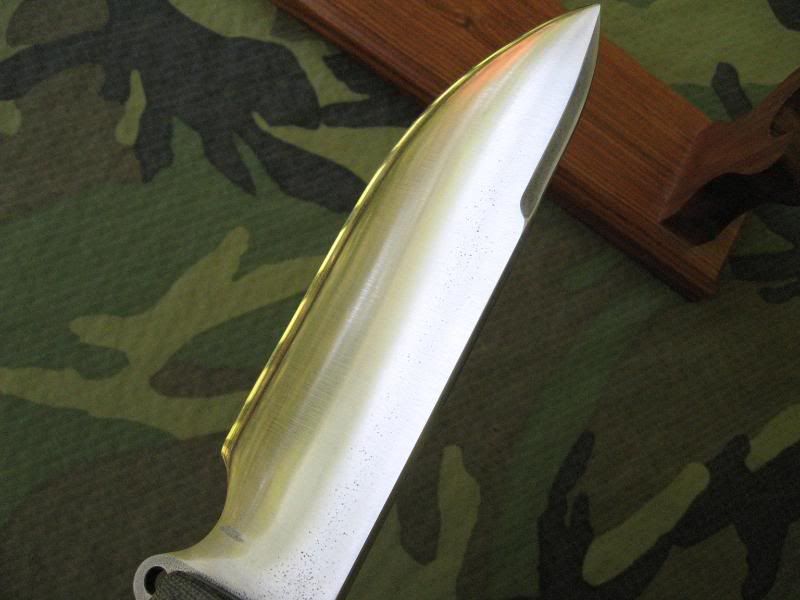
BusseSale013.jpg


If I go through the course of the belts, is the edge going to turn out similar to that? What angle do you generally grind at? I've got a slew of machetes and cheap knives to practice on.
 
I'm interested in how the Grizzly compares to the Harbor Freight 1 x 30 sander.

If you got the 180 grit, 40 micron, 20 micron, and 9 micron belts from leevalley you should be fine for getting nearly mirror polished convex edges. You will also need a leather belt to go on the sander and some white or green compound. I sharpened at about 17 degrees, slightly less than the 20 degree slot on the Sharpmaker to allow for easy touch up in between going to the sander. The bevels will be mirror polished after about 10 passes on each grit. The 180 may take longer to get the scratches out, I didnt try that one, only the finer ones. The edges off the leather will whittle hair and various other tricks.
 
I got -

Sanding Belt,320x
Sanding Belt,220x
1" x 30" SiC Belt, 15 Micron
Honing Compound, 6.0 oz
1" x 30" Belt, Leather

I couldn't find the 40 micron, the 20 micron or the 9 micron belts anywhere on that site. Am I going to be ok with the ones I have posted? I also have a 60 and an 80.

I went with the grizzly sander because I heard HF takes FOREVER to ship so I chose to pay a little bit more and get it right away. There are no HF stores in NH sadly.
 
Those micron sizes are what is written on the belts from leevalley when you get them. The 1200 grit has 9 micron written on it. The 320 has 40 micron written and the other has 20 micron, but I cant remember the grit. I didnt use the 15 micron SiC.
 
Ok gotcha, so I should be all set with what I have ordered? Where would you start to do a full convex reprofile? the 220 or the 80?
 
Don't be afraid of large grits. The biggest problems imo are getting impatient and pushing too hard rather than letting the belt do the work. If I get impatient and push too hard I'll change the angle and overheat the blade.

Easy passes, just concentrating on keeping the angle then immediately dunking in a bucket of icewater and wiping on an old dishrag is how I do it.

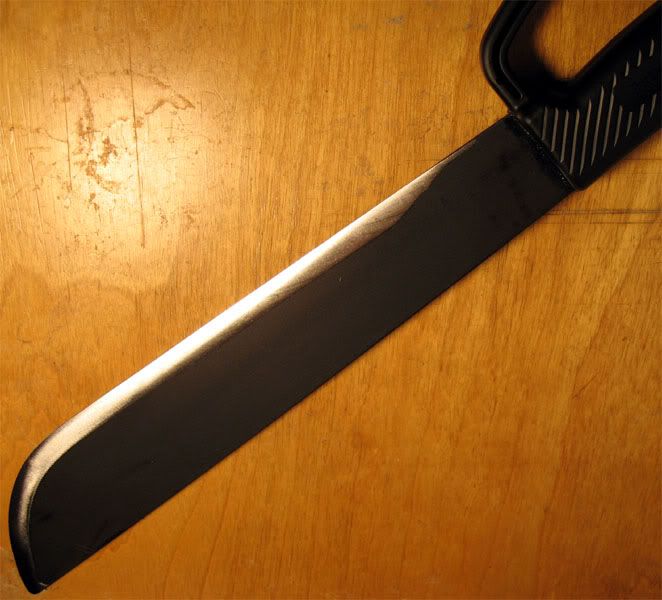
My Ontario machete came with no edge at all. It was so thick it was worse than three butter knives stuck together, and the bevel disappeared halfway up the blade. So, yesterday I carved out a new bevel with a 40 grit blue zirconia, didn't do anything today because of football, but this week will polish it up with 120/320/15 micron/leather with green compound and make a seconday bevel. When I did this to my other choppers they sliced effortlessly and don't chip. I'm sure it will be the same with the Ontario. Here's what she looks like after the 40:

machete9.jpg
 
tn_DSC06350.jpg


tn_DSC06349.jpg


I got that from 120, 320, 600, 1200 grit belts and a leather belt with a .5 micron CrO, I could have went from 120 - 320 - 1200 - strop though
 
The way to do it is practice on cheapo knives first. Belt sanders take a bit of getting used to. For edge work, it will probably cut way faster than you expect it to on a fresh belt. The platen,(metal bit behind the belt that gives it a solid backing) needs to be left a bit loose or even removed on some grinders to give you the slack needed for a good convex edge. On other grinders you can sometimes use the space between the top pully and the platen to the same effect. Use 120 for severely damaged/rebeveling edges and yard tools, then I'd jump straight to a 400+ grit to remove the 120g scratches, and go up from there.
 
A full convex profile, as in from spine to edge? I'd start with 24 grit belts,but that is grinding the knife blade from flat bar stock. If you're just talking about a convex edge, as in the pics above, then 120 might be ok, depending on the knife.
 
Back
Top