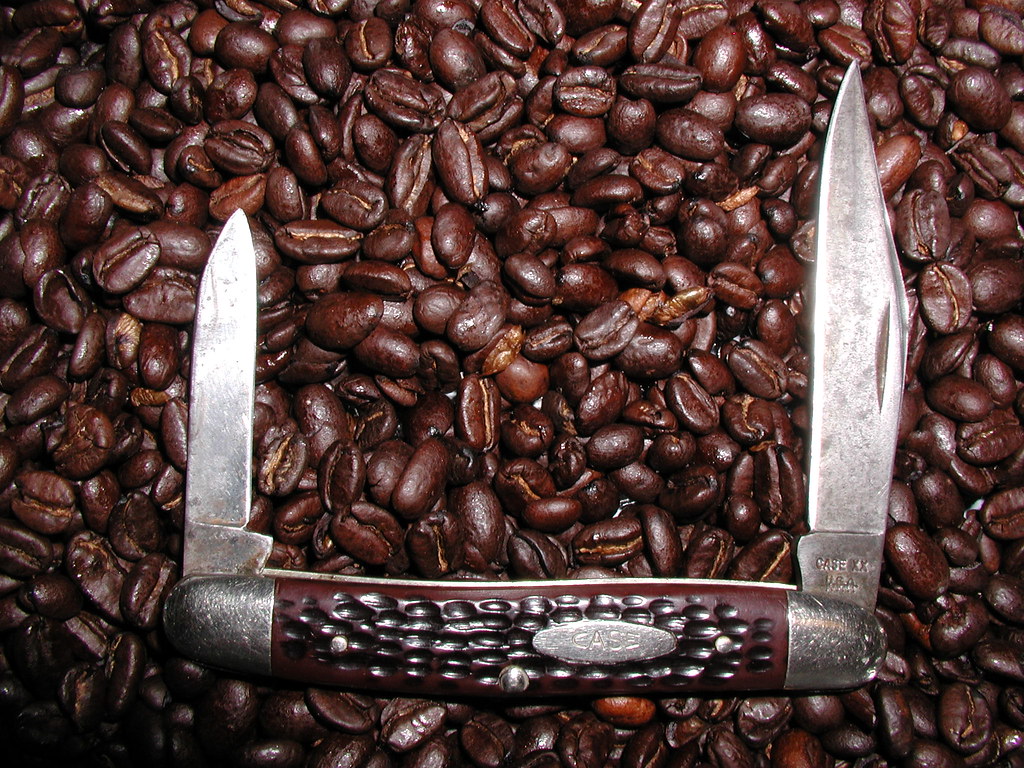
David...I guess I'm OK with Delrin. I guess its really hard to tell bone from synthetic unless your scratch it or burn it?
Delrin is fine, especially on knives of that vintage. Almost classic, so far as I'm concerned. :thumbup:
Scratching or burning will reveal it, although that's obviously a last resort 'test'. Sometimes if you press hard with a thumbnail, you can see some give in the synthetics; might even leave a dent/depression. That'd be almost impossible with bone; it's much harder. A thumbnail will usually just 'skate' across bone, when pressed hard into it.
I think the best way to separate bone from synthetic, is to take a very close (magnified) and brightly lit look at the scales. Any natural materials like bone, stag, wood, ivory, horn, etc., will always show grain and/or pores in the material. Synthetics never will. This lack of grain/pores is what I'm seeing in your second pic, especially in the lighter areas near the edges & bolsters. If you can look directly at the ends/edges of the scales, you'll see 'end grain' in natural materials, whereas with synthetics, it'll always be smooth with no grain or pores. And most of the bone scales I've seen, especially if the bone is highly polished, will show some 'depth' in the material, almost as if encased in glass.
After collecting and/or handling them for a while, you'll begin to recognize either synthetic or natural almost immediately.
Edited to add:
In bone scales, you can often see the 'end grain' or pores more easily, if you look directly into the jigging marks (use a BRIGHT light and a magnifier). Same as if you used a gouge or chisel to carve into wood, you'd see some end grain exposed in doing so.