The Century Chest: Building a Legacy Beyond Gold and Gems

Joined
Jan 21, 2024
Messages
82
Fellow Hogs and Blade Enthusiasts,

We often talk about "investment-grade" knives, but I’ve been reflecting on a different kind of wealth. Imagine, a century from now, a descendant opening a heavy, sealed chest left from his grand-grand-father. Inside, they don’t find the cold, silent glitter of gold or diamonds. Instead, they find the soul of the 21st century: a collection of masterfully crafted blades, preserved in time. Steels that have all retained austenite transformed via long criogenic cycles are as time-proof as diamonds.

To me, a premium knife is the ultimate family heirloom. Unlike a gemstone, which is merely a passive mineral, a high-performance blade is a capsule of human ingenuity. It carries the "spirit of the age"—our mastery over powder metallurgy, deep-cryogenic processing, and the relentless pursuit of the perfect heat treat. It is a tool of survival, a piece of art, and a message of protection sent across the mists of time.

I am currently curating this "family treasure," and my core pieces include legends like the Busse INFI and Swamp Rat CPM-3V. These aren't just knives; they are the pinnacle of what our generation achieved in steel.

However, building a legacy that must last 100+ years raises some technical questions for this knowledgeable community:

Steel & Stability: For a "century-proof" treasure, which models do you consider the most structurally stable? I’m leaning towards the INFI and 3V for their legendary resilience.

Handle Materials: While I love the feel of Respirene-C and Kraton, I worry about polymer degradation over many decades or centuries. Is G-10 or Micarta the only true "eternal" handle, or should I look into skeletonized tangs for the ultimate longevity?

Coated vs. Satin: In a long-term storage scenario (sealed and greased), is a Competition Finish, or Stonewashed blade safer, or does the classic Busse coating provide a critical extra layer of "insurance" against the unpredictable? Could the coating become sticky or brittle after centuries of storage?

The "Verdigris" Factor: I've noticed some oxidation on handle fasteners from my 20 years old ASH-1. What are your tips for ensuring the hardware doesn't outlast (or damage) the scales?

I plan to include a set of diamond plates and a "map" detailing the HRC and chemistry of each blade and the story backing the steel, so that whoever wields them in 2126 knows exactly what kind of "super-steel" they hold. If someone can provide me with the exact chemical formula of INFI, for this intended purpose, it would be highly useful.


I’d love to hear your thoughts. If you were building a chest to be opened three generations from now, what Busse or Kin blade would be the centerpiece?
 
None. Instead a single bar stock of steel, and a hammer.

Along with a flash drive containing every bit of Busse Combat history and its forums. They themselves will forge from the bar stock legends of old, using new 2126 knife making technology.
 
That'd be pretty cool to come across a chest in 2126 and it be filled with bladeware from this era.

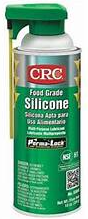
For the steel... I'd probably spray with silicone prior to bagging it.
1770414223419.png
For the handles... Renwax.
or maybe...
1770414454633.png

A member in this forum is working on obtaining chemical composition of INFI through the different generations. Good for mapping/general info... but I don't know if it'd make much difference, as far as what you'd coat blades with.

What models to put in there, oh boy... where to start? First coming to mind are SHBM (original INFI) & Steel Heart 1 (A2 or one of the less than 200 ATS-34).
Looking forward to seeing how this progresses! :D
 
I've had really good luck with Ballistol...be careful with it around leather if if kinda suede-y.

It's also food safe. I wouldn't go making a smoothy with it...but there's that.
 
I have had a couple sitting in Buy Brown kydex sheaths for over 25 years and they are doing great :)

No rust at all.
25 years is nothing compared to my intentions. 😁 Even unstable materials like Kraton can survive that long at room temperature, without loosing their properties.

When we talk about centuries, everything changes, even the steel. Over time, standard carbon steels undergo internal structural changes such as the slow migration of carbon atoms into larger carbide clusters and the gradual relaxation of internal stresses. These processes, combined with the potential transformation of retained austenite, can subtly alter the steel's uniformity and mechanical stability even if oxidative corrosion is perfectly prevented. This is why I am looking for supersteels, which have high purity (e.g. no traces of phosphorus and sulphur), very fine carbide distribution, and very good heat treatment with deep cryo cycles and long tempering (like Busse & Kin).
I definitely like Pittybull's idea of Renaissance Wax. I should probably seal everything, including micarta in such thing. 🤔
Leather, plastics (even thermoplastics).... will change in structure just by beimg stored. G10 and specific types of micarta can survive more without degrading under aging. Leather can also destroy stable steels if blades are stored in contact for decades, due to leather treatment acides.
 
After a long chatting with AI, it appears that M390, Magnacut, and potentially the laminated 3G from Fallkniven have the highest chances to preserve their atomic structure intact, even across mileniums. These are like precious stones that carry a practical utility.

I currently incline towards a Galley Rat. It seems to fulfill nearly all criteria for a centuries-proof knife and, Larrin Thomas's story about Magnacut plusses for a legend that would sound impressive on the paper added to the chest... 🤔
 
Yeah, I will be buried with my SHBM LE. And the casket will be 3ft thick vault of reinforced concrete at 15 under ground. In there will be 3 examples of the greatest fixed blade ever made, the SHBM. And a Note will be attached. Careful, for when these knives are unearthed, all past hogs will come to life to steal them.
 
As for rust, the original INFI formula for the original run of the SHBM, and SHSHII, had two extra percent of alloys, which certainly made it corrosion resistant. Never really had any issues wth it, and I had left them out many times in the rain. Cliff never did either and he did a lot outdoors

pQ4bxdz.jpg


Roon hood took one to the Amazon where it rains more than most places on earth and no worries with corrosion
 
Yeah, I will be buried with my SHBM LE. And the casket will be 3ft thick vault of reinforced concrete at 15 under ground. In there will be 3 examples of the greatest fixed blade ever made, the SHBM. And a Note will be attached. Careful, for when these knives are unearthed, all past hogs will come to life to steal them.
Nuclear Payload hunt… I’m in!🤣
 
If INFI is A8 Mod with 0.2 added Nitrogen (as some people speculate), then it is extremely mileniums-stable as well. Carbo-nitrides formed out of vanadium, molybdenum (without excessive amounts of these two) and with added chromium disolved in solution, theoretically gives a fine and very stable structure assuming good heat treatment as well. But in reality nobody knows what INFI is and all those rumors about its composition are just speculations. This is the reason why I am not considering INFI for this conversation topic (as long as its exact chemical formula is undisclosed, we cannot properly assess its time-proofness).

Corrosion is not an issue (and I am not concerned about it at all), because it can only act as long as the steel surface is exposed to oxigen or water. This is an easy problem to solve for a long-term stored item. What is concerning is the atom migration and difusion inside the steel structure - which cause a steel to loose its mechanical properties in time (and that is only stopped in complex steels that have been fully stabilized via heat treatment). There are many tools from old ages in the museums, which are still not fully consummed by corrosion, even they were left in the soil for thousands of years until found. But they are all brittle and non-usable anymore due to aging. So even not waxed nor oiled during "storage", corrosion still didn't fully consumme them. But they are not as tough, hard, nor mechanically durable as they were during their era, due to atomic migration, difusion, and other "aging" changes which happen normally in standard steels over time.
 
Ha, And Ha... ⚔️
TheTip wrote: "I am not considering INFI for this conversation topic (as long as its exact chemical formula is undisclosed, we cannot properly assess its time-proofness)."

Sorry, Bud, but your logic is faulty.

1) We Don't know the exact chemical composition of India's Iron Pillar either, but its longevity is without peer: "The Iron Pillar of Delhi has been standing for *Over 1,600 Years* - dating back to the Gupta Empire (specifically during the reign of Chandragupta II, c. 375–415 AD). Situated in the Qutb Minar complex, this 6-ton structure is renowned for its resistance to corrosion, having remained rust-free despite over 16 centuries of exposure to the elements."
2) Even knowing "the exact chemical formula" (sic) Doesn't tell you Squat about How the alloys combine to form the Steel nor the intermolecular results After Transversion Wave Tempering recombining those alloys to form Stronger bonds than merely the collection of the elements themselves. The bonding forces result in what's Greater than the sum of its parts = Synergy.
3) This Synergistic effect is apparent to All who Use INFI. The "chemical formula" ≠ the Steel synergistically produced. (That's a Does-Not-Equal Sign, in case the symbol didn't come across when posted.)
4) As evidenced by the Iron Pillar, this is True in other metals as well. David Boye Dendritic Cobalt has virtually nothing to rust or corrode or break down for 10,000 Years. As enduring as his are, and will be, some of us have tested, thus trusted Busse Blades through the decades of our lives, and they've not failed in any time-proof quality, with No signs of any lack of longevity.
5) You started with "INFI & Swamp Rat 3V Steels" in your initial survey (sic: of asking for "models," not steel types), but ending above with "I am not considering INFI for this conversation topic" so What Is Your end game??
Perhaps my suspicious mind perceives a differing motive for Your inquiry than merely "Building a century-proof treasure, that is most structurally stable?" That IS what you started with. Now, you've leveraged the topic to pontificating that without "the chemical formula" that Busse Blades somehow don't live up to your immortal expectations.
This just in: Yes, They Do.
So does the 1,600 years-of-age Iron Pillar in Delhi, nearly 24 feet tall. The One in Dhar was over 40 feet before people broke it.
Just imagine if they had made it of INFI with Transversion Wave Tempering back then. It would still be there, structurally sound, and we wouldn't be having this conversation. 1, 2, 3, 4, 5...
 
Now, you've leveraged the topic to pontificating that without "the chemical formula" that Busse Blades somehow don't live up to your immortal expectations.
I have not stated this. 😂

I eliminated INFI from the discussion to avoid speculation in the absence of objective data. This doesn't mean that I assumed it is not time proof (no way). INFI is a relatively new steel (the concept itself is only decades old), so it did not pass the test of time yet (in the sense of centuries or millenia).

Other steels used by the Busse Company Group still have their heat treat secret. But we can assume at least that it is using cryo cycles to complete the transformation of residual austenite and that they use long enough tempering to relieve internal stress. This has been disclosed by company representatives over the time in many ways. This along with knowing the exact chemical formula is enough to be able to forecast the timeproofness of those steels for centuries long times. For INFI we know similar things about heat treatment, but we don't know the chemical formula. The reverse engineering X-ray test results that some people did against some INFI blades is not sufficient for assuming that we understand the chemical formula. That is just an approximation and may also miss certain elements.
 
Back
Top