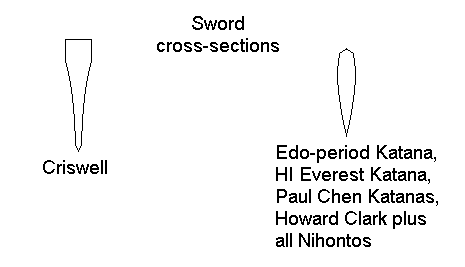
OK, here's why the HI Katana and the other "traditional blade shapes" work so well:
First thing, the total blade heft needed to support the relatively fragile hollow-ground edge of a Criswell will be higher. As long as he uses that hollow-grind, he'll have to back it with extra "beef". He'll get excellent shallow "slicing" performance with that grind, but for real deep cutting, the original shape is a lot like a modern rifle bullet. For similar reasons.
On an original, the spine has that peak because blocks are performed with the spine and with the blade held at about a 45degree angle or a bit less. And the spine is hardened, although not as much as the edge. The core is softer. So while an original may have less actual metal in it's cross-section, the part that you bring to bear against the other guy's edge is of maximum strength.
The first thing Pala (Bill's Nepalese father-in-law and owner of HI) noticed when he saw the original blade was that the spine was hard too. Took him by surprise. I'm not sure they'll be able to duplicate that particular feature in Nepal; if not, the fact that it's 5160 steel should give it decent impact resistance to an enemy's blade edge even if it's unhardened. We won't know about that part until we get one back from Nepal (which will be pretty soon, Bill seemed to think 4/1/00).
Note: so far as I'm aware, the spine on a $400 range Paul Chen isn't hardened either, and that's railroad-track (1086 or similar) steel.
You can see the Criswell's grind the best here:
http://home.earthlink.net/~djoyal/rob4.jpg
For comparison, here's an American smith known for excellent handmade traditional-style blades: Howard Clark
http://www.mvforge.com/ - his best deal IMHO is in tool steel at $35/inch but you don't get a pretty hamon. The HI will be somewhat similar in concept - tough above looks.
Browse Howard's site even if you can't afford his level...lots of good info.
Jim
[This message has been edited by Jim March (edited 02-26-2000).]


 .
.