Buzzbait
Gold Member
- Joined
- Feb 25, 2001
- Messages
- 6,810
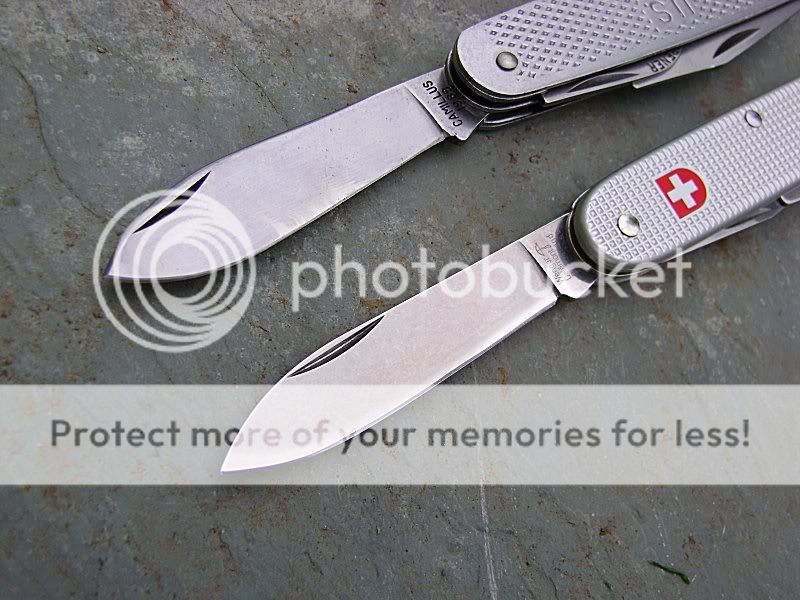
Here is an interesting knife, worthy of a review. This is actually one of the longest lived models in knife history. It is the Camillus model 1760, also known as the DEMO knife. It became US Military issue back in the 1940's, and remained as issue until this century, almost unchanged through that period of time. That's quite a long run for a slipjoint. I was never in the military, but came to know this knife due to a matter of proximity. I grew up in Upstate New York, which was Camillus country. If you went camping in Upstate New York during the last 20 years of the last century, you probably saw as many DEMO knives as you did Swiss Army Knives.
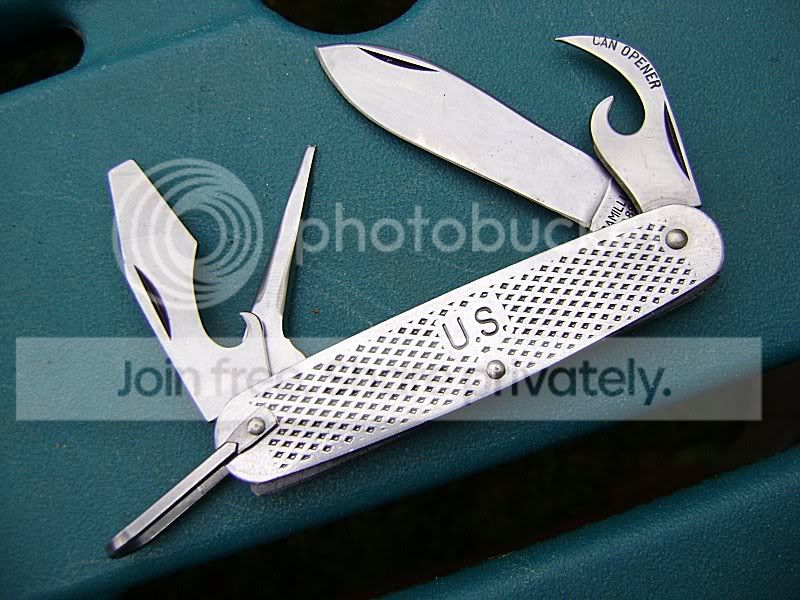
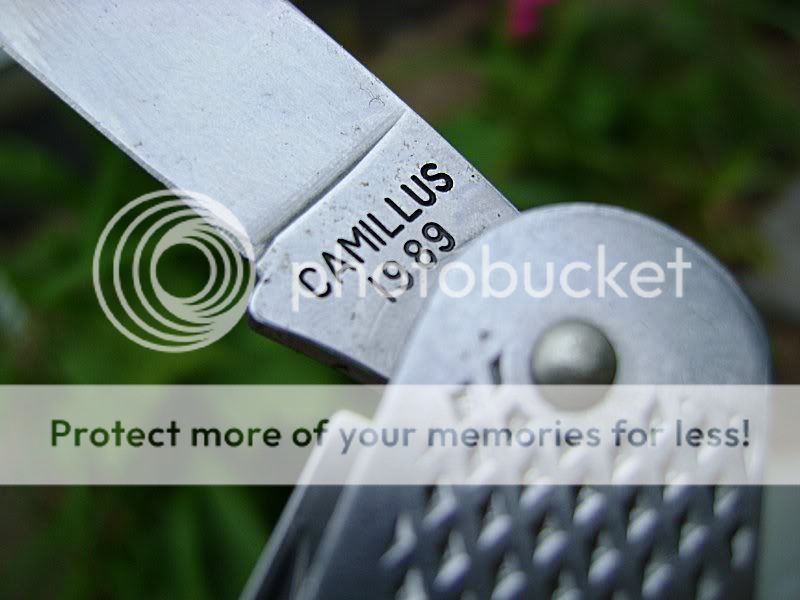
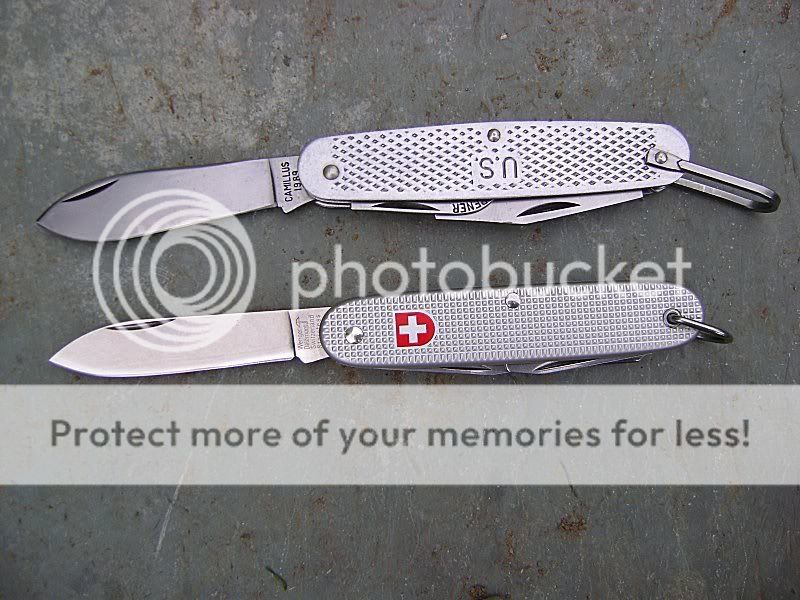
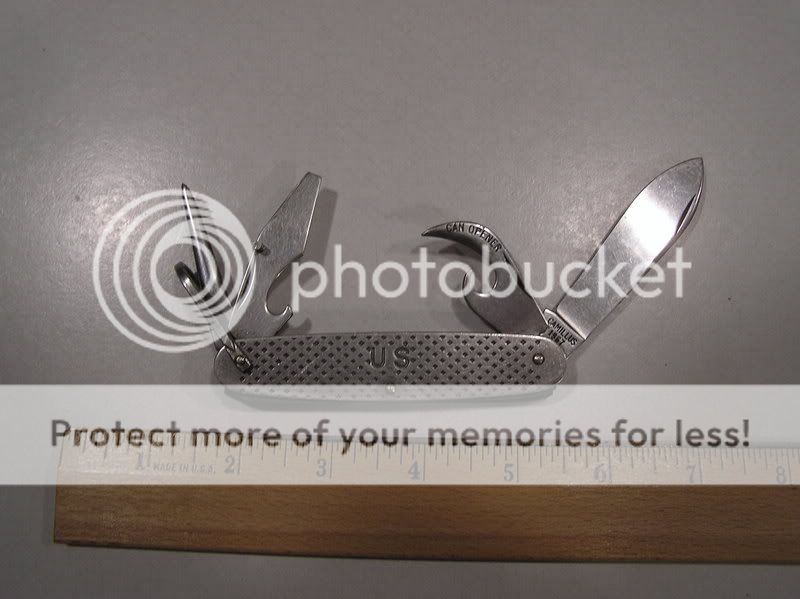
From a slipjoint point of view, I guess that you'd call this a scout or camping pattern. It has the same basic layout as most scout knives. The main blade shares a back spring with an awl. The can opener shares a back spring with a cap lifter. Unlike other scout and Swiss Army knives, the DEMO knife has no bone, plastic, brass or aluminum. It is all stainless steel. This is one tough knife. Probably as close to indestructible as you can find in a slipjoint.
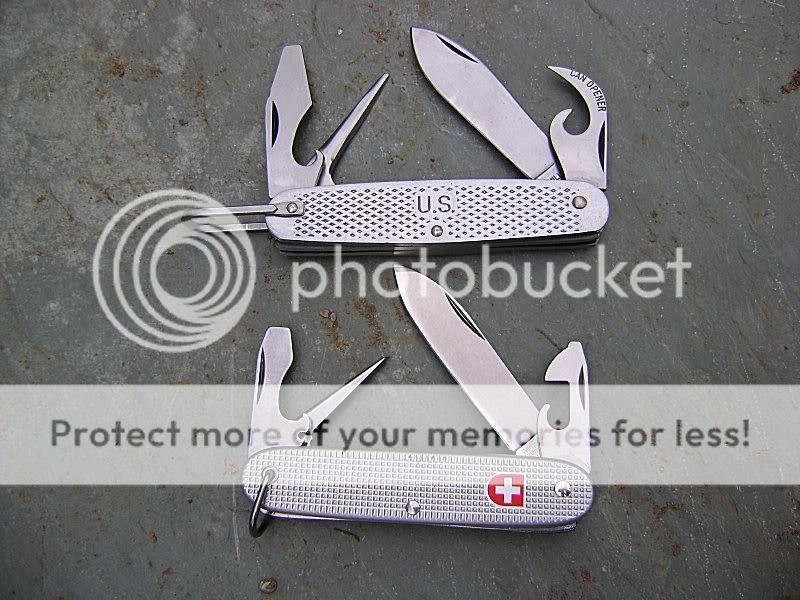
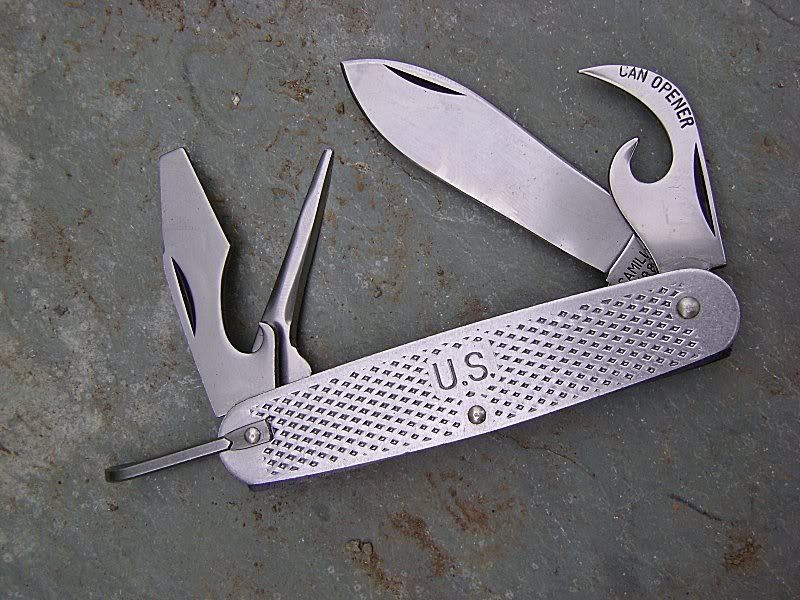
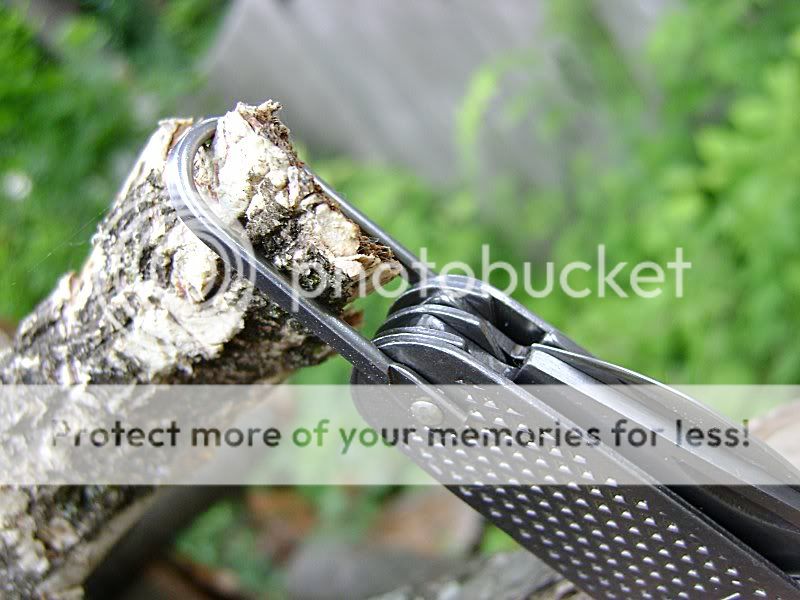
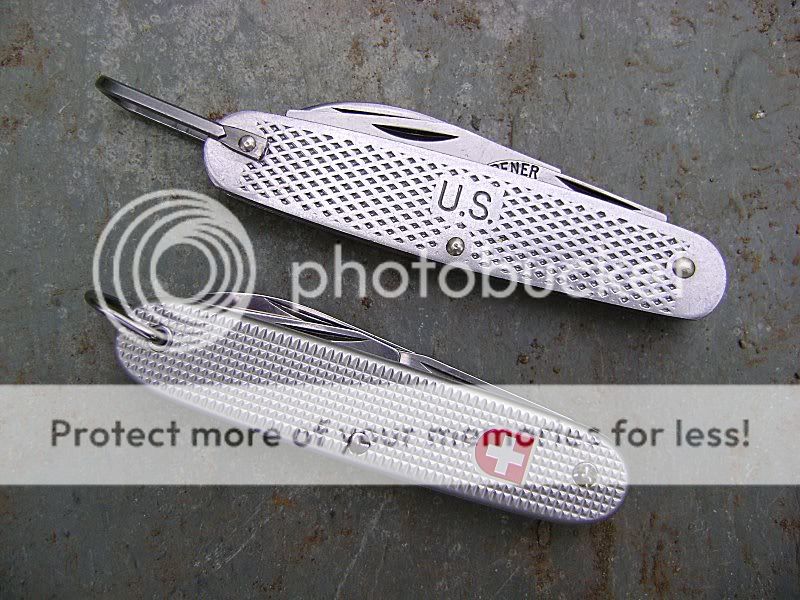
In addition to the stainless steel scales, the DEMO knife does have a few other distinguishing characteristics. Oddly enough, this knife happens to have an extremely long bail. When I say long, I mean approximately twice as long as most every other scout pattern knife. And this bail, like the rest of the knife, is tough as nails. When you tether this knife to a lanyard, you can be confident that the knife will still be tethered when you need it. Unlike some Swiss Army knives, the bail is riveted to the knife, instead of being pressed into the hole of a hollow rivet. The firm riveted construction keeps the bail from flopping around too much, making it far less likely that you'll accidentally close the knife blade on the bail, thus nicking the blade.
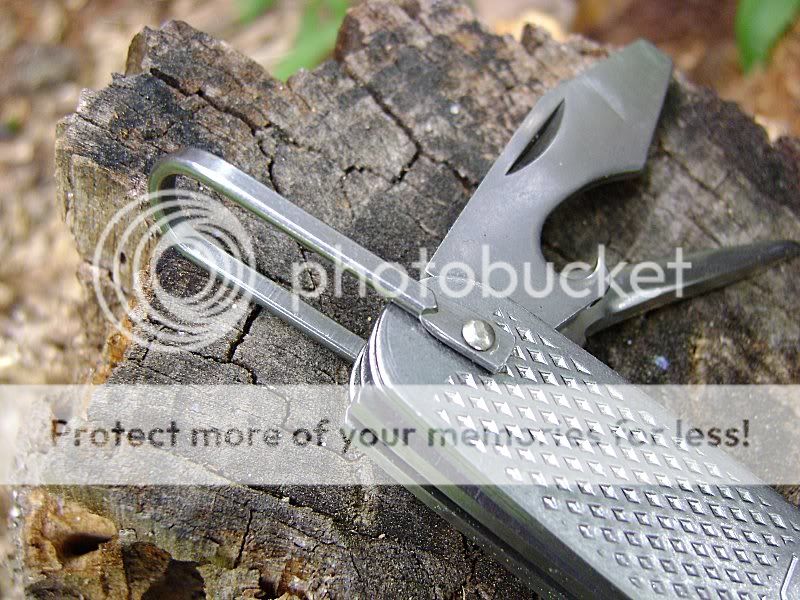
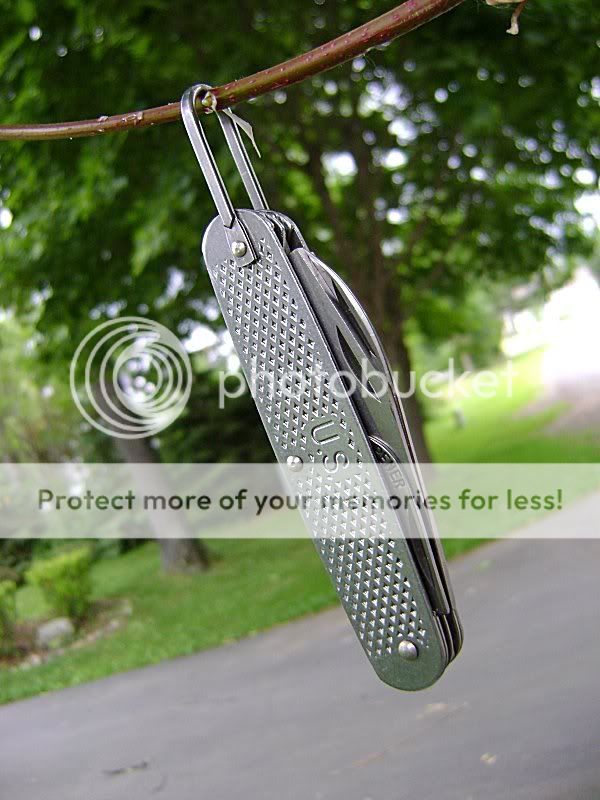
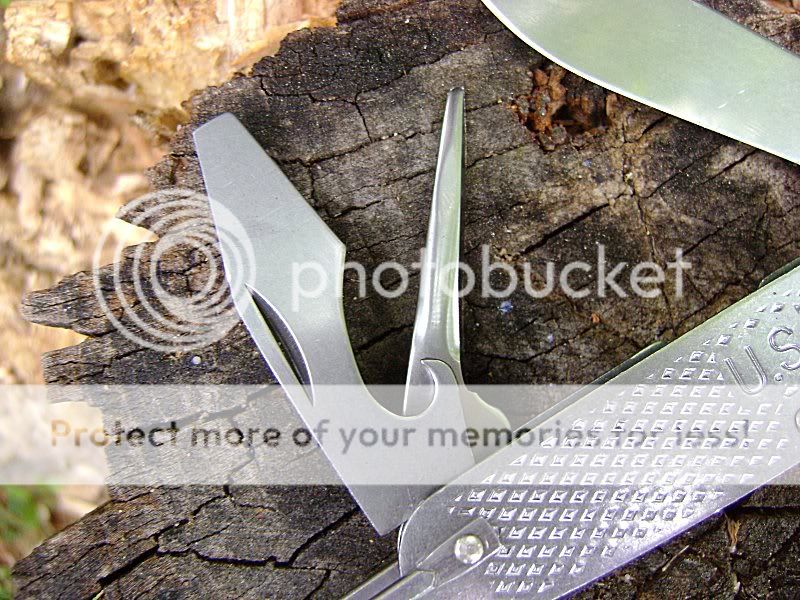
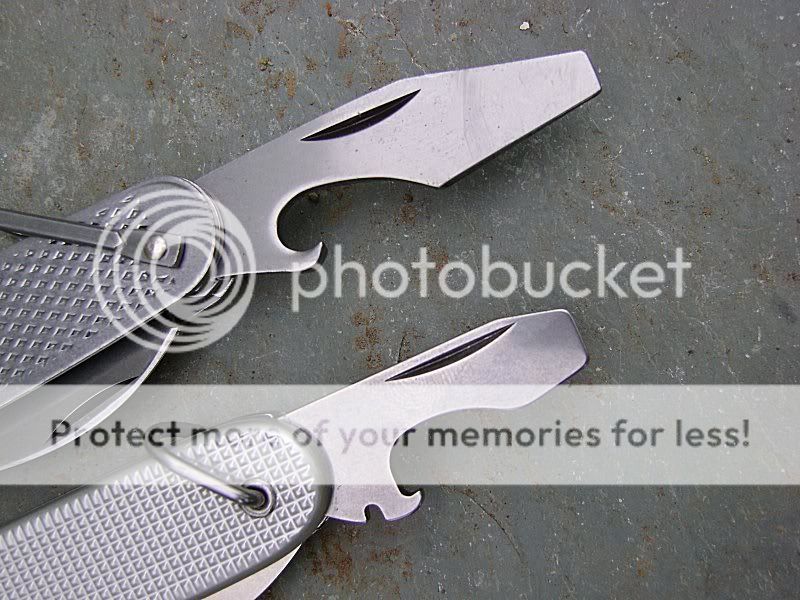
When you need to open a can of baked beans on your next camping trip, you will know exactly what tool to use. The can opener is distinctly labeled CAN OPENER on the DEMO knife. Why only the can opener is labeled is a mystery that only the US Military can answer. Everybody who looks at this knife comments about the odd labeling of the can opener.
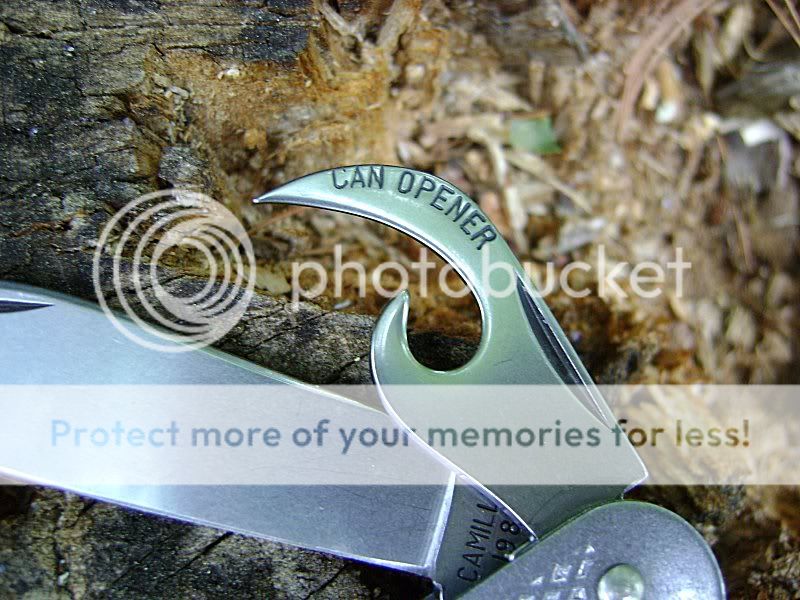
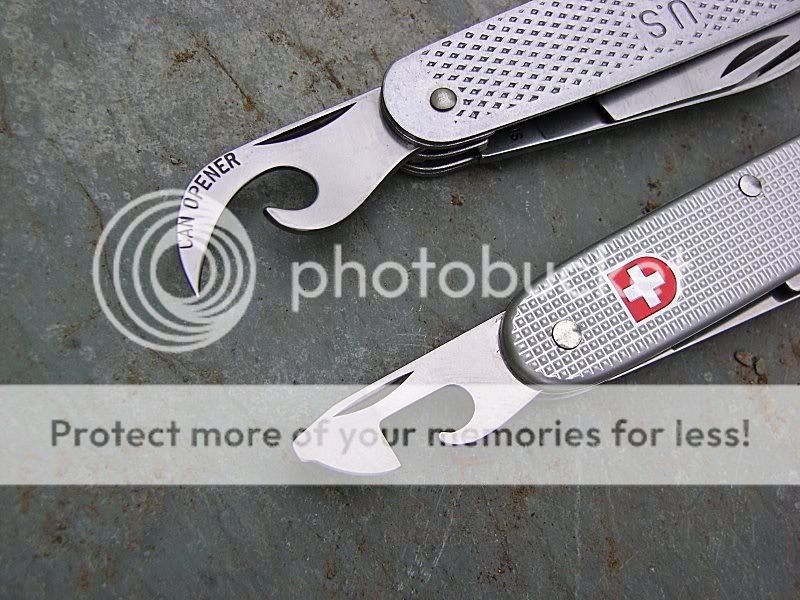
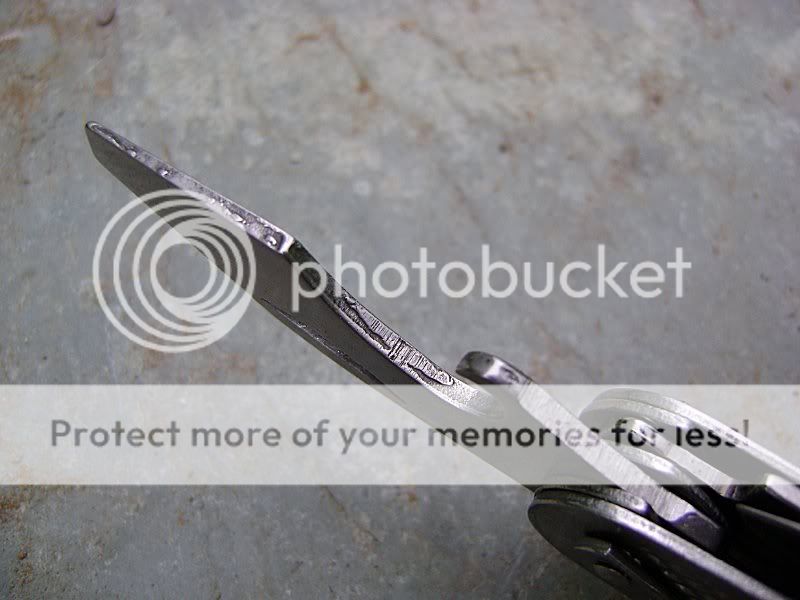
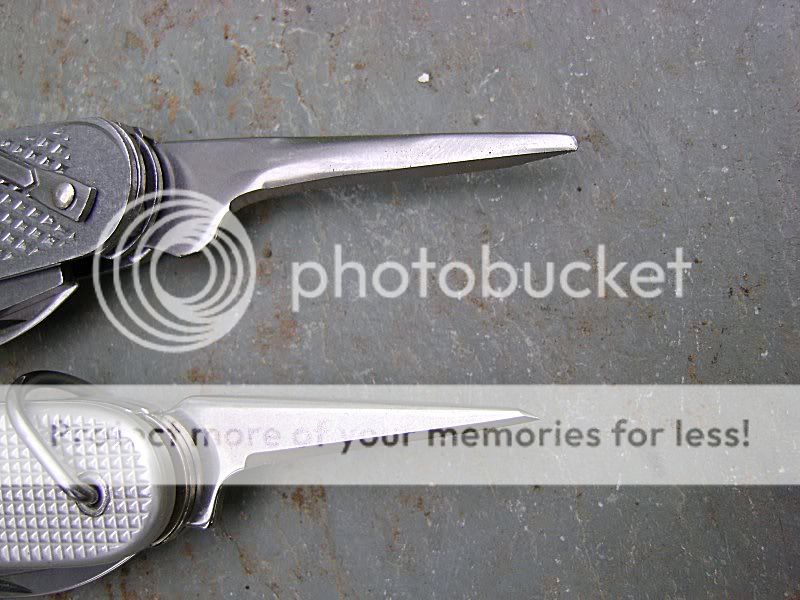
The awl is interesting in that it is not a flat piece of steel, or one with a bend like a Swiss Army knife. The 1760's awl is actually concave on one side, and convex on the other. And for some odd reason, the tip is rounded instead of being pointed.
From a slipjoint point of view, I guess that you'd call this a scout or camping pattern. It has the same basic layout as most scout knives. The main blade shares a back spring with an awl. The can opener shares a back spring with a cap lifter. Unlike other scout and Swiss Army knives, the DEMO knife has no bone, plastic, brass or aluminum. It is all stainless steel. This is one tough knife. Probably as close to indestructible as you can find in a slipjoint.
In addition to the stainless steel scales, the DEMO knife does have a few other distinguishing characteristics. Oddly enough, this knife happens to have an extremely long bail. When I say long, I mean approximately twice as long as most every other scout pattern knife. And this bail, like the rest of the knife, is tough as nails. When you tether this knife to a lanyard, you can be confident that the knife will still be tethered when you need it. Unlike some Swiss Army knives, the bail is riveted to the knife, instead of being pressed into the hole of a hollow rivet. The firm riveted construction keeps the bail from flopping around too much, making it far less likely that you'll accidentally close the knife blade on the bail, thus nicking the blade.
When you need to open a can of baked beans on your next camping trip, you will know exactly what tool to use. The can opener is distinctly labeled CAN OPENER on the DEMO knife. Why only the can opener is labeled is a mystery that only the US Military can answer. Everybody who looks at this knife comments about the odd labeling of the can opener.
The awl is interesting in that it is not a flat piece of steel, or one with a bend like a Swiss Army knife. The 1760's awl is actually concave on one side, and convex on the other. And for some odd reason, the tip is rounded instead of being pointed.