

on_the_edge
Gold Member
- Joined
- Jan 31, 2006
- Messages
- 11,789
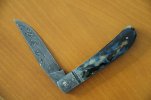
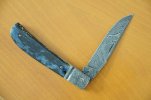
Just about seven years ago now, I commissioned Cliff Parker to make a slip joint for me. I was looking for un-dyed fossilized mammoth ivory scales with a fair amount of blues in them. I also wanted a single damascus clip blade and damascus bolsters. 3-3/4” closed length would be the icing on the cake. What ultimately arrived was a pocket-sized work of art made to my specs and quite rare in that Cliff does not make a lot of slip joints.
For many, the knife might have landed in their safe or a display case—after all, it was expensive, rare, and beautiful. For crazy me, it landed in my pocket though it did not stay there for long because it also spent a fair amount of time in my hand getting used. Yep, I’m weird like that.
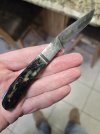
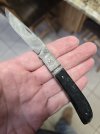
Fast forward to a few days ago when I thought to look back at some of the pics I took of the knife when I first got it. My fading memory and the slow unnoticed changes over time really caught me by surprise (in a good way). Cared for, but not babied, she still takes an incredible edge and is maturing nicely IMHO. I certainly have no complaints.
I thought some folks here might be interested to see the “then and now”.
For many, the knife might have landed in their safe or a display case—after all, it was expensive, rare, and beautiful. For crazy me, it landed in my pocket though it did not stay there for long because it also spent a fair amount of time in my hand getting used. Yep, I’m weird like that.
Fast forward to a few days ago when I thought to look back at some of the pics I took of the knife when I first got it. My fading memory and the slow unnoticed changes over time really caught me by surprise (in a good way). Cared for, but not babied, she still takes an incredible edge and is maturing nicely IMHO. I certainly have no complaints.
I thought some folks here might be interested to see the “then and now”.
