Thick or Thin blade? thoughts please

knife hunter

"Die Hard Hog" Moderator & Dealer
Moderator
Joined
Dec 5, 2007
Messages
11,271
You get the point was being lazy and didn't want to retype..

I don't wanna sound like I am from GA,but I am so:p

Really I understand thin slices better, but the measurements aren't of the edge anyway.

Its the spine!

The backbone of your knife, and maybe your life.

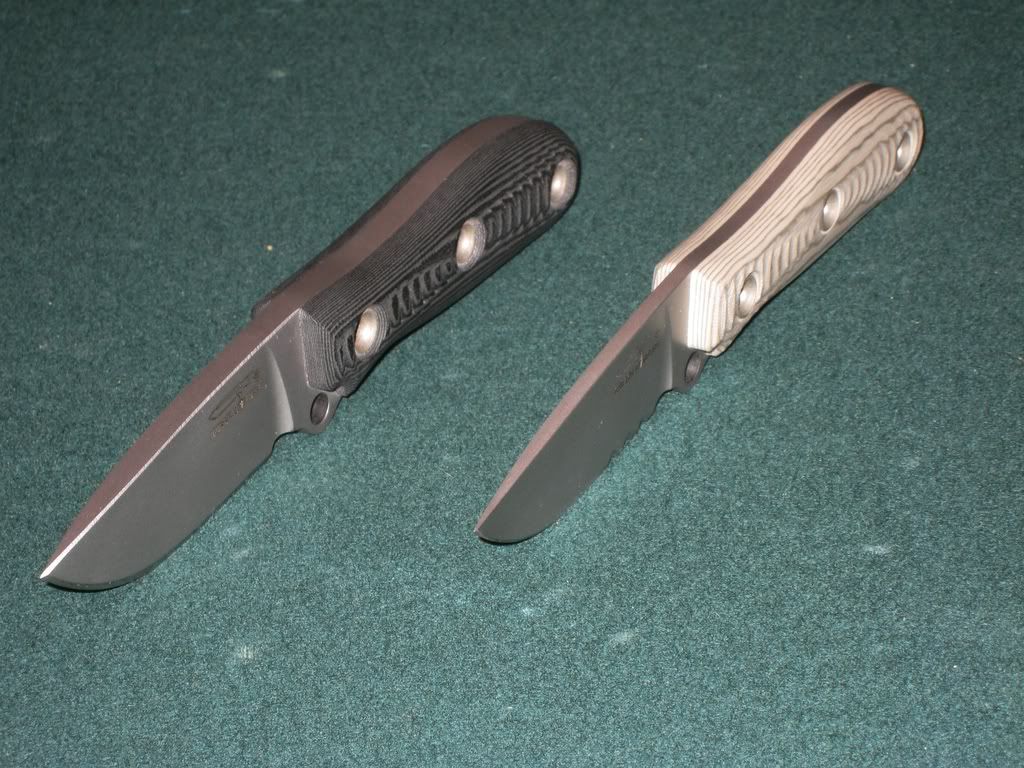
The .270 GW's are scary sharp and feels way better in my hand.

I just think I can do more with more.

Die Hard Hog
 
Make life simple, get both! :thumbup::thumbup:

Wait...

That's in my signature. :D ;) :D
 
Warranty is the same either way, so I would not be afraid of a thinner knife.

Sometimes less is more. For example,

less clothing on a beautiful woman...

less traffic on the way to work...

you get the idea. ;)
 
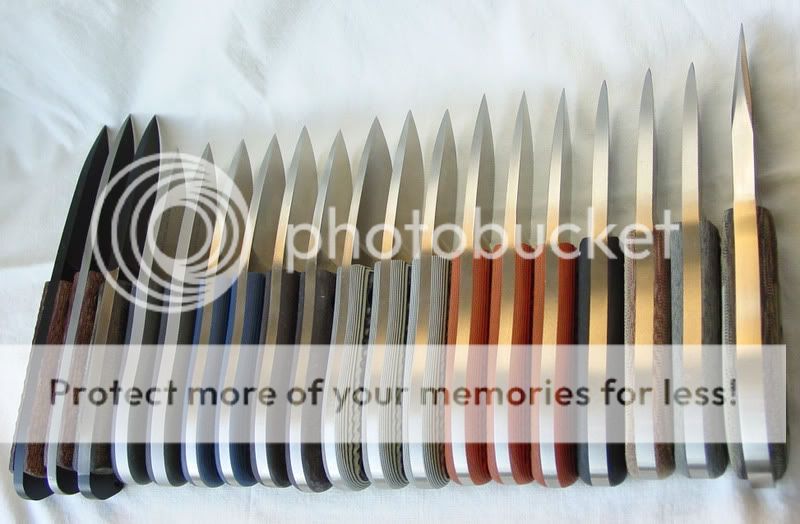
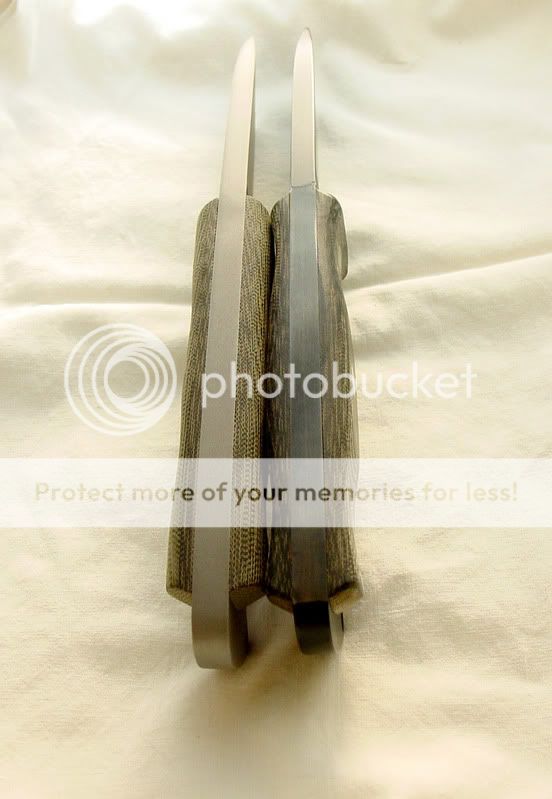
Both serve their purpose depending on application.. Overall I find the thin one more useful, but the fatties are fun to beat the Sh*t out of....

Like what Lunde said, it's good to have both.....
Picture026.jpg
 
The thickness of the spine does have a large effect on cutting, if you intend to cut deep, like slicing an apple or something like that. I prefer the small to medium knives relatively thin - that's to say well under 1/4". The larger knives can be as fat as they want, they're not going to be used for fine cutting anyway. :D
 
A CGFB isn't going to break and it's less than 1/4".

Unless you need the extra heft for chopping, thin wins.

On a small knife, they won't chop either way, I see no advantage to fatties.
 
A CGFB isn't going to break and it's less than 1/4".

Unless you need the extra heft for chopping, thin wins.

On a small knife, they won't chop either way, I see no advantage to fatties.

Don't listen to this propaganda!!! GO FAT!!!!
 
Get as many as you can of both .Everybodys needs are different . Keep what you want trade off the rest . :) :) :)
 
The flip side of the thin argument is that I have pounded my .24 thick MS user through some good sized hunks of wood and at the same time I have not run into an apple or anything else that it would not cut. So I see no advantage to a thin knife that is not as strong... unless it is a kitchen or filet knife.

Also I have never pulled out a .23 to .25 thick 3-4 inch blade and said to myself “gee I had better go get a thinner knife to use for this job”. On the other hand I have put away thin knives to go get more “pork” for the job.

Also Fat is just too cool.:thumbup: :cool:

fat.jpg


newone6.jpg

SHBA8.jpg
 
The flip side of the thin argument is that I have pounded my .24 thick MS user through some good sized hunks of wood and at the same time I have not run into an apple or anything else that it would not cut. So I see no advantage to a thin knife that is not as strong... unless it is a kitchen or filet knife.

I agree with that logic. Fruits/veggies can be a problem with a fatty....but you do mention kitchen duty as an 'exclusion'.
 
Count me in for thin on small to medium knives. Even for the 6" Satin Jack, for example, I prefer 3/16 to 1/4. And 3'16 infi is plenty stout. For knives like the steel heart or battle mistress, with which I'll do a lot of hacking and chopping, frequently on very hard and knotty wood, 1/4 suits me about right. ( A BM much thicker than that may still function just fine, but it may start to get heavier than a lazy old codger like me prefers to carry.)
 
Thin. INFI is strong enough. I prefer 3/16. It is quicker and in a 5-7" blade it is still heavy enough for emergency chopping. Since my users hang from my belt I prefer less weight. I also prefer to cut with my knives not chop. I do have a .25" EU-17 but its full flat grind balances its thickness.
 
The flip side of the thin argument is that I have pounded my .24 thick MS user through some good sized hunks of wood and at the same time I have not run into an apple or anything else that it would not cut. So I see no advantage to a thin knife that is not as strong... unless it is a kitchen or filet knife.


+1!

Just received my second .27 FAT GW... this one's going to my fiancee's Dad.

If I wanted thin, I'd buy a Ginsu. Nothing feels like FAT. :D
 
Easy choice. Get both! There is a time and place for both of them.

If cutting performance is important to you then go thin. Otherwise FAT would be nearly indestructible at the cost of cutting performance.

Cutting performance and strength are inversely related. You can hardly gain from one without sacrificing the other.

I mostly prefer thin because I see my knives as cutting tools...and they should excel in that department.

There are many a times when I had resort to thin cut cleanly through box loads of caulking tube nozzles and to cleanly notch veneer skins, laminated plywood, and solid wood. Trying to make precise cuts on the above with thicker blades will waste a lot of time and energy.
 
Easy choice. Get both! There is a time and place for both of them.

If cutting performance is important to you then go thin. Otherwise FAT would be nearly indestructible at the cost of cutting performance.

Cutting performance and strength are inversely related. You can hardly gain from one without sacrificing the other.

I mostly prefer thin because I see my knives as cutting tools...and they should excel in that department.

There are many a times when I had resort to thin cut cleanly through box loads of caulking tube nozzles and to cleanly notch veneer skins, laminated plywood, and solid wood. Trying to make precise cuts on the above with thicker blades will waste a lot of time and energy.

+1 agreed!!:thumbup:
 
I vote for getting both..you will have the best of both worlds..a good slicer and something you can beat the heck out of.
 
As a butcher I get to see first hand what thin, sharp knives do to meat products, and I've also had a chance to use my AD at work, which is not that fat.

For my applications, the AD did a reasonable job of boning out a pork loin, but my thin butcher knife would have done the job in half the time, with a better product in the end as well. I find that thick blades have a lot less agility when you are half way through something.

I also used the AD in the kitchen a couple of times, carrots cut a little then just split. most veggies just split. Even used my butcher knives at home and they are a little thick for hard items such as carrots etc.

For non food items I don't care what it is, the AD works great, and has got to be my favorite small fixed blade. Saying that I only own one small Busse so it may change with my collection. I have no hangups about fat, I just want thin for food/meat prep.

 
Wow. looks like a xxxl nick would be perfect for you.:thumbup:


As a butcher I get to see first hand what thin, sharp knives do to meat products, and I've also had a chance to use my AD at work, which is not that fat.

For my applications, the AD did a reasonable job of boning out a pork loin, but my thin butcher knife would have done the job in half the time, with a better product in the end as well. I find that thick blades have a lot less agility when you are half way through something.

I also used the AD in the kitchen a couple of times, carrots cut a little then just split. most veggies just split. Even used my butcher knives at home and they are a little thick for hard items such as carrots etc.

For non food items I don't care what it is, the AD works great, and has got to be my favorite small fixed blade. Saying that I only own one small Busse so it may change with my collection. I have no hangups about fat, I just want thin for food/meat prep.

 
Back
Top