Thumb stud as part of the locking mechanism

Joined
Mar 3, 2011
Messages
95
I've seen a couple of folding knives that use the thumb stud as part of the locking mechanism in order to prevent the blade from moving up any further after it is deployed.

For example;
images


I have stayed away from blades that use this sort of feature involving the thumb stud for this process, because i feared in time that the thumb stud would get loose from it flying into the frame to prevent the blade from moving up any further, or the thumb stud would fall off.

Is this really something I should worry about, or is it more of a problem for cheaply made knives?
 
I have never seen this happen in any knife, cheap or expensive. You definitely do not need to worry about it with that strider
 
I wouldn't worry about that and even if it did happen, rare as it may be, the MFG's who use that sort of stop pin method are almost always those who will fix it without any problem.

I actually prefer the thumbstud stop pin method over a stop pin between the scales by a long shot.

All my favorite knives utilize this method of blade stop, Umnumzaan, ZT in the 055x and 056x series and Strider. These are the bulk of my favorite productions knives right now and they all utilize the same type of blade stop.
 
I actually prefer the thumbstud stop pin method over a stop pin between the scales by a long shot.

Me too, I don't know if it is just my imagination but I think it decreases bladeplay because there are two objects, one preventing left sided wobble, and one preventing right sided wobble, instead of the pivot trying to squeeze the liners together
 
I have a bunch of knives with this setup and haven't run into any problems or seen any damage. Even knives with assisted opening or flippers don't seem to be affected by the repeated smashing into the frame.

I do have a knife made by DDR that has a stop pin milled onto the blade, while it appears that the studs are the only thing stopping the blade, the hidden pin rides in a semi - circular channel near the pivot and acts as another stop. I didn't know about it until I took the knife apart.

I think the Strider SnG is made so the G10 side stops the blade and not the titanium side.
 
I think it's a more solid method of stopping the blade and may possibly handle the forces easier than a thinner pin between Ti and G10 or whatever the scales are made out of.

Keep in mind that many Striders only make lock up contact on the Ti side and it still works pretty good that way too.

All in all though, without being a knife making expert, I just feel like the thumbstud stop pin is stronger and more solid over all :)

Me too, I don't know if it is just my imagination but I think it decreases bladeplay because there are two objects, one preventing left sided wobble, and one preventing right sided wobble, instead of the pivot trying to squeeze the liners together
 
Last edited:
Jim Burke uses a similar method to stop the blade as well ;)

I do have a knife made by DDR that has a stop pin milled onto the blade, while it appears that the studs are the only thing stopping the blade, the hidden pin rides in a semi - circular channel near the pivot and acts as another stop. I didn't know about it until I took the knife apart.
 
I have never seen this happen in any knife, cheap or expensive. You definitely do not need to worry about it with that strider

There are two instances of that happening with a Strider mentioned on this page: http://www.bladeforums.com/forums/showthread.php/904347-Strider-SNG-being-overpriced/page2

I've heard of it happening elsewhere, too. There's a picture floating around of one with a cracked blade because the stop pin was set incorrectly. OP, you shouldn't have a problem with a well-made knife, as this happens very rarely, but Striders are notorious for problems like these. I'd put more trust into a $50 Kershaw or something like that based on Strider's track record.
 
I think that is called a "floating" stop pin. The Kershaw JYDII has one also. Without the stop pin inside the top area of the handle's, it allows the knife blade to be done in some different ways.
 
I prefer thumbstud stop pins myself for many of the reasons already mentioned in this thread.
 
I wouldn't worry about it. If you're using a folder that hard you should be using a fixed blade or a tool designed for the job. The only flaw that I found with the thubstud blade stop is when wearing gloves. Sometimes the fabric gets pinched between the thubstud and scale.
 
I appreciate everyone who took the time to type out a message and give their input to this thread. I wasn't concerned with the thumb stud on the Strider, but just the thumb studs on any folder that uses this type of mechanism.

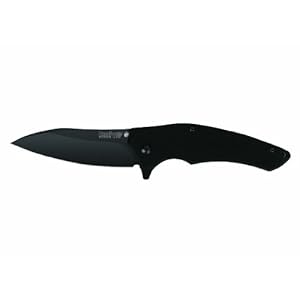
I was asking because I was considering on getting this Kershaw knife that uses this thumb stud locking mechanism. The Kershaw Turbulence.

31pZsQVCmvL._SL500_AA300_.jpg


From what everyone has said, I feel like I made a good choice with the knife I picked.
 
There are two instances of that happening with a Strider mentioned on this page: http://www.bladeforums.com/forums/showthread.php/904347-Strider-SNG-being-overpriced/page2

I've heard of it happening elsewhere, too. There's a picture floating around of one with a cracked blade because the stop pin was set incorrectly. OP, you shouldn't have a problem with a well-made knife, as this happens very rarely, but Striders are notorious for problems like these. I'd put more trust into a $50 Kershaw or something like that based on Strider's track record.

Hmm.

Could that just be a lemon? I can't find something majorly structurally wrong with the design..
 
Hmm.

Could that just be a lemon? I can't find something majorly structurally wrong with the design..

I think it's just the attention to detail while manufacturing the knife. With Striders, the precision isn't where it should be for the price IMO. Sure, a larger company can invest in better tools to make this issue less likely, but there are plenty of smaller companies in the same price range who keep the quality more consistent.
 
Back
Top