Tips for improving blade performance?

Joined
Aug 9, 2015
Messages
46
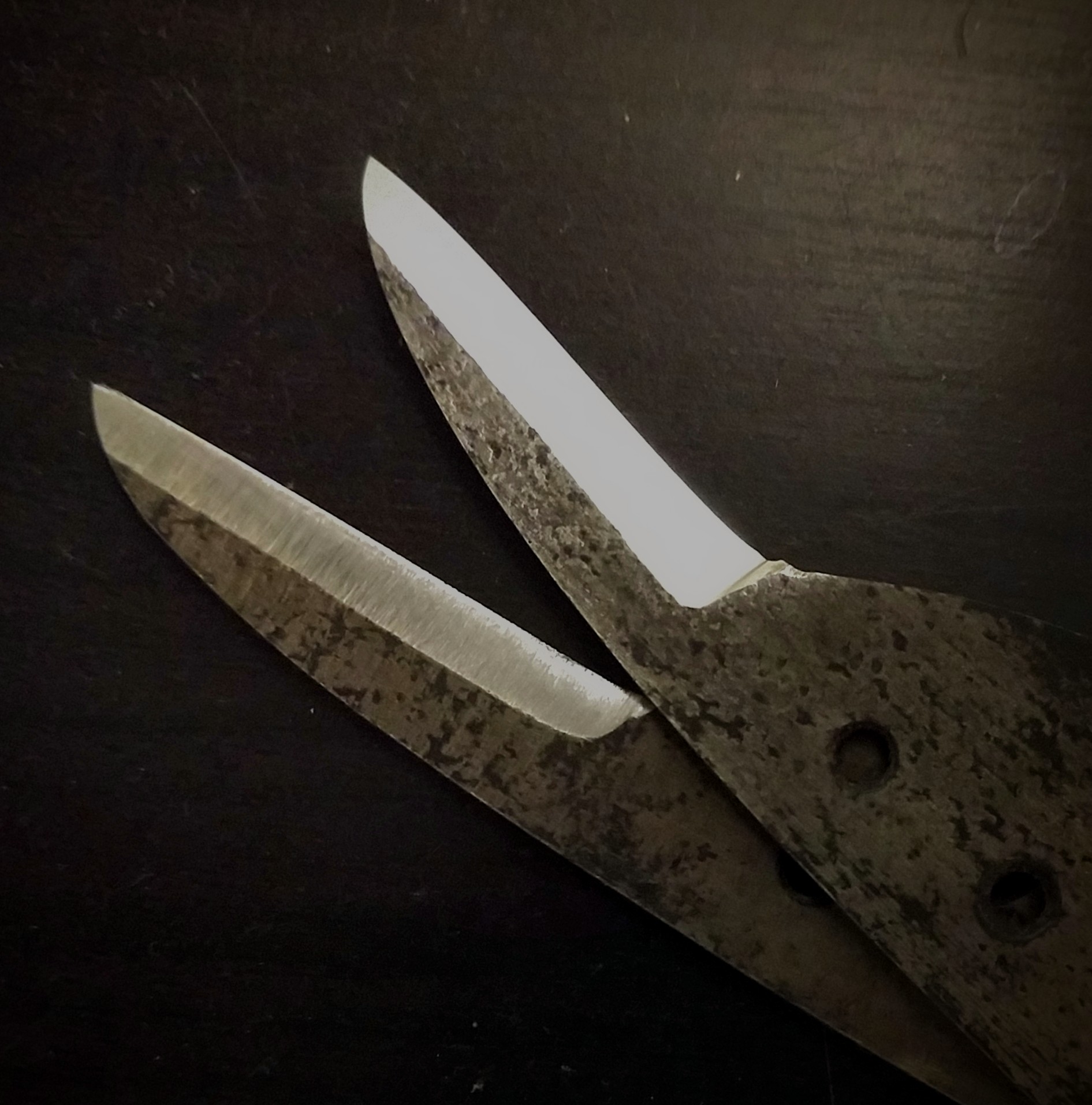
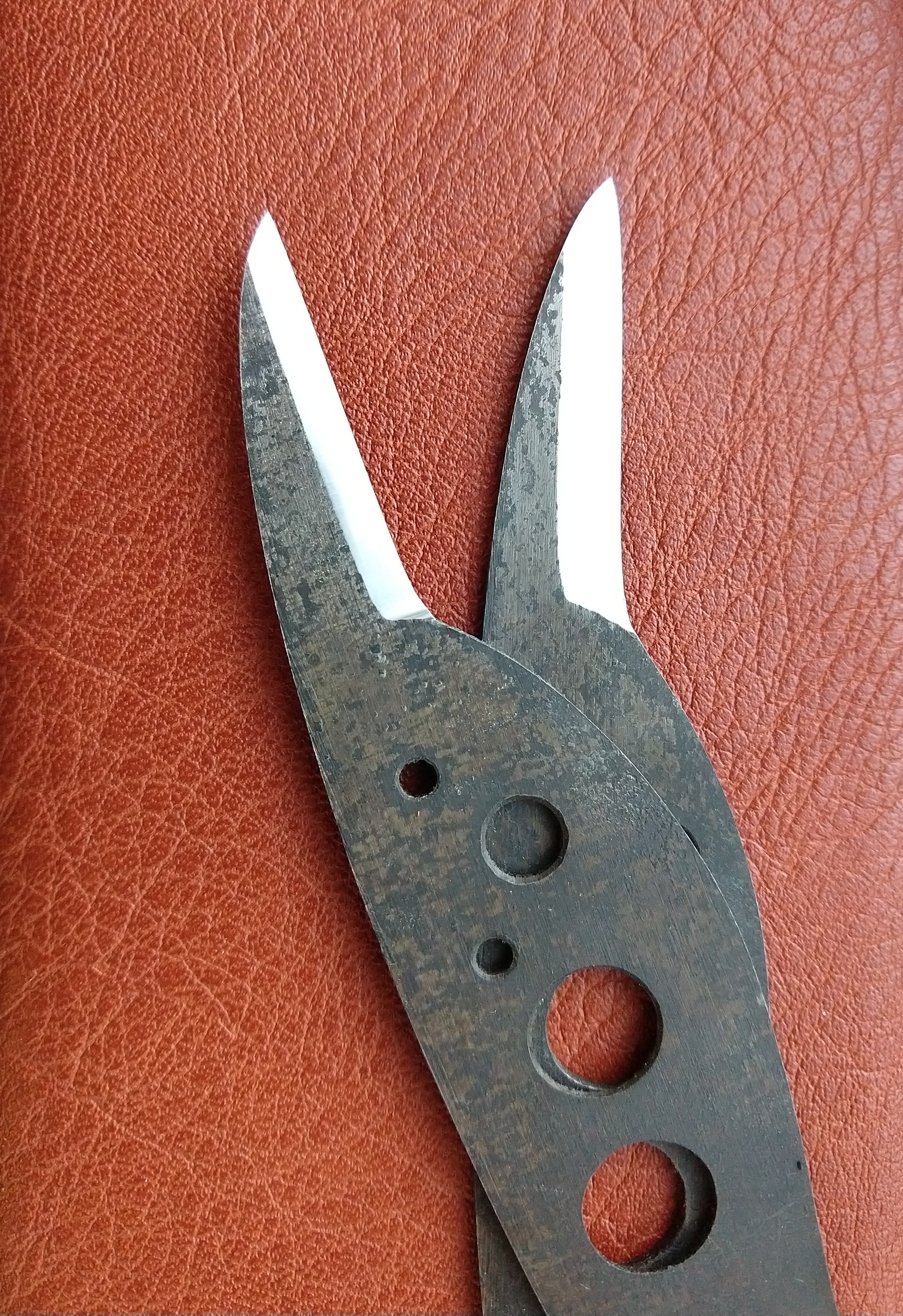
Recently I've been fine tuning my whittling knives. As my grinding improved, I started to make them thinner and thinner. Unfortunately, I started having problems with edge damage because they were just too thin.

Yesterday, I finished these two edges. The bottom one is finished with a zero grind at 8 degrees per side. They are both O-1 at about RC60.

The knife cuts soft basswood like a laser. But when I tried it on the hard end-grain corner of a piece of walnut it suffered some minor edge damage (not shown- resharpened).

I ground the next one at 10 degrees per side. This one didn't suffer edge damage, but it wasn't a laser either.

Any tips on how I can improve the edge performance while still keeping the cutting ability?
uO2aXMc.jpg
 
Recently I've been fine tuning my whittling knives. As my grinding improved, I started to make them thinner and thinner. Unfortunately, I started having problems with edge damage because they were just too thin.

Yesterday, I finished these two edges. The bottom one is finished with a zero grind at 8 degrees per side. They are both O-1 at about RC60.

The knife cuts soft basswood like a laser. But when I tried it on the hard end-grain corner of a piece of walnut it suffered some minor edge damage (not shown- resharpened).

I ground the next one at 10 degrees per side. This one didn't suffer edge damage, but it wasn't a laser either.

Any tips on how I can improve the edge performance while still keeping the cutting ability?
uO2aXMc.jpg
Micro bevel?
 
For the thinner, that suffered edge damage, set a secondary bevel at just slightly steeper angle, try the same wood again, and see...repeat till no edge damage.

For the thicker grind, try thinning the primary a bit but keeping a slightly steeper secondary angle.

Having the primary grind at a shallower angle and slightly increasing the edge angle seems like the way to address that issue. Since you made them and are testing them, you can likely answer the question better on what works.
 
sometimes there is some low-hanging fruit in the heat treat. I don't know your set up but it's possible that a different alloy or heat treat might work better. O1 needs a long soak at precise temperatures to get the best edge stability.
 
If the HT is right, O-1 edges hold up pretty good at low angles.

I would do the FFG and convex the edge. A 12DPS microbevel will also make a stronger edge.
 
Why not just have basswood knives and tupelo/mahogany/butternut knives? Super low angle for basswood, 20 degrees for everything else. Given that you are making them, why not have a selection?

BTW, totally agree on the higher hardness. Woodworking tools made by big companies are intentionally run soft for increased toughness and for idiots that use $90 chisels to open paint cans. True story.
 
Why not just have basswood knives and tupelo/mahogany/butternut knives? Super low angle for basswood, 20 degrees for everything else. Given that you are making them, why not have a selection?

BTW, totally agree on the higher hardness. Woodworking tools made by big companies are intentionally run soft for increased toughness and for idiots that use $90 chisels to open paint cans. True story.

Yup, this is why japanese kitchen knives are typically Rc63+, while others are Rc60 and less. You need the strength (hardness) to support a fine edge.
 
Thank you everyone for the good ideas!

I am going to play around some more tomorrow. I think I will try heat treating the knives again - I still have four new ones to play around with. This time I won't temper them back as much.

Also, I will play around with some micro- bevels. I tried it a bit and was not happy with them, but I was not very exact in my testing.

I'm pretty sure my heat treat is OK. I use a Paragon with a 15 min soak. I do wonder how opening and closing the door affects the blade. I usually load about 8 at a time. Usually the temp is back up to 1480 by the time one blade is quenched and the next is ready to come out. The tips are back in the oven and don't seem to darken much when I open the door to pull a blade out.

Finally, I've considered different steel. I hope to give A2 a try eventually, and will probably try 15n20 next month.

Ben
 
The evolution of knife hardness has largely come about due to better HT, better steel choices and quality, and better understanding of metallurgy and physics.

For many years I made all my knives Rc 58-59. I thought they were great, and so did the people who used them. Then I moved up to Rc 60-61 when I started doing more kitchen knives, I discovered that all my blades did better at the higher hardness. Now, I do sone fine edge kitchen blades in high carbon steel at Rc 63-64. If someone chops hard stuff or uses the knife as a boning knife, the edge will chip. Otherwise it lasts and lasts.
When I look back at some of my early blades, they were dull axes compared to my current ones. It is rare I use thicker steel than .100" and mostly I use .060". I used to do the old standard 20DPS on blades and now I do 10-12DPS. FFG to near zero is also the norm.
 
b7GAyVj.jpg


I've started the next round of testing. This time I tempered the O-1 at 350 degrees instead of 425. I shapened at 10 degrees per side -zero grind.

This time the edge held up much better on the walnut. I gave the knife a much harder workout and it only suffered some very minor damage that easily stropped out in just a minute. I had no problems with the tip, but I didn't try to break it either. That was my worry with making a harder blade.

I ground the bevel on the next blade. This time I'm going to try 9 degrees per side and see how it goes.
b7GAyVj
 
Good stuff! I am going to make some carving knives from O1, so this is great info.

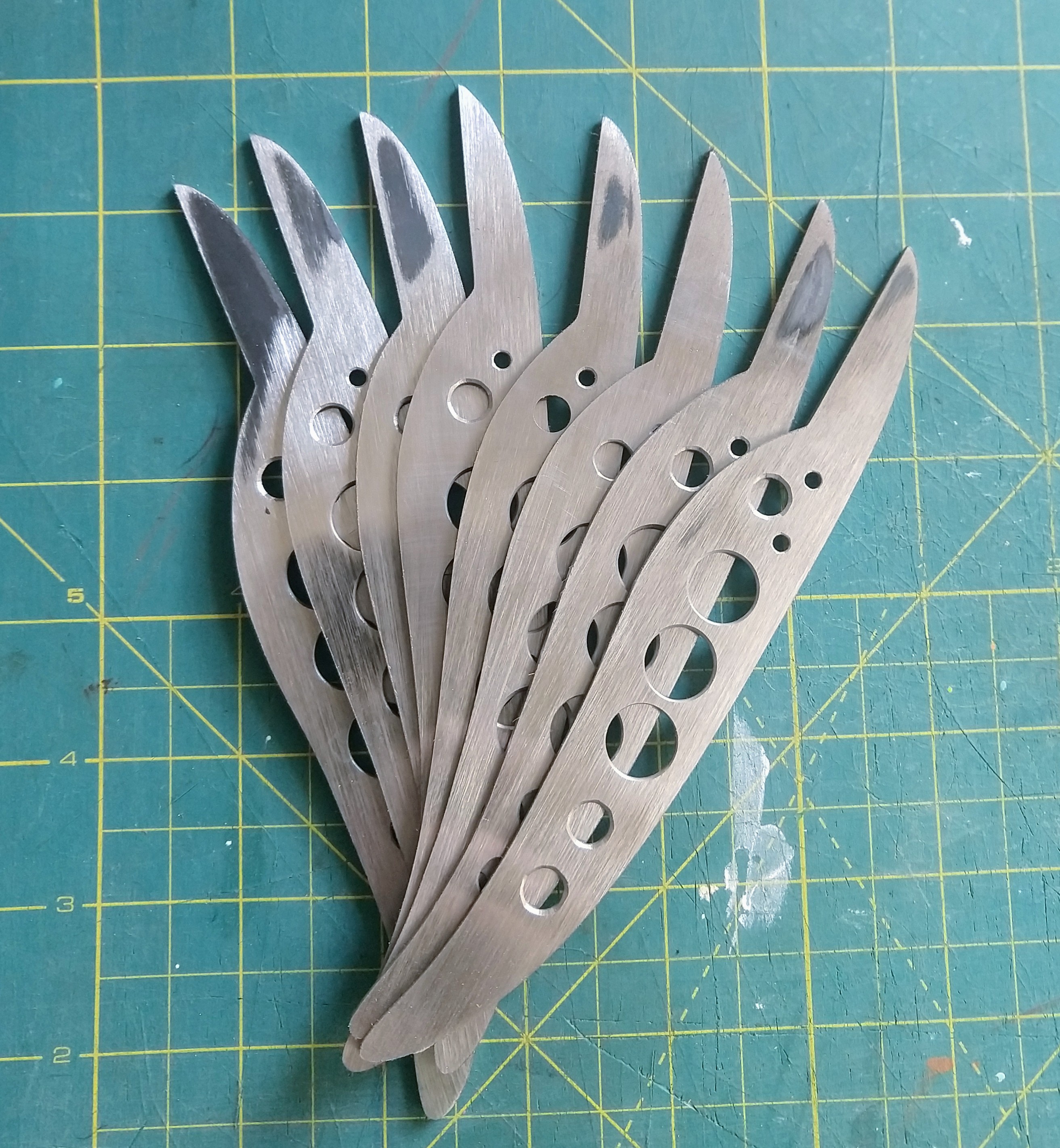
Is there a reason you made them full tang?
 
Is there a reason you made them full tang?

Yes! Because I can't seem to drill a straight hole and the broach I made didn't work so well. I actually do like the feel of the extra weight. These are .060" with tapered tangs so really not that heavy. I also did some with a G-10 spacer with a built up frame that were nice.

Ben
 
How are your knives performing now? Have you made any more? Although I don't use them on wood, O1 at Rc64-65(temper at 300F) works great in the kitchen.
 
Use 52100, it's tougher than O1. And can be run harder to take a thinner edge and cut better.
 
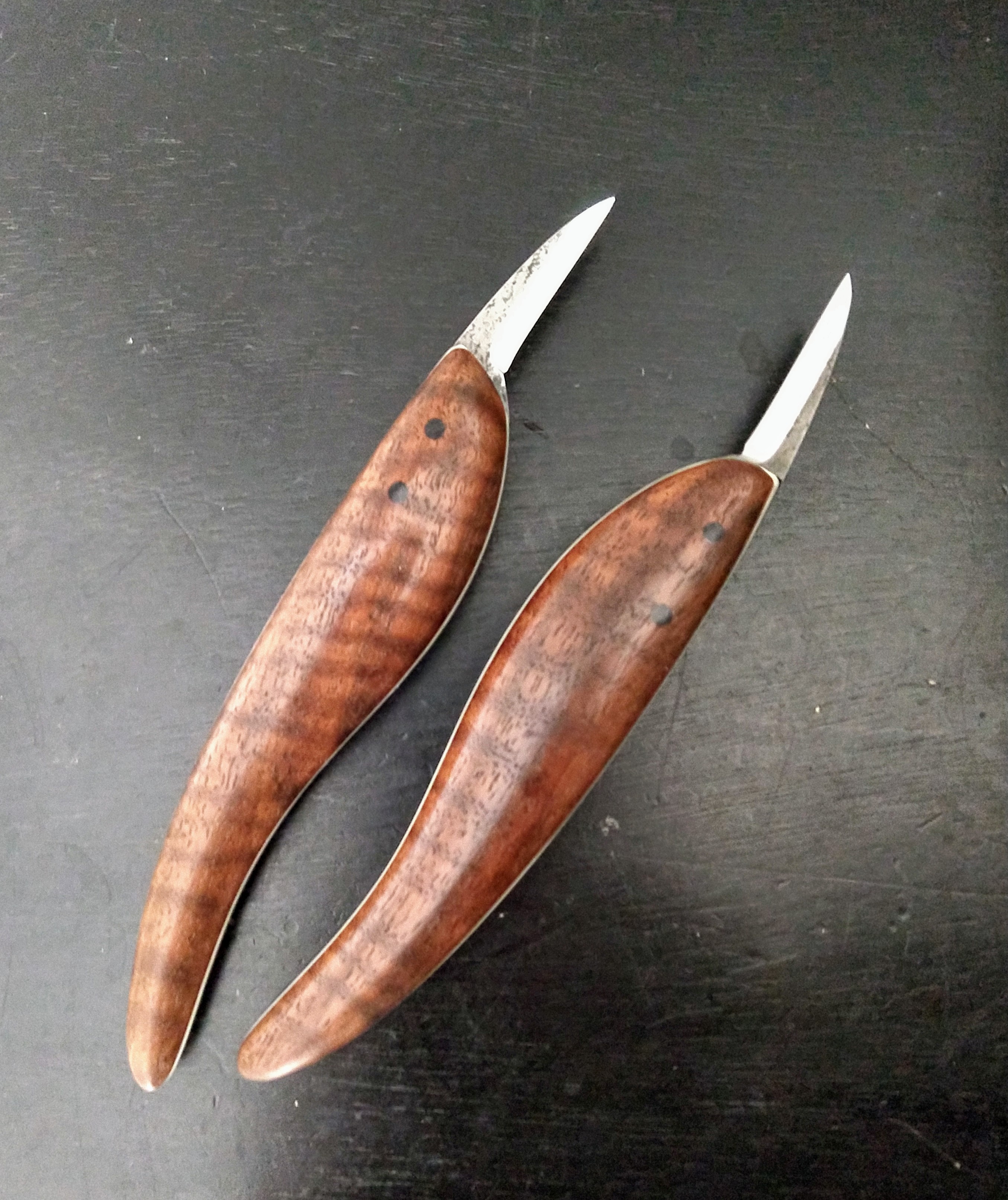
I've finished a couple more and have another 6 blades just about done. I think that the problems with edge stability were really due to a little bit of Burr left on part of the edge. I made a new strop and worked in improving my technique and things seem better now.
8yTR3lk.jpg


Fu95BnS.jpg
 
I like that style. When I was a serious woodcarver I used quite a few styles and the ones with a good palm swell were best. I hate the "stick with a blade" type they sell through the carvings suppliers today.
 
Back
Top