
Truoil

torqueguy

Pocket Puukko
Joined
Oct 19, 2007
Messages
234
Can’t say enough about Truoil. Birchwood Casey product, using it for 50 years. Its a secret mix of linseed oil, turpentine, shellac and whatnot. Cheap, little lasts forever.

Internet says Beretta uses it on their high grade guns. This is 6th coat on amboyna burl. Really nice stuff. Soaked it in 50/50 truoil spirits with a dash of laquerthinner for flavor. Let it soak until it weeps. Then keep wiping with clean towel until it sheens over. 6 hours in the sun will get it ready for a quick buff with maroon pad, then 7th coat
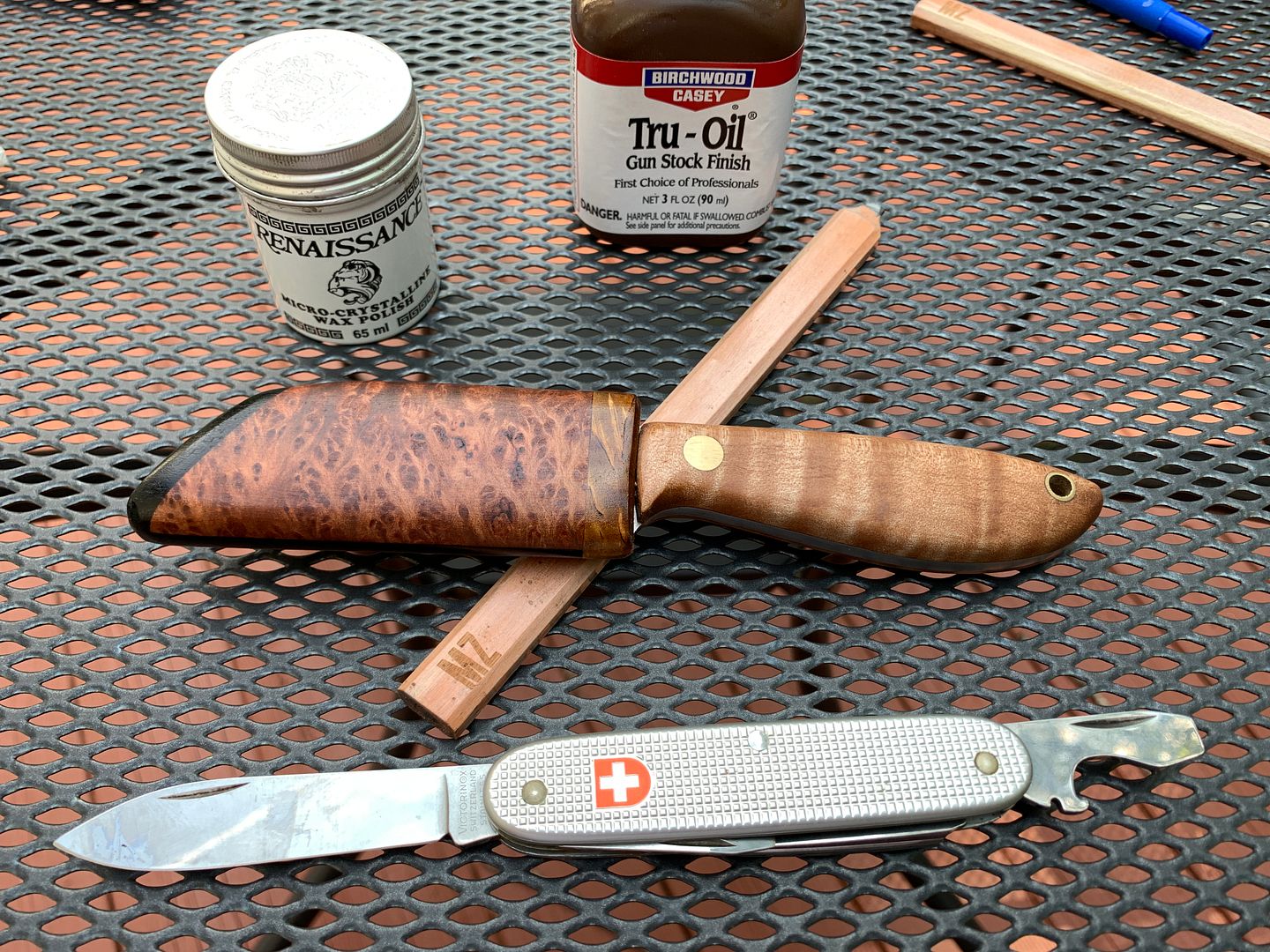


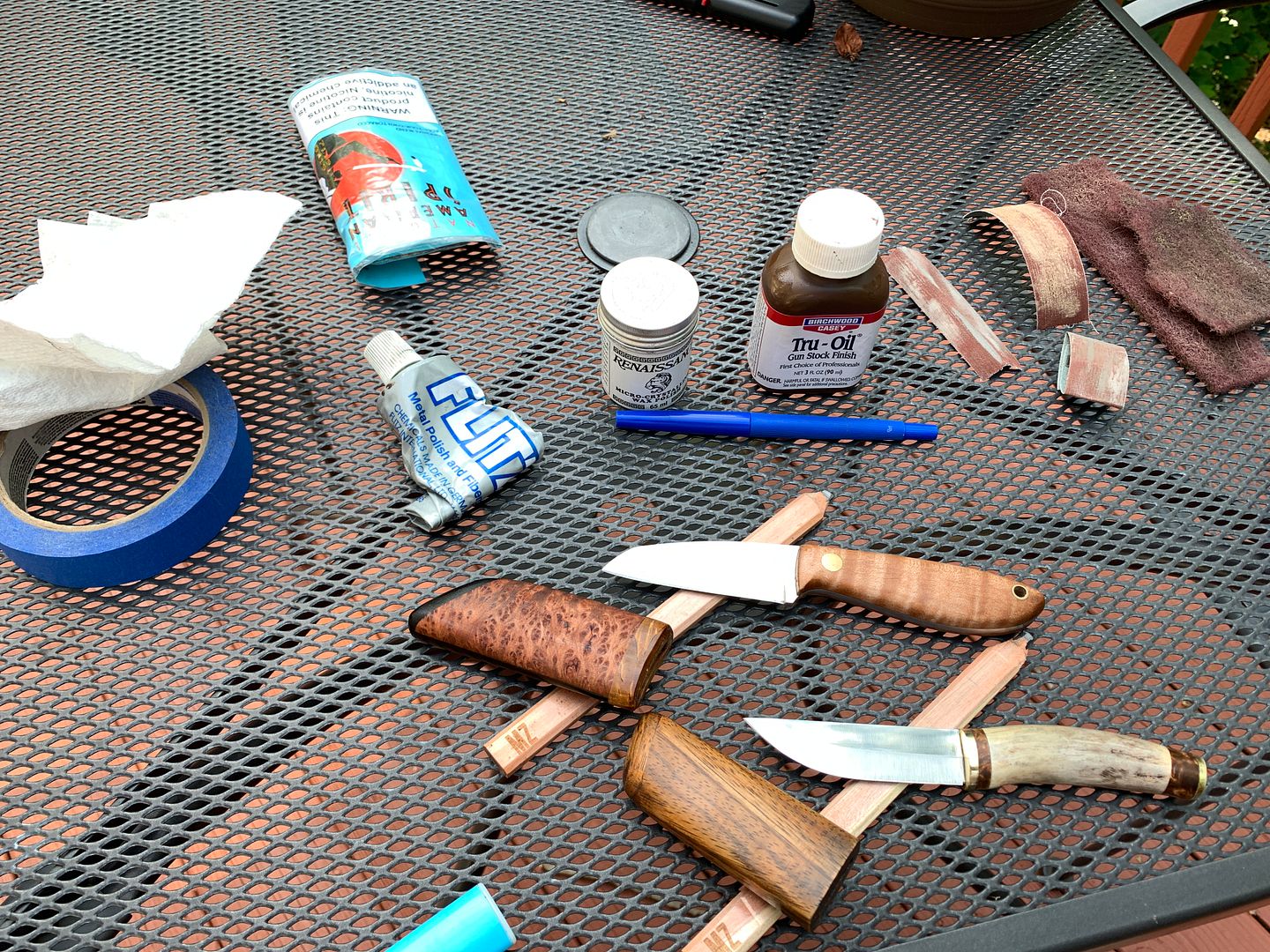
Once truoil is dry and hard, 48-72 hours, its polished down with rottenstone and spirits. You make a syrup of pumice cream in essence and rub it in with clean papertowels.

Graduation is Renaissance wax in shotglass, nuked for 15-20 seconds. Give it a schmear and polish with dry paper towels.

After this I need a cigarette
 
Thanks for the post. I love TruOil as well. Usually I start with Watco Danish oil, as for my mileage it seems to penetrate better being a thinner oil. I have cut it with spirits as well to thin it out. But after a coat or two of the Danish, I switch over to TruOil for the final coats, and to give it a satin finish (or gloss with more coats/polish). Then the wax. I never thought to nuke wax down, thanks for the tip. Nice looking work!
 
I may have to buy some as I am about out of the South African made London style stock finishing brew that Brownells used to sell. There as loused to be a Prudey style kit, but it is gone too. The only one pot that type that I can find seism to only be sold in the EU.
 
Truoil is the best for sure. Purdy is the tops. I’m an Anschutz guy myself.

This is todays cocobolo wharncliff. I’m trying to stay down to one but addiction has me bad

This is just spit. Its still hot from grinding. The heat sets up the epoxy too.

 
Coming together. Cocobolo. So dense it won’t take any sealer. Only thing that works is white buffing compound and bring a chair

 
Cocobolo is easily polished by hand sanding to around 800-1000 grit and then lightly buffing by hand with a soft cloth, or on a slow dry buffing wheel ( maybe just a tiny charge of matchless pink).

I know people like the idea of retention magnets in the sheath but it will slowly attract steel dust and fragments. We are knifemakers and steel dust is all around us ... it is unavoidable. It will scratch the blade eventually.
 
I have made many chef knives with cocobolo handles/sayas and they all look great when new with a buffed finish. I use TruOil on all my knife handles, but I was never able to get it to cure on cocobolo. In daily kitchen use, the unfinished cocobolo turns dark from oxidation and oils/dirt and really looks lousy after a few months...this always really bothered me. I experimented for over a year and came up with a finish that works great, but takes about two to three weeks to process.

After buffing, I use natural Watco Danish oil and follow the directions and build up about 6-8 coats over a few days and then let it sit for a few days...after that, I start with thin coats of TruOil letting each application dry a day or two and continue this pattern until I see it start to build up, then apply thicker coats as usual. It has worked well and the wood looks great and maintains the original vibrancy for years.

IXKXUNB.jpg


RHM1XqP.jpg
 
Cocobolo is easily polished by hand sanding to around 800-1000 grit and then lightly buffing by hand with a soft cloth, or on a slow dry buffing wheel ( maybe just a tiny charge of matchless pink).

I know people like the idea of retention magnets in the sheath but it will slowly attract steel dust and fragments. We are knifemakers and steel dust is all around us ... it is unavoidable. It will scratch the blade eventually.
I thought of that but I counter sink them then pack with grade 2 white lith. Not a scratch yet
 
Thats a good thought about the metal particles sticking to the magnets. I countersink 1/16” below the surface then scrape either lithium or petroleum jelly. The blades just snick in

 
Still needs a few hours of hand sanding and buffing. Made the scabbard tip out of Amboyna burl. Trying to darken it up to better match the cocobolo. Going to try burgundy aniline dye next. Also need better radius on scabbard where handle sits

 
The only word that comes up is stunning. Absolutely stunning

I have made many chef knives with cocobolo handles/sayas and they all look great when new with a buffed finish. I use TruOil on all my knife handles, but I was never able to get it to cure on cocobolo. In daily kitchen use, the unfinished cocobolo turns dark from oxidation and oils/dirt and really looks lousy after a few months...this always really bothered me. I experimented for over a year and came up with a finish that works great, but takes about two to three weeks to process.

After buffing, I use natural Watco Danish oil and follow the directions and build up about 6-8 coats over a few days and then let it sit for a few days...after that, I start with thin coats of TruOil letting each application dry a day or two and continue this pattern until I see it start to build up, then apply thicker coats as usual. It has worked well and the wood looks great and maintains the original vibrancy for years.

IXKXUNB.jpg


RHM1XqP.jpg
 
Anschutz lover myself. Grew up in competition rifle shooting. Sako lover as well! My current Anschutz is a .17HMR Meistergrade for varmint control. I learned my (Walnut) stock finishing from a custom rifle maker, J Earl Bridges. Sorry for the thread derail. I need to refinish my Sako 75 .270. I’ll try the method you outlined above! Good rifles and good knives. Love ‘em!

Again, thanks for the photos and advice. Keep the education coming! I’m always eager to learn new techniques.
 
On many hardwoods I do a coat of dewaxed shellac sanding sealer before truoil.

I use truoil finish on most my tool handles as well. Files, hammers, axes, chisels, etc.
 
I have been successful in truoil over CA finish on zircote. But not on oilier verawood, ended up just polishing.

I have made many chef knives with cocobolo handles/sayas and they all look great when new with a buffed finish. I use TruOil on all my knife handles, but I was never able to get it to cure on cocobolo. In daily kitchen use, the unfinished cocobolo turns dark from oxidation and oils/dirt and really looks lousy after a few months...this always really bothered me. I experimented for over a year and came up with a finish that works great, but takes about two to three weeks to process.

After buffing, I use natural Watco Danish oil and follow the directions and build up about 6-8 coats over a few days and then let it sit for a few days...after that, I start with thin coats of TruOil letting each application dry a day or two and continue this pattern until I see it start to build up, then apply thicker coats as usual. It has worked well and the wood looks great and maintains the original vibrancy for years.

IXKXUNB.jpg


RHM1XqP.jpg
 
Back
Top