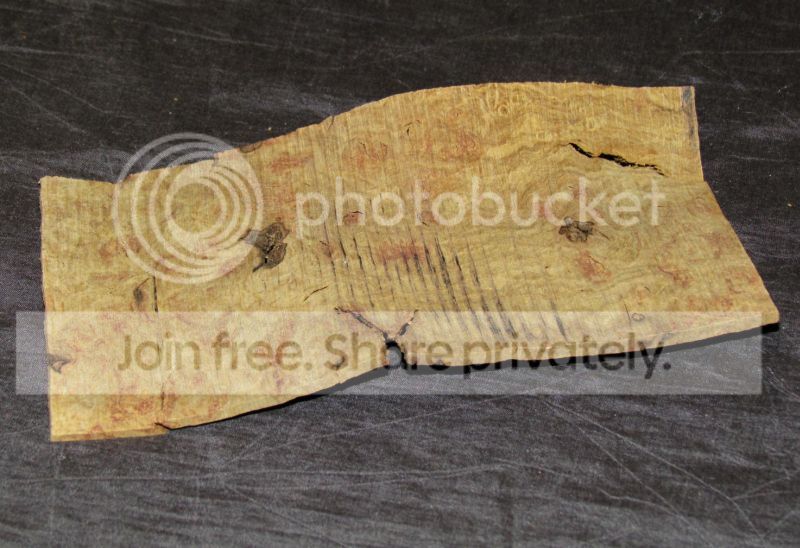
I don't know.... I see a naturally formed palm swell there. Less work for me!
You're mass producing these, right Mark?
1st in line!! :thumbup::thumbup:

I know you meant it as a joke, but I had a bunch of thin pieces like this left over when cutting blocks.
The cutting was in early summer so they dried and distorted into potato chip shapes pretty quickly.
An artist from the Bay area saw them and wanted to buy as many as they could get.
She ended up spending half the day digging through my cut offs pile.
Now to get back on topic
The point I wanted to make with this thread is that you are setting yourself up for failure when you use wood or other natural materials that are not dry.
With wood it starts out with about 1/3 of it's mass being water. When it dries it changes size and shape.
I have seen several recent posts about using found wood like firewood.
One poster said the tree had been dead for years so they knew it was dry. My guess this time of year it would have a moisture content in the upper teens. Even dry wood absorbs moisture from the air. I had some wood that I had dried to 8% last month. I took the blocks and set them on my workbench in a covered shop area that is open to the outdoors. I got pulled aside to other things and the blocks sat for 3 days. When I got back to them the moisture content was 14-16% from moisture the wood had absorbed from the air. So, back into the kiln.
A good rule of thumb
This one thing can save you a lot of headache.
With natural (unstabilized) wood it is best to keep it indoors in an area that is heated/ac. This gives time to dry any residual moisture on dry stuff and allows it to adjust to your climate. A lot of the bigger names you see around here don't touch the wood until it has sat at least a year or more.