
what wood would this be?

meako

Gold Member
Joined
Sep 4, 2006
Messages
10,086
I've searched hither and thither. Can anyone identify this species of wood on this old Case Rope/Sailor knife.
It was fairly grotty when it turned up but a bit of toothbrushing revealed beautiful old wood scales. Any idea on age?
It sharpened up well.
any info appreciated.
cheers.
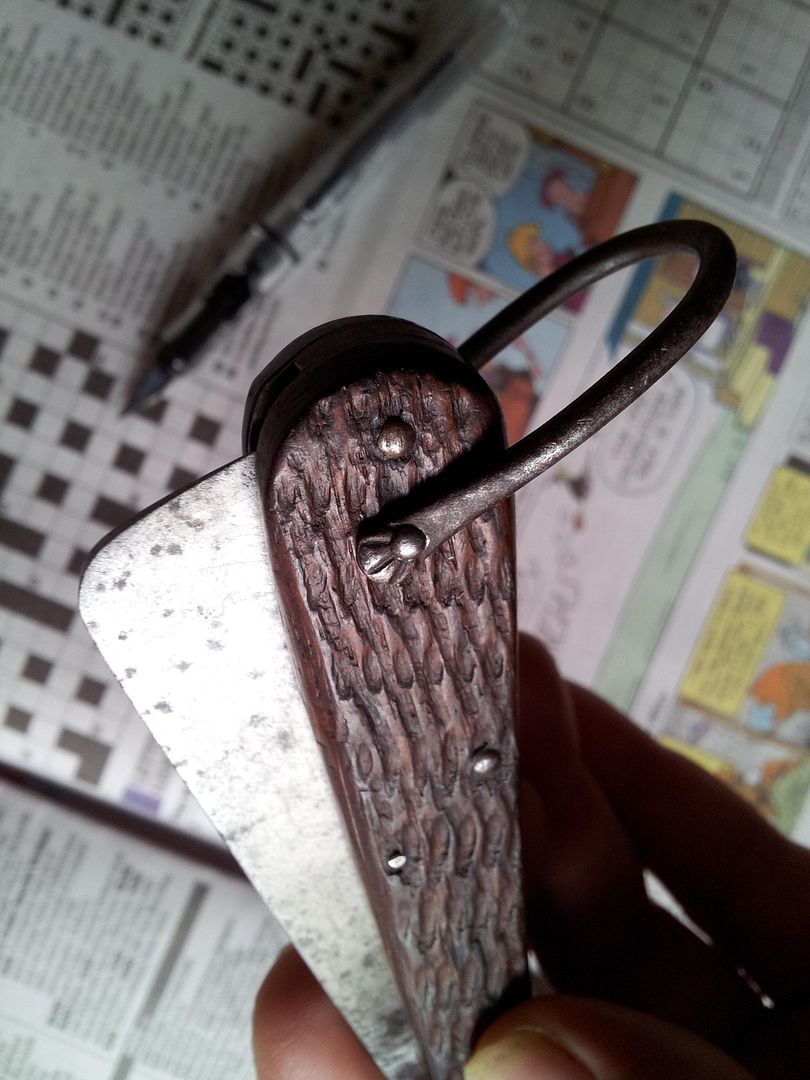
2014-03-27130141_zps868dea64.jpg
 
nice knife :)
maybe rosewood? other case knives, e.g. hunters have similar looking wood handles.
 
From what I can see of the knife, it looks like the ones built to U.S. Government specifications during World War II. Camillus used "stagged rosewood". Case probably did as well as the USG contracts tended to be very specific.
 
Case used walnut on a lot if not most of those knives.

Here is a picture of my Case XX SS 1199 SHR with smooth walnut covers circa 1965 - 1969.

 
Last edited:
Likely walnut, as previously mentioned; especially on the older* knives from Case (1970s and earlier). I think walnut may've been the first wood they used, and they utilized it a lot. Walnut is also very stable for wet use, so it'd be perfect for a sailor's knife, I'd think.

Edit:
* = My copy of the 'Official Price Guide to Collector Knives' (Fourteenth Edition; 2004), by C. Houston Price, mentions Case has used walnut on knives since 1920. It goes back a long time, on their knives. Case also reserved a digit for it (1), as the first number in the pattern ID on walnut-handled knives. The use of pattern ID# was internal to the company prior to 1949/50; past that, Case also started stamping it on blades.


David
 
Last edited:
If your blade is stamped SHR, the SH stands for Sheepsfoot while the R indicates the Bail.
 
to clean old wood, I found using cheap mayonnaise the cheaper the better because it has more oil in it. apply and use 0000 steel wool( the fine stuff) and rub with the grain. The oil in the Mayo will pull the dirt out and leave the finish intact. The steel wool will remove the dirt and clean the finish. You can then clean the wood back off with some murphy's oil soap or whatever. It should clean it up a bit more and make it easier to identify. This is an old furniture restoration trick, cleans the wood without ruining the old patina and finish.
 
^^Interesting. Wonder if this may be one of the knives made for Case, by Camillus. There's some history of that between the two companies, though I don't know how far back it goes.


David
 
For comparison, here's a WWII-era Camillus Maritime Commission and Merchant Marine Sailor's Knife aka Sailor's Jack Knife

camillusrope001_zpsec7c7e38.jpg


camillusrope002_zpseade4b39.jpg


camillusrope003_zps68536c13.jpg
 
Likely walnut, as previously mentioned; especially on the older* knives from Case (1970s and earlier). I think walnut may've been the first wood they used, and they utilized it a lot. Walnut is also very stable for wet use, so it'd be perfect for a sailor's knife, I'd think.

Edit:
* = My copy of the 'Official Price Guide to Collector Knives' (Fourteenth Edition; 2004), by C. Houston Price, mentions Case has used walnut on knives since 1920. It goes back a long time, on their knives. Case also reserved a digit for it (1), as the first number in the pattern ID on walnut-handled knives. The use of pattern ID# was internal to the company prior to 1949/50; past that, Case also started stamping it on blades.


David

;) Yeppers; and if one digs even further, the use of synthetic scales for knives started right about the same time that Colt and other authorized manufacturer's of 1911's started using plastic grips, if for only one reason, and that was to reduce production costs, and more importantly, to divert the use of walnut for more important uses, such as in airplane propellers, rifle stocks, furniture, etc...after all, there was a costly war going on at the time.
 
Last edited:

Camillus used "stagged rosewood"

Looks just like a Camillus I've seen on the net.
attachment.php

bingo!
The "feet" on the bail match, as do the pin positions. Walnut is much more porous, I vote Stagged Rosewood.

here's a WWII-era Camillus Maritime Commission and Merchant Marine Sailor's Knife aka Sailor's Jack Knife

camillusrope001_zpsec7c7e38.jpg

Bingo Bingo again
the bail and pin positions match..

I like a good mystery. When is the next chapter with more pics coming out?:-)
 
to clean old wood, I found using cheap mayonnaise the cheaper the better because it has more oil in it. apply and use 0000 steel wool( the fine stuff) and rub with the grain. The oil in the Mayo will pull the dirt out and leave the finish intact. The steel wool will remove the dirt and clean the finish. You can then clean the wood back off with some murphy's oil soap or whatever. It should clean it up a bit more and make it easier to identify. This is an old furniture restoration trick, cleans the wood without ruining the old patina and finish.
Thank you.
 
Back
Top