Hollow grinding is typically used with a grinding wheel, and has concave shape to it. It curves inward. Hollow ground blades are good slicers, and resharpening is pretty easy.
A good description:
"It's a grind done on the round, contact edge of an abrasive wheel (where the user stands in line with the wheel). When using an abrasive belt grinder, the rotation is towards the user, as it is with bench grinders; with water-lubricated stone wheels, the motion is usually the opposite. Much is made about the relative merits of using a flat grind to sharpen tools (of all sorts), claiming that the concave shape of the hollow grind creates thin leading edges and an inherently weak profile. This is somewhat disingenuous since sharpening and profile grinding are two entirely different acts, and the radius of a contact wheel across the sharpened edge is, for all practical purposes, flat."
NOTE: Whenever you see an illustration of a hollow grind, the diameter of the contact wheel is always dramatically unrealistic in terms of what would actually be used (a fact that is rarely mentioned). This is done to show why the grind is considered to be hollow as opposed to flat, and to fit enough wheel into a tiny illustration that it can be identified as a wheel. Many people seem to interpret the exaggeration of the illustrated shape as representative of practical application.
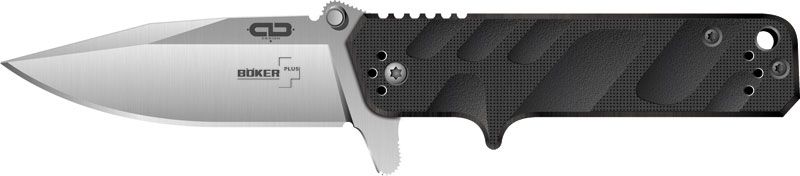
A 3/4 grind simply means that the grind line starts 3/4 of the way up the blade and doesn't describe any specific grinding technique. It can be a 3/4 flat grind, 3/4 hollow grind, etc. This knife has a 3/4 grind...
Here is a good page explaining blade grinds, and it has some nice illustrations...
http://backyardbushman.com/?page_id=13