
What's the trick to applying Tuf Glide to a pivot?

Joined
Jul 22, 2009
Messages
11,409
I've been using Benchmade Blue Lube for a while now, though this particular knife doesn't seem to like it:
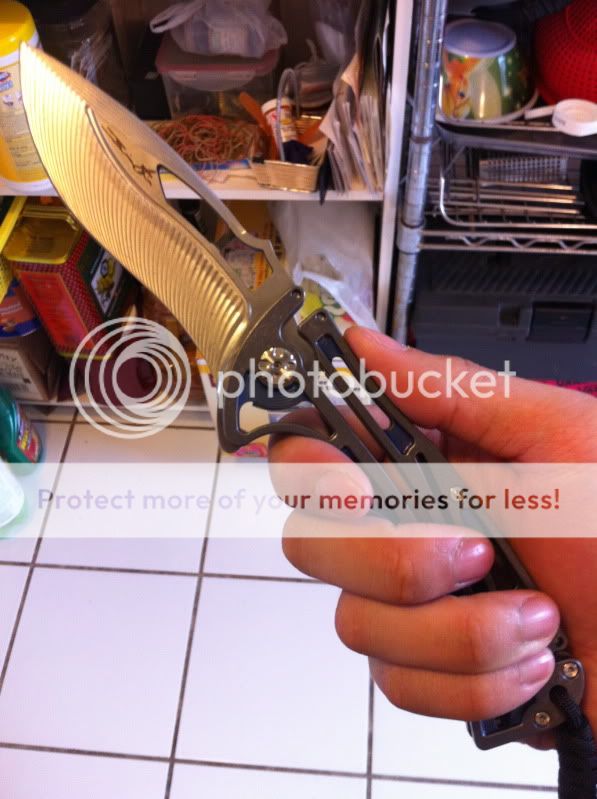
IMG_0346.jpg


The milled portions near the pivot exposes the lubed portions of the blade, which sucks up dust like a vacuum cleaner.

I suppose there was good reason Brian included a 0.4 oz pen applicator of Tuf Glide with the knife, as a dry lubricant would address the issue. Now I'm just running into the issue of drying. I noticed the opening felt annoyingly rough, like all I had for lube was tap water. Then I read around and found that Tuf Glide works best when it's actually dry and make take several applications to deposit enough lubricant to the surface. The residue on my fingers is plenty dry, no issues with that:thumbup:. On the knife, not so much. A hair dryer only seemed to make it run more. And boy the thing likes to run, I think I coated most of the handles and blade along with the pivot.

Kind of wondering if there were any tips to help speed up the evaporation, as the high humidity here doesn't help matters.
 
I suppose there was good reason Brian included a 0.4 oz pen applicator of Tuf Glide with the knife, as a dry lubricant would address the issue. Now I'm just running into the issue of drying. I noticed the opening felt annoyingly rough, like all I had for lube was tap water. Then I read around and found that Tuf Glide works best when it's actually dry and make take several applications to deposit enough lubricant to the surface. The residue on my fingers is plenty dry, no issues with that:thumbup:. On the knife, not so much. A hair dryer only seemed to make it run more. And boy the thing likes to run, I think I coated most of the handles and blade along with the pivot.

Kind of wondering if there were any tips to help speed up the evaporation, as the high humidity here doesn't help matters.
Think of the Tuff Glide like paint: which will dry faster -- several thin layers or one thick layer? The humidity doesn't help you any, so try to find some dessicant and a tupperware bowl with airtight lid that is big enough to hold your knife. That might help some if you have enough dessicant.
 
Hmm, true. I've been reapplying without making sure the previous application was completely dry first. I have some success placing the knife in front of my floor fan and a can of air helps to blow out the excess.
 
Although Tuf-Glid and Tuf-Coat are my favorite choices for blade protection, and I use them on every knife I own except my dive knives, I've never found it particularly effective as a pivot lube. I have a skeleton handled knife similar to the one you've pictured (though mine is a Spydie,) and I use just a wee bit of urea grease for the pivot... and I do mean a VERY, VERY small amount... perhaps less than could fill the empty space in this 'o.' Works well and there is virtually no dust or pocket lint pickup.


Stitchawl
 
Although Tuf-Glid and Tuf-Coat are my favorite choices for blade protection, and I use them on every knife I own except my dive knives, I've never found it particularly effective as a pivot lube. I have a skeleton handled knife similar to the one you've pictured (though mine is a Spydie,) and I use just a wee bit of urea grease for the pivot... and I do mean a VERY, VERY small amount... perhaps less than could fill the empty space in this 'o.' Works well and there is virtually no dust or pocket lint pickup.


Stitchawl
Yes, I have some problems keeping the pivot lube to a reasonable amount:D. Though with further drying of the Tuf Glide I have found that the action on my knife is about as smooth as my Blue Lube now.
 
Yes, I have some problems keeping the pivot lube to a reasonable amount:D.

Unfortunately, I too was born into the 'more is better' family, and it took me quite a while to break the habit. It's easiest for me if I can disassemble the knife and get to the pivot that way. I just put on waaaay too much, the wipe almost all of it off!

Though with further drying of the Tuf Glide I have found that the action on my knife is about as smooth as my Blue Lube now.

That was the same result that I got, which is why I switched to grease. 'Blue Lube,' 'White Lightning,' 'Tuf Glide,' Teflon and Moly sprays, etc., all gave me about the same results. Grease was a quantum leap smoother... for me. I'm using urea grease, but I imagine that lithium grease, silicone grease, and white grease would all work as well.


Stitchawl
 
I've never had such results with the Chris Reeve fluorinated grease. Though again, I do have a habit of slathering on a little too much. I also get a bit nervous about disassembling the more pricey knives, especially these with the sealed thrust bearings and roller thrust bearings.

Though at this point, I doubt the opening will get any smoother than it is right now. The flipper opening isn't 100% like an IKBS or even my R.J. Martin Overkill. The modified back lock design causes the blade to slow its opening around that last quarter inch of opening. Lubing the area where the backlock contacts the blade helps, though because of its open design requires the lube to be a dry one. Still, it's pretty damn close at 95% and shouldn't fail to open unless I don't press the flipper hard enough.
 
Back
Top