I was wondering why you don't see more slipjoints with wood. Is it because of the fear of cracking with the thinness of the handle material? I have seen ebony used on some which is really not that stable so why not something natural like Walnut or Maple? I would love to have one in Walnut crotch or Stabilized Spalted Maple, it would make a killer knife.

-
The BladeForums.com 2024 Traditional Knife is available! Price is $250 ea (shipped within CONUS).
Order here: https://www.bladeforums.com/help/2024-traditional/
You are using an out of date browser. It may not display this or other websites correctly.
You should upgrade or use an alternative browser.
You should upgrade or use an alternative browser.
Why not wood?
- Thread starter KFU
- Start date
Good question!
I love wood. The warmth, grain pattern, and workability. I've sanded down enough Opinels to get the look I like, and I'd live it if more knives had wood handles. Put a nice linseed oil finish that I can rub down now and then, and I'm happy. I once had a nice old Camillus TL-29 that had a wood handle, and it was pretty rugged.
Olive wood, cocobolo, rosewood, all have beautiful grain and color. I'd like to see more of it.
Carl.
I love wood. The warmth, grain pattern, and workability. I've sanded down enough Opinels to get the look I like, and I'd live it if more knives had wood handles. Put a nice linseed oil finish that I can rub down now and then, and I'm happy. I once had a nice old Camillus TL-29 that had a wood handle, and it was pretty rugged.
Olive wood, cocobolo, rosewood, all have beautiful grain and color. I'd like to see more of it.
Carl.

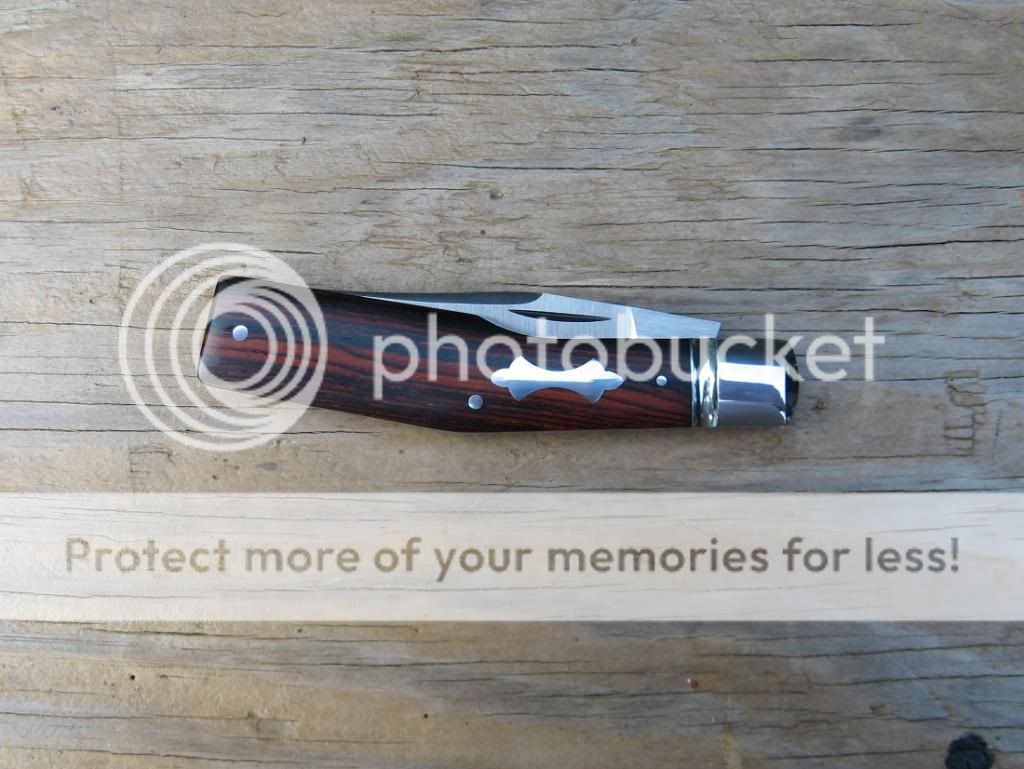
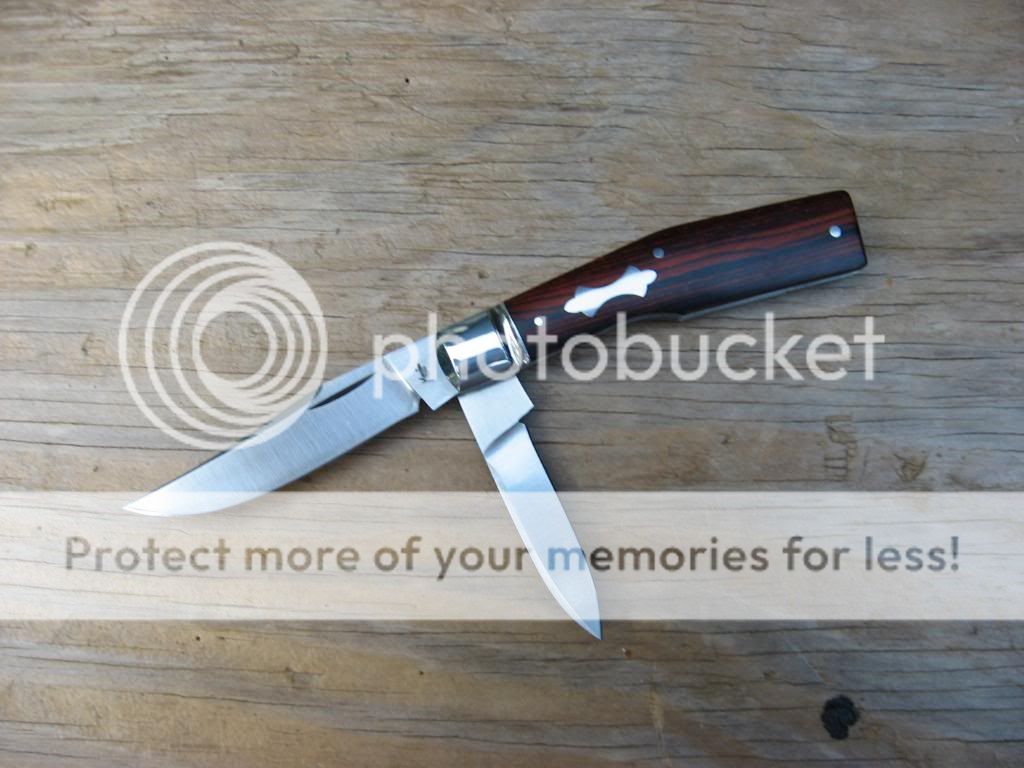

I don't really like wood on knives.
I can appreciate a nicely made knife with wooden scales like those above, but I would always choose another scale material for a knife I was buying.
Wood wasn't/isn't used much because of all the stuff a knife has to go through.
Temperature and humidity changes, scrapes and dings, exposure to liquids etc.
I can't imagine wood being a hygenic choice for dressing game or fish, for instance.
I think in the 'olden days', wood was a bit of a cop out handle material used on the cheaper knives, probably for the above reasons.
It's different nowadays with exotic hardwoods and stabilized woods, these problems are mostly mitigated or eliminated, but to me, I just think why have wood when you can have bone?
Some woods look very nice, but how nice would they look after a few years in a pocket with a set of keys?
I can appreciate a nicely made knife with wooden scales like those above, but I would always choose another scale material for a knife I was buying.
Wood wasn't/isn't used much because of all the stuff a knife has to go through.
Temperature and humidity changes, scrapes and dings, exposure to liquids etc.
I can't imagine wood being a hygenic choice for dressing game or fish, for instance.
I think in the 'olden days', wood was a bit of a cop out handle material used on the cheaper knives, probably for the above reasons.
It's different nowadays with exotic hardwoods and stabilized woods, these problems are mostly mitigated or eliminated, but to me, I just think why have wood when you can have bone?
Some woods look very nice, but how nice would they look after a few years in a pocket with a set of keys?
Gaboon ebony or Ceylon ebony are extremely hard, wear resistant and stable if they're cut and seasoned right -- I've got knives well over 100 years old with a lot of use that the ebony scales still look almost new on (another plus for ebony - doesn't change it's appearance with time). The problem is that a lot of other woods get called ebony that are just not suitable. The thin sections of wood that are required on a slipjoint that is properly hafted are a tough spec for most natural wood to meet - it needs impact resistance, wear resistance, dimensional stability under wide variations of moisture -- the proper ebonies, the true rosewoods, cocobolo, and blackwood are all good choices (no coincidence that the best natural woods for knife scales are the same as those chosen by luthiers for centuries for parts of musical instruments that must resist wear and tear and moisture).
I don't think that wood is actually a cop out, but 'good enough' for a knife that is expected to be used up. They used to do that you know, use up a knife instead of keeping it and cherishing it. Think of all those simple butcher patterns sent west and used by mountain men, and later the buffalo hunters. They were probably used up in a season of skinning hides and sharpening every night to be ready for the next day's work.
I remember all the butcher's knives at the market when I was a kid, were all wood handle.
A lot of the sailors knives of the 1800's had simple wood scales.
Carl.
I remember all the butcher's knives at the market when I was a kid, were all wood handle.
A lot of the sailors knives of the 1800's had simple wood scales.
Carl.

dannyp
Gold Member
- Joined
- Nov 25, 2007
- Messages
- 2,257
I think part of it may be the inconsistent nature of wood. If you're trying to do it on a large production scale, you will either end up with a lot of plain looking scales or a lot of waste. The only other option is to pay for premium lumber which will drive up the cost. I wonder if this is part of why ebony was so popular in the past.
I have seen quite a few customs here with wood scales, from desert ironwood and curly koa to highly figured burls. On the production side, GEC does a decent job with wood since they do smaller runs of knives. I've always thought the mexican bocote they used on the Tidioute line looked nice. I recently picked up this Tidioute Dogleg in palm.

I have seen quite a few customs here with wood scales, from desert ironwood and curly koa to highly figured burls. On the production side, GEC does a decent job with wood since they do smaller runs of knives. I've always thought the mexican bocote they used on the Tidioute line looked nice. I recently picked up this Tidioute Dogleg in palm.
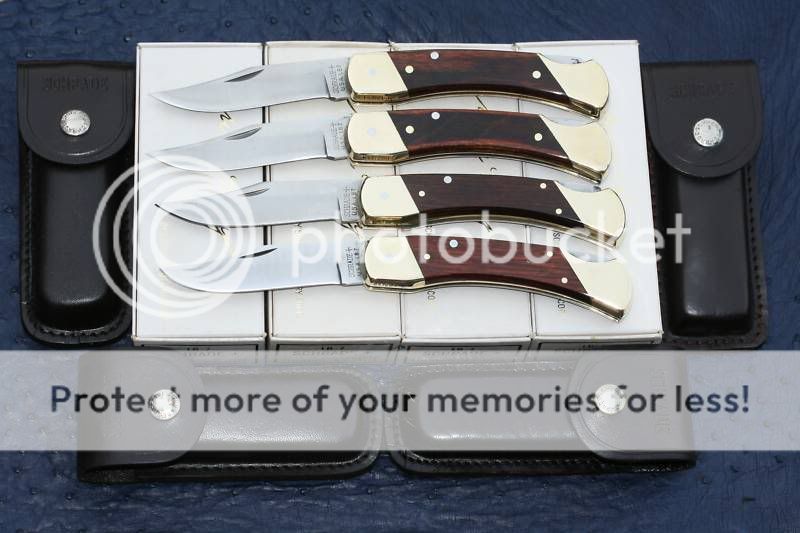
Personally, I really like wood. I like stabilized wood like Schrade used in LB7s. I think they called it "Wonda Wood". I also have a GEC & with zebrawood and a Queen with curly zebra wood. They look completely different but are both beautiful in their own way.




- Joined
- Feb 22, 2007
- Messages
- 9,008
We need a wood expert, there are so many kinds that you don't see on the knife infomercials  I have worked with some woods that I could smash against concrete until I was worn out and it didn't do a thing. Some feel like I am grinding hardened steels. I just go in the back woods for the stuff I use. Mostly red oak, american beech, walnut, rock maple, silver maple, black locust, white birch and a ton of other woods just growing back there. I am not an expert on the far harder and more durable woods than I just mentioned though. I hope to see some good info in this thread
Learning about the characteristic of different woods and the history of them is also very interesting IMO.
I have worked with some woods that I could smash against concrete until I was worn out and it didn't do a thing. Some feel like I am grinding hardened steels. I just go in the back woods for the stuff I use. Mostly red oak, american beech, walnut, rock maple, silver maple, black locust, white birch and a ton of other woods just growing back there. I am not an expert on the far harder and more durable woods than I just mentioned though. I hope to see some good info in this thread Learning about the characteristic of different woods and the history of them is also very interesting IMO.
- Joined
- Feb 22, 2007
- Messages
- 9,008
Before anyone takes offense to the infomercial comment, it is how I felt. Once I started learning about different wood I felt that way. Like WOW, there are so many awesome types to be used out there. I felt like I was so limited by the choices I found in knife magazines and different catalogs. It wasn't until I came to bladeforums that I felt like I stopped watching infomercials and actually began to make informed decisions.
Okay, just wanted to make sure I didn't come across wrong. I have been drinking and am going to stop posting now...lmao.
ETA - KFU, I am all ears
Okay, just wanted to make sure I didn't come across wrong. I have been drinking and am going to stop posting now...lmao.
ETA - KFU, I am all ears

My daughter did a science project on the hardness of wood and I have some sample blocks that she used. We live near a lot of custom yacht facilities and we got some scraps of ipe and Brazillian cherry. They are both incredibly hard. You can't drive a nail through the ipe...it just bends up. I'd love to have a knife handle made with ipe.
I don't mind wood....I just like other stuff better
That's basically my feeling about it. I like really good ebony, but even there, good bone or ivory would easily be my preference. I'd pick good ebony over buffalo horn though.
There are a lot of hard, tough, dense woods, but most of them are rather bland -- you're working with a small canvas on most slipjoints - the figure in the wood has to be very tight and spectacular to look good on a slipjoint. A piece of wood that would look amazing on furniture or musical instruments would likely still look kinda blah on a slipjoint because you'd be seeing such a tiny little window of it.
Last edited: