Stacy E. Apelt - Bladesmith
ilmarinen - MODERATOR
Moderator
Knifemaker / Craftsman / Service Provider
- Joined
- Aug 20, 2004
- Messages
- 38,428
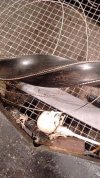
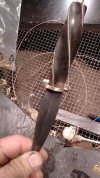
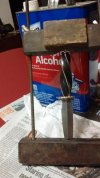
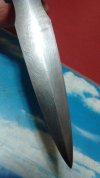
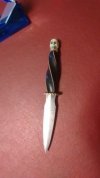
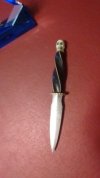
I didn't take photos of the blade being forged, but it was a simple small dagger blade. Ron Frazier started the billet before he passed away, and I think it is 1095 and O-1. It is about 300 layers.
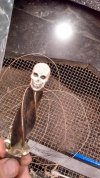
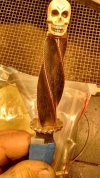
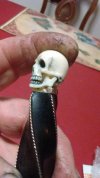
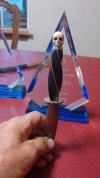
The skull came from a "picker" friend who was buying gold. The skull was in a box of ivory and gold stuff that were being scrapped. The skull and other carvings were free, because the owner didn't want any ivory because he thought he could go to jail for owning it. It was a bit less detailed, and I did a little reshaping and detail work.
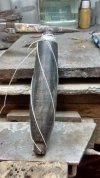
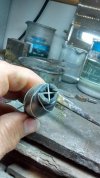
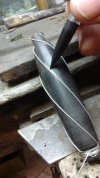
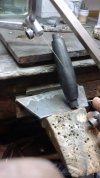
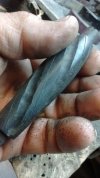
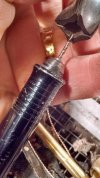
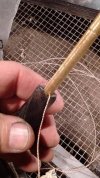
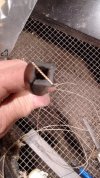
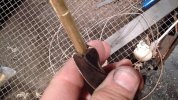
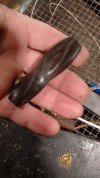
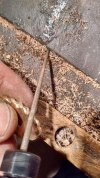
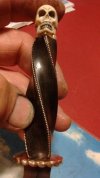
The handle is ebony and fluted buy hand. Twisted 14 karat yellow gold wire was inlaid down the flute ridges. I twist the two strands of 24 gauge wire with a cordless drill and put the loop end on a nail. Use just enough tension on the wire to keep it straight and prevent kinking. You have to move the drill forward as the twist shortens the wire. Twist it slow and run your fingers down the wire toward the nail so it twists evenly. Twist the wire with your fingers to walk the twist down the wire. With a helper on the drill end, I have done a length as long as 30 feet this way. The key factor is very slow twisting and working the twist down the wire for an even twist. The very ends of the twist, especially the drill end, will be a bit tighter or looser than the main part, so they will get clipped off. Plan for that on deciding the amount of wire to twist I usually twist about twice the needed wire length. This allows for replacements of wire damaged in installation or other problems, and the excess can be used for other decorative accents.
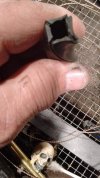
The fittings on each end of the handle are make in tri-color mokume. The guard is file worked with a fluted pattern. The pommel plate is shaped to fit the skull and fluted, too. The skull is mounted on a stud that acts as the cervical vertebrae.
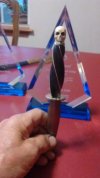
The skull came from a "picker" friend who was buying gold. The skull was in a box of ivory and gold stuff that were being scrapped. The skull and other carvings were free, because the owner didn't want any ivory because he thought he could go to jail for owning it. It was a bit less detailed, and I did a little reshaping and detail work.
The handle is ebony and fluted buy hand. Twisted 14 karat yellow gold wire was inlaid down the flute ridges. I twist the two strands of 24 gauge wire with a cordless drill and put the loop end on a nail. Use just enough tension on the wire to keep it straight and prevent kinking. You have to move the drill forward as the twist shortens the wire. Twist it slow and run your fingers down the wire toward the nail so it twists evenly. Twist the wire with your fingers to walk the twist down the wire. With a helper on the drill end, I have done a length as long as 30 feet this way. The key factor is very slow twisting and working the twist down the wire for an even twist. The very ends of the twist, especially the drill end, will be a bit tighter or looser than the main part, so they will get clipped off. Plan for that on deciding the amount of wire to twist I usually twist about twice the needed wire length. This allows for replacements of wire damaged in installation or other problems, and the excess can be used for other decorative accents.
The fittings on each end of the handle are make in tri-color mokume. The guard is file worked with a fluted pattern. The pommel plate is shaped to fit the skull and fluted, too. The skull is mounted on a stud that acts as the cervical vertebrae.
Attachments
Last edited: