
Wish me luck (Mammoth Tooth) ...

Joined
Jan 19, 2009
Messages
312
... I'm stepping things up a notch and am going to attempt a handle with this Mammoth Tooth this weekend:
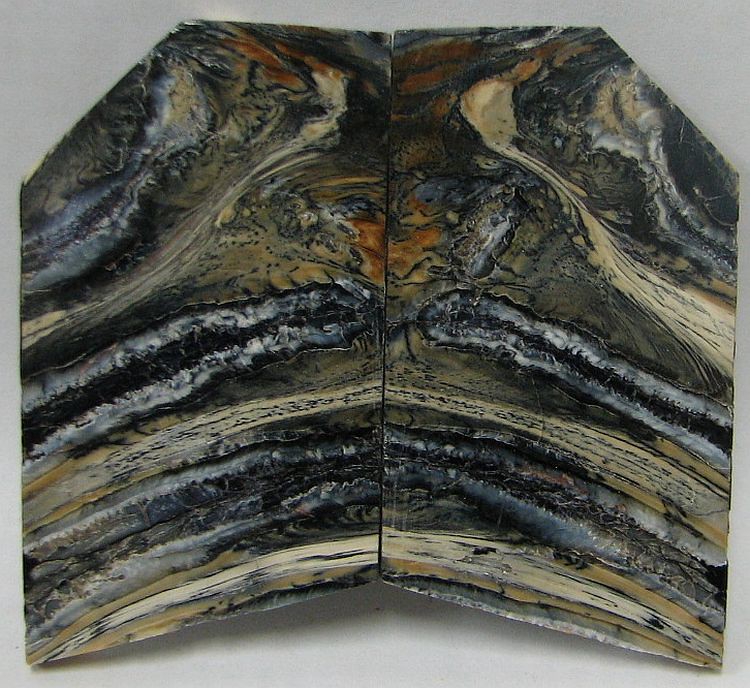
5390861950_f4beb2c2b1_b.jpg


and I think that since it's not large enough for an entire scale, I will pair it with a contrasting wood like I did on this Ebony and Ancient Kauri knife:
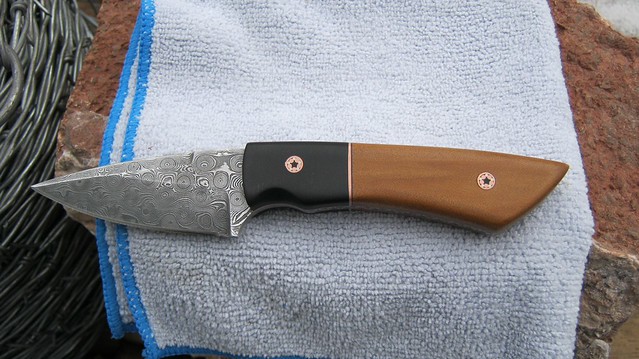
5367639688_8790f3298b_z.jpg


Should be really sharp looking if things go well.

From reading on this forum, I know that I should back it with a vulcanized spacer first and work very slowly with sharp bits and fresh belts. I also plan on using CA glue to keep stabilizing it through the process.

Does anyone have any suggestions as to what wood would look good (I'm thinking the black ebony right now) or any other tips? Thanks and hopefully I can report back next week with a completed knife! -Chad
 
I have no tips, as I've not used mammoth tooth before. Sounds like you have a good idea of how to proceed, so I'll just say that it's really nice looking stuff and good luck. Post pics when you're done.

Have you considered putting stainless or nickel silver bolsters in front?
 
I think that you are right on with the ebony-or something else really simple.The mammoth tooth has a lot of activity, and something without would be a nice contrast.Just my 2 cents...Oh and good luck:D
 
You are on the right track with the tooth, would you like some blue mammoth ivory to go with that tooth, it should look real nice with a black spacer in there. A have some short pieces that were waiting for the right project. I'm happy to give them to you. Just PM or email me your address. Put that tooth with some ladder pattern damascus with the bars running paralell to the bars in the tooth. That would be killer.
 
Well, I may be late getting in here to try to help. There are two things that make mammoth tooth difficult to work with. They are the grinding and the drilling. Believe it or not, in fact the grinding is only difficult because of trying to use the wrong type of belts. Silicon carbide are the type needed and one of 120 and 220 grit will do good. I don't think you will want any courser and I'll bet you will get by with some hand work which is always necessary. Trying to stay with the good ol' top of the line Blaze and others is expensive hard on the manpower and can absolutey destroy the tooth scales you are trying to work. Now for the drilling. I try to start with scales I have not sized down as much as usual. Use a carbide bit or a very sharp cobalt and run your speed fast with very light pressureand use cutting fluid or some oil or even water. This won't guarantee you success but I hope it will help. I will be interested in hearing of anything additional you may learn. Frank
 
The one piece of advice I got from Charles Turnage when I bought some tooth from him was to glue spacer material to both sides to reduce chipping, then drill and profile. After assembly you can grind off the spacer that's on the outside as you finish things up.

I haven't worked with what I have yet...I'm afraid of it still :)

-d
 
I have quite a few 3/8-1/2" slabs of mammoth tooth covered in thick CA glue. These were cut about 10 years ago. I make slipjoints only and when hafting in mammoth tooth I cut an appropriate pc to near size....+/-1/16", reglue the freshly cut edge, sand the two faces of all glue, flatten both faces on the disc grinder, immediately glue to the liners with Loctite 386, clean up the edges, bore thru pins holes and pein all together. The liners act the same as a pc of colored backer material with no color. This works for me. When boring I also use high speed with very sharp bits or with carbide bits...careful as the carbide is very brittle. Any side stress will break them very quickly. If possible try to position the tooth such that you are boring thru the softer material. When cutting this on a metal bandsaw I use a 18-20tooth blade and cut as fast as possible...which is not fast!:p You will quickly learn the difference between the hard and soft spots and how to find them based on color. Usually you cannot get all the pins into the softer materials .....but try! This method also bookmatches the material. Good luck and easy on the peining!!!!!!!!!:eek:
 
Back
Top