

- Joined
- Apr 5, 2010
- Messages
- 44
I believe the Swords of Qādisīyah, also called the Hands of Victory are the worlds largest sculpted swords.
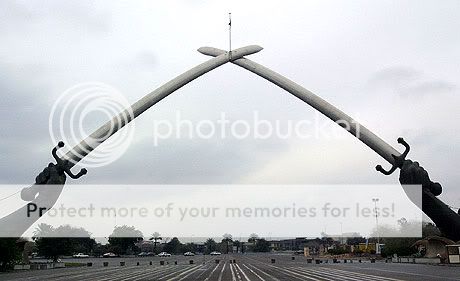
The design consists of a pair of massive hands emerging from the ground, each holding a 140 foot (43 m) long sword. A small flagpole rises from the point where the swords meet, at a point about above the ground. Kamil used photographs and plaster casts of Saddam's forearms to model for the design of the hands. When Kamil died in 1987, with the monument incomplete, his position was assumed by fellow artist Mohammed Ghani. Ghani personally took an impression of one of Saddam's thumbs, and the resulting fingerprint was added to the mold for one of the arches' thumbs.
The blades of the stainless steel swords weigh 24 tons each and were cast in Iraq, partly composed of metal from the guns and tanks of Iraqi soldiers killed in the Iran-Iraq war. The hands and arms of the monument are cast in bronze. The arms rest on concrete plinth, the form of which make the arms appear up out of the ground. Each plinth holds 2,500 (+ or – 100), according to Saddam, comprise of the Iranian soldiers killed during the war, and are held in nets which spill the helmets on the ground beneath.
The design consists of a pair of massive hands emerging from the ground, each holding a 140 foot (43 m) long sword. A small flagpole rises from the point where the swords meet, at a point about above the ground. Kamil used photographs and plaster casts of Saddam's forearms to model for the design of the hands. When Kamil died in 1987, with the monument incomplete, his position was assumed by fellow artist Mohammed Ghani. Ghani personally took an impression of one of Saddam's thumbs, and the resulting fingerprint was added to the mold for one of the arches' thumbs.
The blades of the stainless steel swords weigh 24 tons each and were cast in Iraq, partly composed of metal from the guns and tanks of Iraqi soldiers killed in the Iran-Iraq war. The hands and arms of the monument are cast in bronze. The arms rest on concrete plinth, the form of which make the arms appear up out of the ground. Each plinth holds 2,500 (+ or – 100), according to Saddam, comprise of the Iranian soldiers killed during the war, and are held in nets which spill the helmets on the ground beneath.
Last edited:
