WW2 Moro Barong

Joined
May 3, 2007
Messages
95
morobarongym9.jpg


I thought some of you might like to see this.

My Dad (RAAF) was stationed at the US air base at Tawi Tawi in WW2. This is in the Sulu islands, south of Mindanao in the Phillippines.

He traded for, (US cigarettes I think), this barong and bought it home. It survives in good condition except for a crack in the sheath which I have to fix.

I think it is made by the Moro people and is a combat (rather than farming) barong.

It is very well balanced and feels surprisingly light when handled. There is absolutely no play at all between the tang handle fit.

The top part of the handle is obviously carved wood and the lower part is a tube of horn.The binding is (salvaged) metal braid.

It measures exactly 25 inches overall with the handle and blade being near enough to 5 and 20 inches respectively.

It takes an exceptional edge and the steel is harder than I expected.

I have spent a lot of time all over the Phillipine islands but have not yet got this far South. It is a very unsettled area and has been so for at least fifty years. It has been a dream of mine to spend time with these people.
 
Hello bblake,

I picked up a WWII barong at an antique auction 8-9 years ago for about $60.00. Very similar in construction to the one you have posted. I use it during the various Sayaw's as it really flows well.

Gumagalang
Guro Steve L.

www.Bujinkandojo.net
www.Sayoc.com
 
That was a good pickup Airyu.

"Flows well" is a really good way of describing the feel of this piece. It is pretty heavy but you don't feel that at all once you start working it.
 
I have a very similar one which also comes from Mindanao, the blade is exactly the same. Most Barong from Sulu are in-fact made for Combat use as opposed to farming. A friend of mine here comes from Sulu and is very knowledgable about the blades and history of the area.

Nice Barong. The only thing I find with most Moro Barong is that the handle grip is a little too small for my hand, but they were made for Philippinos not Westerners.... so I have to put up with that.
 
I notice that the blade shows no visible rust. That's pretty impressive considering this is a WWII era blade. Did you or your dad take any special care to keep the blade from rusting?
 
Thanks for the feedback guys.

Actually I'm ashamed to say we did not take any special care of it at all. I finally got it out only a few months ago and it had surface rust but that was about it.
I worked it pretty carefully with 3 grades of Arkansaw stones and was pleased with how it came up.

It is really impressive how well the steel has stood up. It was in the humidity of Papua New Guinea for nearly 20 years as well.
As I said, the hardness of the steel impressed me as well. I wish I had the ability to do work like this.
 
As I said, the hardness of the steel impressed me as well. I wish I had the ability to do work like this.

The story I hear is leaf springs from old junker cars were salvaged and used for some of these blades. The leaf springs were favored for their toughness, and...cost.

Do you have any junk yards in your area?
 
The story I hear is leaf springs from old junker cars were salvaged and used for some of these blades. The leaf springs were favored for their toughness, and...cost.

Do you have any junk yards in your area?

Nice barong.

Re. leaf springs: generally these are 5160 steel - a tough durable steel. To take full advantange of its qualities the blade should be hammer-forged and fire-hardened. I have a pinute made with L6 (a close cousin to 5160) with which I'm going to test-cut with tatami mats this summer.

Best,

Steve Lamade
 
Very nice WWII barong:thumbup: Be intersting to see yours Stickmaster as a comparison;)
L6, thats what Howard Clarke uses, did you get the pinute made by him?
 
Very nice WWII barong:thumbup: Be intersting to see yours Stickmaster as a comparison;)
L6, thats what Howard Clarke uses, did you get the pinute made by him?

C.A.S. Iberia. Does he use L6 for all the swords that he makes?

Best,

Steve
 
No he doesn't Steve, but he likes L6 for the results he gets in flexibility, but I think he actualy gets better edge retention with 1086, after all he far do you need a katana to bend? Its something that Wilkinson Sword have being for a long time, but then their swords are designed for a different style of fencing.
 
The 1086M does hold an edge a bit longer. However, 1086M will take a "set" (though with alotta effort) if the user makes a bad cut landing on the flat instead of the edge. Howard doesn't make L6 blades expressly for its flexibility, though its a definite plus. L6 makes for a very tough blade material after he converts it to Bainite with his heat treat. It is a more forgiving material. I think one of his points in the excercise was to show that it will flex and will "true" instead of staying bent, not that it could just bend further than most.

As for FMA blades, I asked him a long time ago about adding in another Asian line, but his backlog was too great.
 
No he doesn't Steve, but he likes L6 for the results he gets in flexibility, but I think he actualy gets better edge retention with 1086, after all he far do you need a katana to bend? Its something that Wilkinson Sword have being for a long time, but then their swords are designed for a different style of fencing.

The 1086M does hold an edge a bit longer. However, 1086M will take a "set" (though with alotta effort) if the user makes a bad cut landing on the flat instead of the edge. Howard doesn't make L6 blades expressly for its flexibility, though its a definite plus. L6 makes for a very tough blade material after he converts it to Bainite with his heat treat. It is a more forgiving material. I think one of his points in the excercise was to show that it will flex and will "true" instead of staying bent, not that it could just bend further than most.

As for FMA blades, I asked him a long time ago about adding in another Asian line, but his backlog was too great.

Thanks for the responses. Too bad he doesn't make FMA blades - I liked the site and would definitely buy an FMA blade from him. Re. L6 I gather that the steel shows off its best qualities if it is forged properly and thus heat-treated for hardness and edge quality.

My C.A.S. Iberia pinute is o.k. for now. It cut through large plastic water bottles without any problem straight out of the box and I plan to touch up the edge before moving on to tatami mats this summer. At some point I would like to upgrade however. I would like a longer pinute than most and so this will probably be a custom job. Any suggestions are appreciated.

Best,

Steve
 
Hello Steve, what length pinute are you looking for?

Hello chugokujin, the reason Howard converts L6 to bainite, is because thats what gives it the flexiblity, but I must confess I have never seen the point, and you would have to be a very poor MA to bend a 1086 katana from Howard I would think. With the style of the Officers fighting sword that Wilkinson used to make, I could easily see why it was needed, but with a katana, there simply isn't the need for various reasons.
 
Steve,

Good forging and Heat treat will make the blade with many a steel. But, it can range from basic backyard heat treat to doing it with modern furnaces. Results will vary depending on technique and application. You may wanna visit the bladesmithing section. Heat treating is very interesting if you can keep up with the lingo and understand the charts.

My observation is that the Filipinos, like old Japanese smiths do not temper their blades. They like the edges very hard. Your pinute should do fine for tatami if you convex the edge for strength. The furniture will rattle eventually like any tradtionally pressed fit handle. My bolo did after I took it to a dead standing tree. Customs can be pricy. Finding a maker to make a "sword" instead of a long prybar like some of the stuff out there can be tricky.

Sorry, guess this went off topic real quick.
 
Hello Steve, what length pinute are you looking for?

33" is the length of the stick with which we practice; the C.A.S. Iberia pinute is 32.5" and feels a little tip heavy - but I've been told that's true of a lot of pinutes. It's interesting that San Miguel Eskrima can be practiced quite well with a sabre and I have often wondered whether part of the European influence came from watching military officers and the landed gentry practice with a sabre or something similar.


Steve,

The furniture will rattle eventually like any tradtionally pressed fit handle. My bolo did after I took it to a dead standing tree.

That's right - one thing I'm afraid of is watching the blade sail over the fence into my neighor's yard while I'm holding on to the handle...

Best,

Steve
 
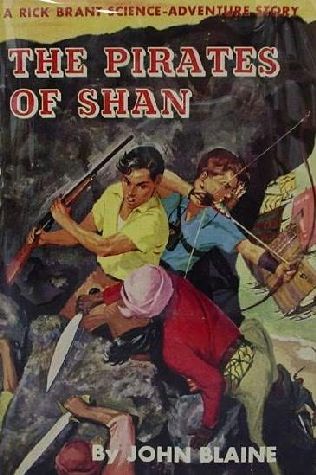
I became fascinated with the kriss and the barong from a Rick Brant book called "The Pirates of Shan" back around 1960. The primary characters are teenagers and one, who was Indian, picks up a kriss and a barong for company on their search for missing friends. Back before political correctness youths could take along a rifle, bow and arrows, and short swords as required to face pirates in the Sulu Sea.
n22964.jpg
 
I notice that the blade shows no visible rust. That's pretty impressive considering this is a WWII era blade. Did you or your dad take any special care to keep the blade from rusting?

you know how Filipino farmers rust-proof their machetes? they hack and stab at the trunks of banana trees (very watery) and also slice into trees that produce a lot of white sap. it coats the blade with a gooey blue-violet residue. keeps the blade from rusting. but then, farmers' machetes are used everyday and daily use keeps blades from rusting.
 
Hello Steve, that would be a long Pinute, also I think its much more likey that they would have seen the Spanish with the earlier stye rapeir, which is very similar to the English Broadsword.
How do you pm someone here?
 
Hello Steve, that would be a long Pinute, also I think its much more likey that they would have seen the Spanish with the earlier stye rapeir, which is very similar to the English Broadsword.
How do you pm someone here?

Yes, it would - and I haven't seen any pinute that are that long. Momoy Canete was also said to favor an "espada" ('spada?) or long thin sword, but I'm not sure of the dimensions. At any rate, I've wondered if, rather than the rapier that earlier generations of Cebuanos had seen, something like a 'spada or sabre used by the military or landed gentry might have been the inspiration for some drills in San Miguel Eskrima called "espada y daga." I took a weekend class with Ramon Martinez on Spanish sword and one thing that I gathered was that the transition from rapier to small sword in Spanish fencing culture did not involve a huge change in technique (other than the fact that the small sword shorter and lighter and therefore was easier to manipulate). And the footwork for Spanish sabre is essentially the same - as well, although there is more cuts with the edge. At any rate, "espada y daga" drills done with stick and dagger look like this:

http://www.youtube.com/watch?v=6RZY1ZfVAQw

We decided to use rapier and dagger for the same drills and they come out looking like this:

http://www.youtube.com/watch?v=SpaK9rEt8mk

This is obviously a military rapier or rapier-sword compared to the Spanish dueling rapier which is much more of a point weapon. But personally I think that these drills would be easier to perform with a somewhat shorter weapon like a 'spada or sabre, and that's how I plan to teach them from now on. Anyhow, it's interesting conjecture but that's all it is for now - until someone does a history of the dueling culture (if there was one) of the Philippines under Spanish rule.

Best,

Steve
lhommedieu@hotmail.com
 
Back
Top