- Joined
- Apr 12, 2006
- Messages
- 2,506
This is something I came up with for the Extreme Knife Challenge on the Wilderness and Survival Skills Outdoor Gear, Survival Equipment & More sub-sub-forum. 
Basically, the idea is that a number of knifemakers sign up to make knives that they think will meet the requirements for the challenge and they are sent to one or two judges who put the knives through their paces and post their conclusions about how they performed.
The first one that I heard about was the Custom Machete Challenge, but only after it was over. I would have loved to participate in that one. There have been several others since then, but this is the first challenge I've participated in. The challenge this time is to build a knife to handle extreme survival situations, which can take place anywhere, including urban environments, and may include what would constitute testing to destruction.
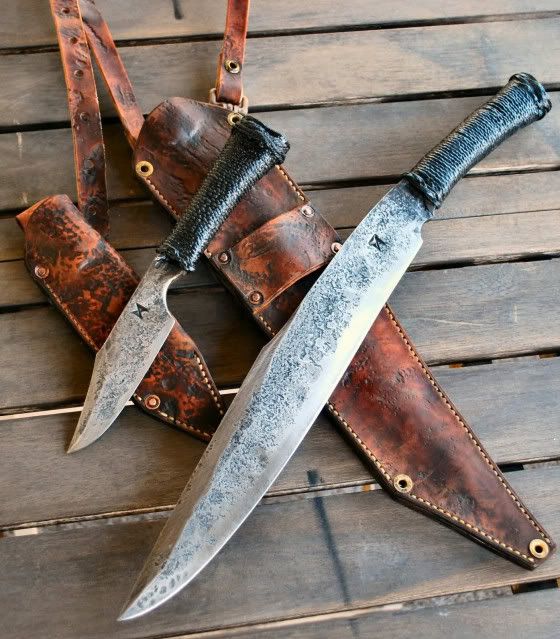
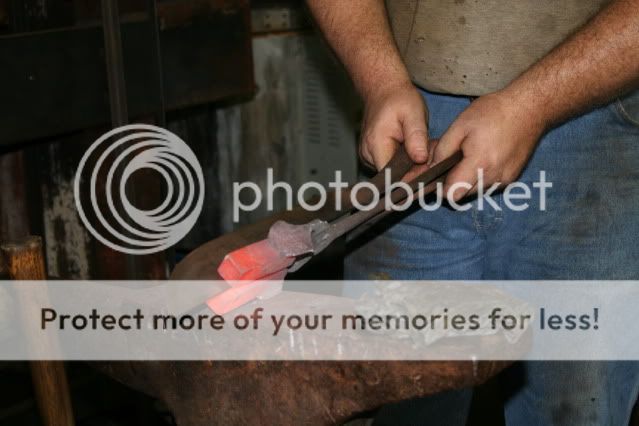
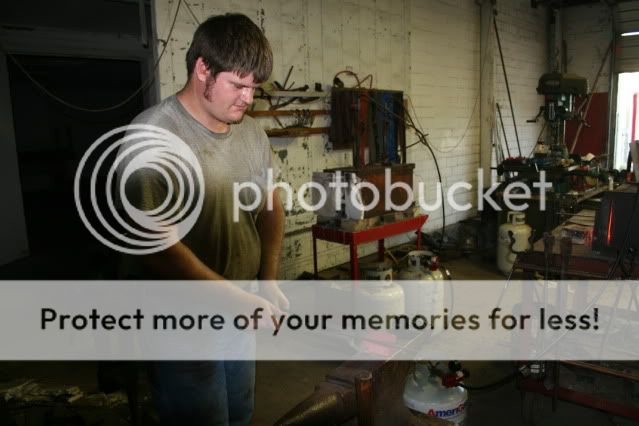
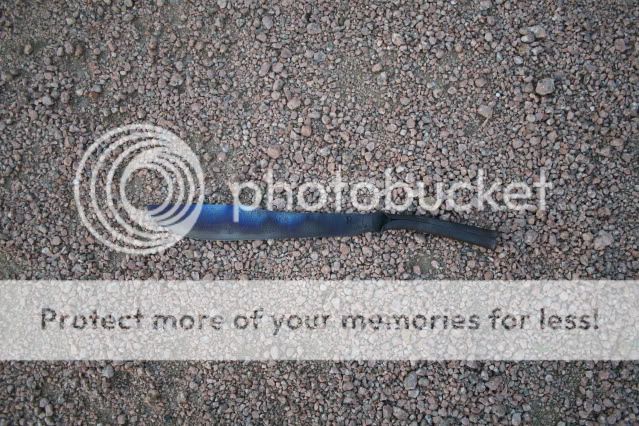
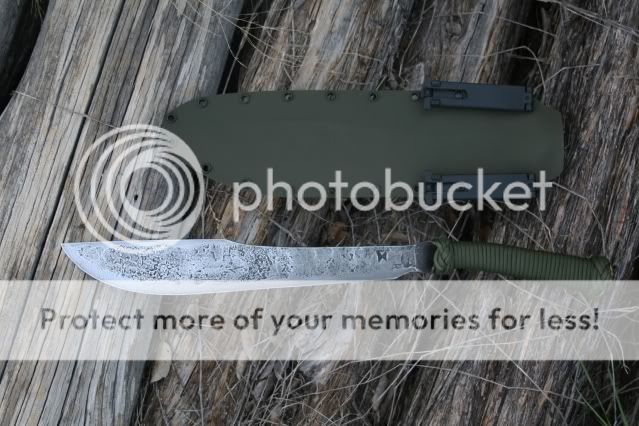
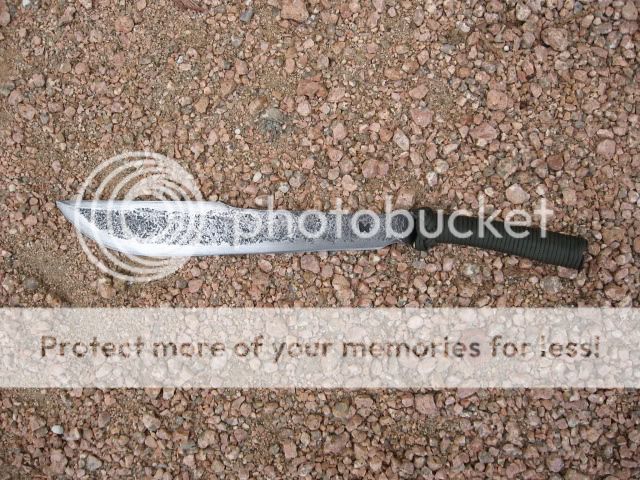
I did a rough sketch, then forged the blade from 1 1/2" x 1/4" 5160 steel. I wanted a plenty capable chopping blade with a big belly and the sweet spot dropped below the level of the hand for extra chopping power. However, I wanted the blade to remain straight for general ease of utility (such as drawknife duty and choking up for fine work) and to make it easy to sharpen on a flat stone, so I made the drop come from the curve of the handle and the angle of the blade to the handle. It needed to handle a variety of task sizes, and I wanted it to not be too heavy and to also be somewhat concealable if needed in an urban environment, so I went with a 12" long blade. Big, but it could be slung under a coat or long-sleeved shirt or fit into a backpack.
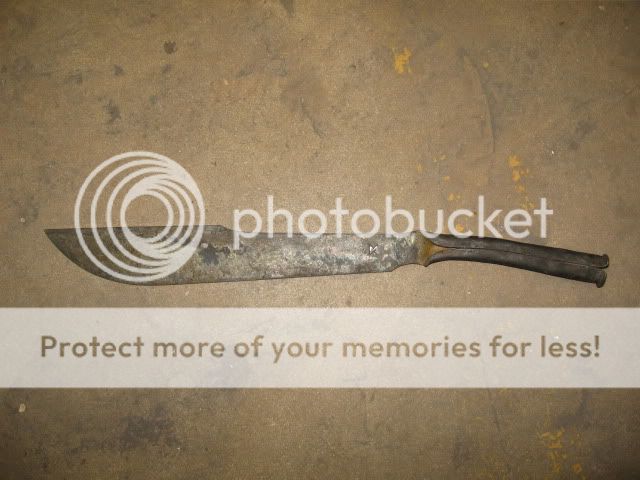
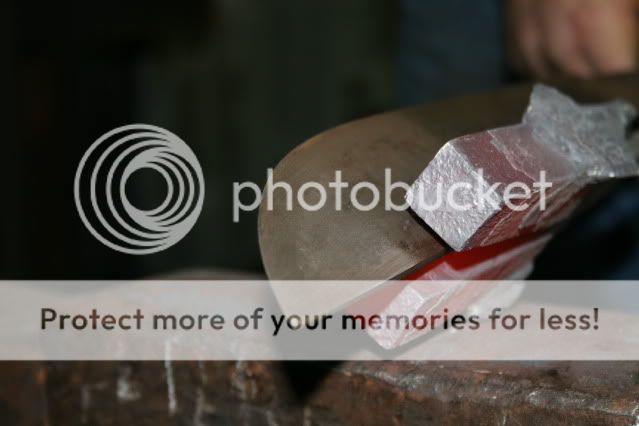
After forging it out, I decided that although I was quite happy with the profile and that it would make a great brush chopper, the thickness of the blade was a little suspect for some of the suggested activities for the challenge (breaking padlocks and chain, etc.) The spine was approximately 3/16" before the raised clip, 1/8" for most of the false edge, and about 1/16" just back of the point. I knew how it would handle hardwoods and such, but the more extreme end of things had me worried. I decided that I would finish out the blade, but then would forge a heavier version for the challenge.
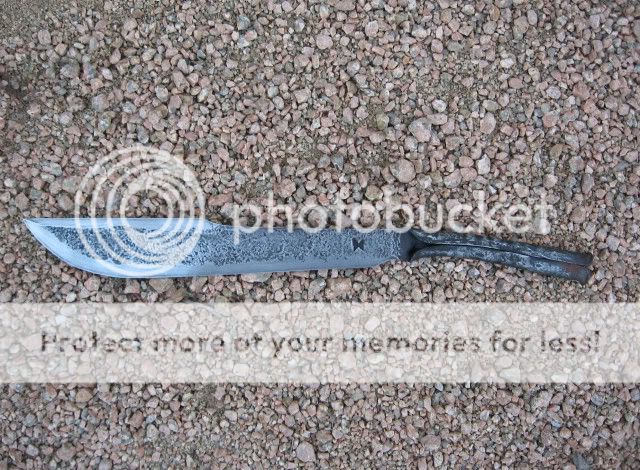
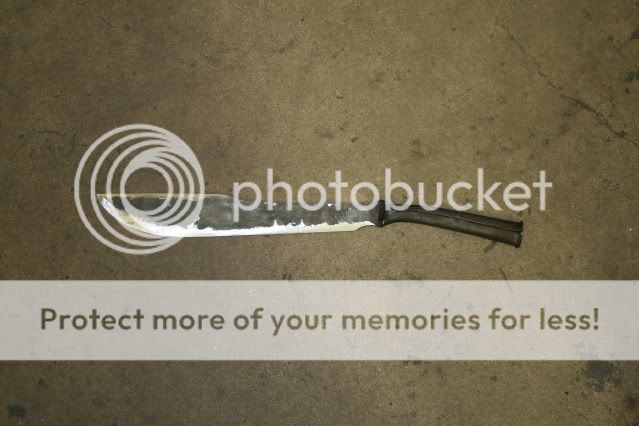
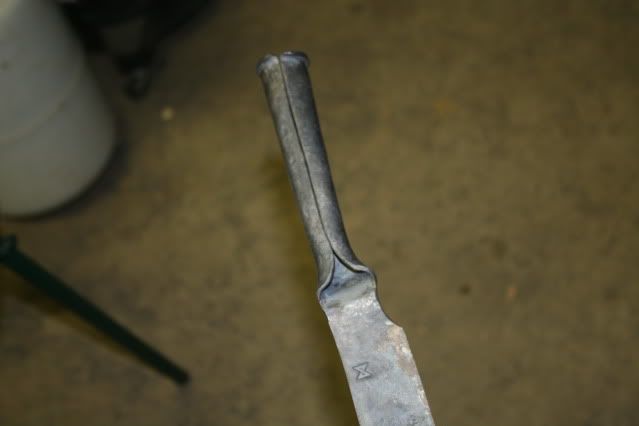
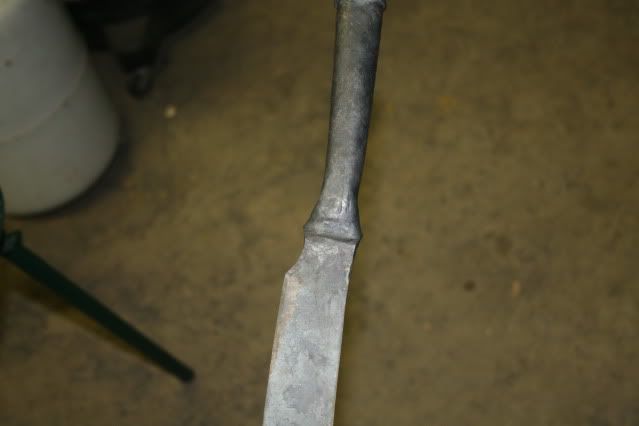
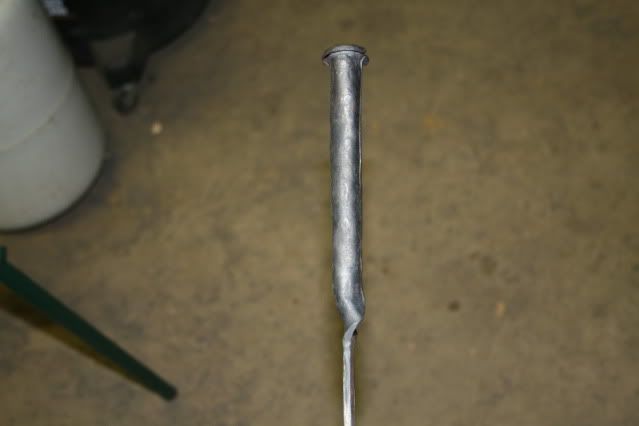
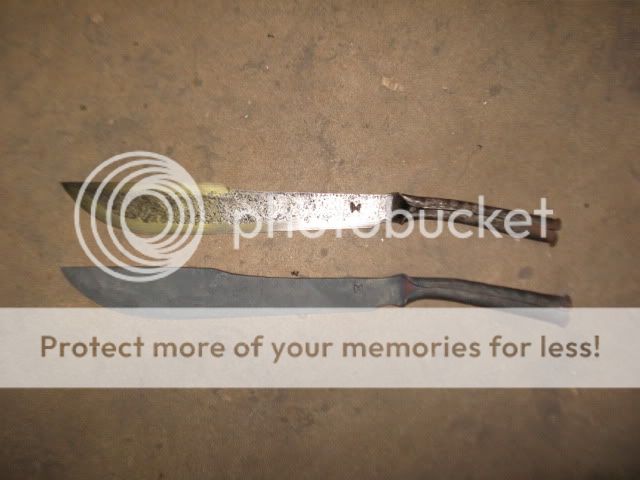
As it stands now, the Mk II version has been soaked in vinegar to eat off the scale and is ready for stock removal. The false edge area is around 1/4" thick right now, but will thin out a bit. The MkI had a shorter handle than I typically do, making it where I wouldn't have enough room for my usual Turk's head knot at both ends of the handle, so I made the Mk II have my standard handle length.
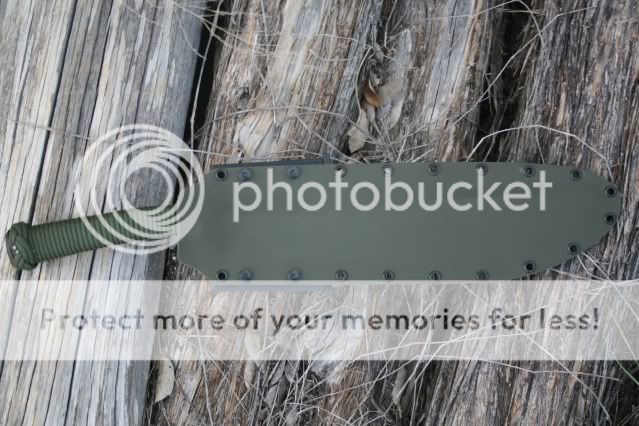
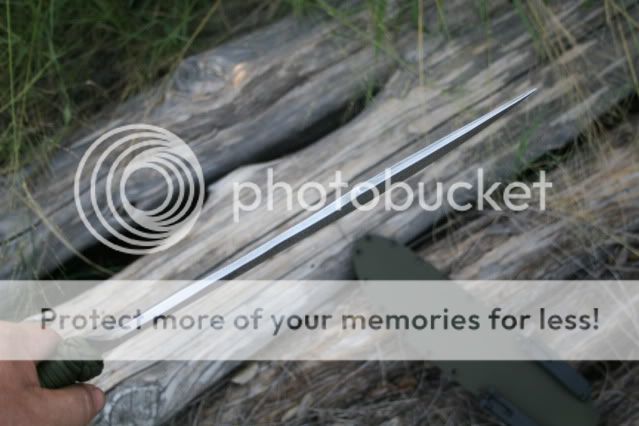
I chose some subdued olive drab paracord for the handle wrap and two-strand Turk's head knot, sealed in Minwax Wood Hardener. After sharpening, I tested it out on both thin, whippy hackberry branches and a good-sized pecan log. I'm happy with it and will put it on my table at the Blade Show, while finishing up the Mk II version for the Extreme Challenge.
Basically, the idea is that a number of knifemakers sign up to make knives that they think will meet the requirements for the challenge and they are sent to one or two judges who put the knives through their paces and post their conclusions about how they performed.
The first one that I heard about was the Custom Machete Challenge, but only after it was over.
I would have loved to participate in that one. There have been several others since then, but this is the first challenge I've participated in. The challenge this time is to build a knife to handle extreme survival situations, which can take place anywhere, including urban environments, and may include what would constitute testing to destruction.I did a rough sketch, then forged the blade from 1 1/2" x 1/4" 5160 steel. I wanted a plenty capable chopping blade with a big belly and the sweet spot dropped below the level of the hand for extra chopping power. However, I wanted the blade to remain straight for general ease of utility (such as drawknife duty and choking up for fine work) and to make it easy to sharpen on a flat stone, so I made the drop come from the curve of the handle and the angle of the blade to the handle. It needed to handle a variety of task sizes, and I wanted it to not be too heavy and to also be somewhat concealable if needed in an urban environment, so I went with a 12" long blade. Big, but it could be slung under a coat or long-sleeved shirt or fit into a backpack.
After forging it out, I decided that although I was quite happy with the profile and that it would make a great brush chopper, the thickness of the blade was a little suspect for some of the suggested activities for the challenge (breaking padlocks and chain, etc.) The spine was approximately 3/16" before the raised clip, 1/8" for most of the false edge, and about 1/16" just back of the point. I knew how it would handle hardwoods and such, but the more extreme end of things had me worried. I decided that I would finish out the blade, but then would forge a heavier version for the challenge.
As it stands now, the Mk II version has been soaked in vinegar to eat off the scale and is ready for stock removal. The false edge area is around 1/4" thick right now, but will thin out a bit. The MkI had a shorter handle than I typically do, making it where I wouldn't have enough room for my usual Turk's head knot at both ends of the handle, so I made the Mk II have my standard handle length.
I chose some subdued olive drab paracord for the handle wrap and two-strand Turk's head knot, sealed in Minwax Wood Hardener. After sharpening, I tested it out on both thin, whippy hackberry branches and a good-sized pecan log. I'm happy with it and will put it on my table at the Blade Show, while finishing up the Mk II version for the Extreme Challenge.