1095 grain/carbide size?

ust curious (again!:).

What's the finest steel? Avg carbide size and grain

BCMW/my ht of W2 (src from NJSteelBaron current composition) :D Projected/guesses grain size below 2um (astm 15); 3% carbide volume @ < 250nm dia. Oh sure :rolleyes:

LOL, seriously bluntcut do you offer your stuff for sale on a regular basis yet? We want it!

Nathan, smallest carbide size and grain, afaik, comes from cemented nano-carbide hardmetals (WC-Co), <200 nm is the claim http://allaboutcementedcarbide.com/02_01.html
We are talking about >90% carbide here, not the puny 1-5% of many steels ;) Tungsten carbide and the like can be made exceedingly sharp, hard, and wear-resistant - they can take and keep an edge that knife-steels cannot even approach due to lack of hardness... but toughness is quite low, not your ideal bushcraft tool :p
 
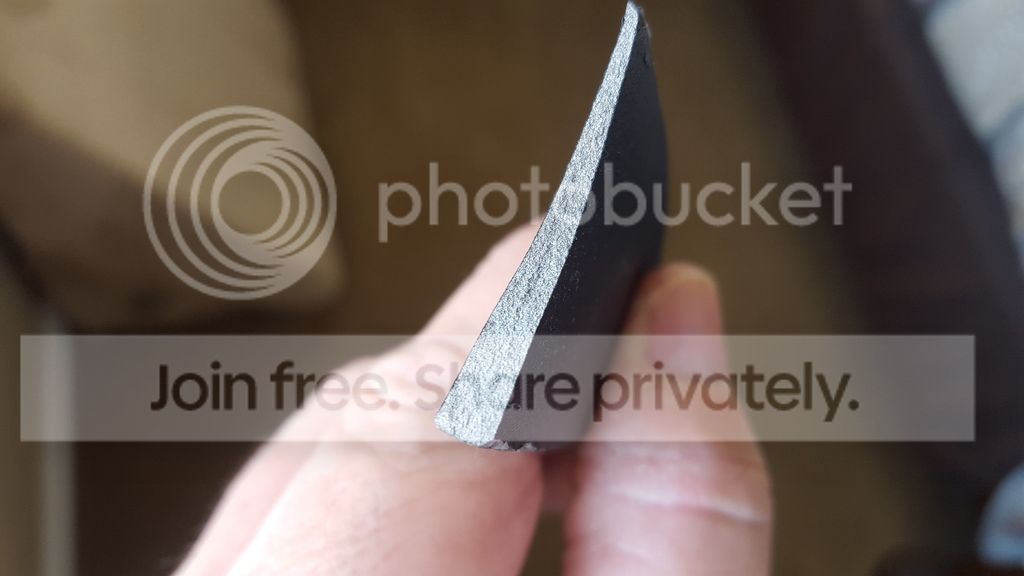
here is awesome grain size:D
20160213_124756_zpsmnmeloec.jpg


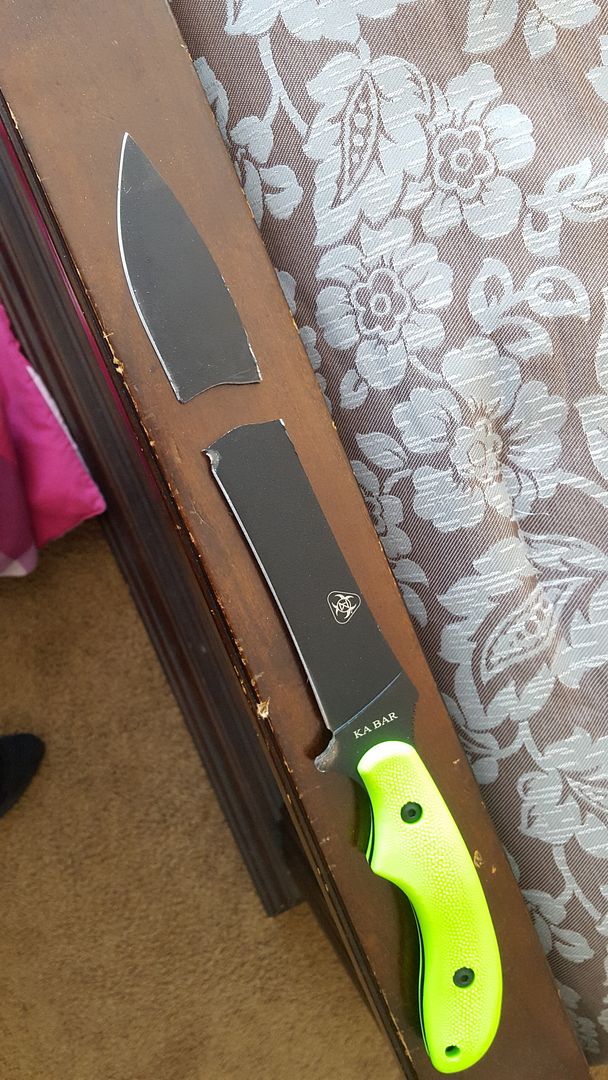
which I noted after this camilus/kabar/becker broke. 1095 crovan

20160105_123508_zpsedgcocc5.jpg
 
here is a buck hoodlum fail. Look at that grain 5160. Goes to show you can screw any steel up.

maxresdefault.jpg
 
Here is small grain (tempered) but plate martensite, hence non-jagged broken face. It looks fuzzy because it's very smooth/silk in real life. * note * - as quenched martensite shows grain & grain group/cluster broken interface much clearer.
OFYRINE.jpg
 
Last edited:
problem is there is no way for an individual to know without breaking the knife. I have seen this large grain in many high volume production blades I have broken over the years.
 
If you want to see fine grain, break a HSS mill or drill bit. It makes that stuff above look like gravel.
 
See if your low Cr Steels (where Cr < 2 mass % ) has coarse/bad grain size w/o break your knife...

1. Almost mirror polish the sharpening edge bevel using grit at least 8K, best to 0.5um.
2. Nital 3% etch for 45 seconds, clean with windex or baking powder.
3. Use 15+ magnification loupe or usb microscope.

Coarse grain usually carbide + stuff heavily precipitated/deposited at grain boundaries. so look for ridges of carbides outline of a grain. For #2, 15 minutes soak in vinegar may provide a faint outline of grain.

This approach doesn't work well for average or better ht.

problem is there is no way for an individual to know without breaking the knife. I have seen this large grain in many high volume production blades I have broken over the years.
 
ust curious (again!:).

What's the finest steel? Avg carbide size and grain

As before, it all depends on the processing. Some steels have grain size as low as ASTM size 25. Carbides can be fully dissolved so only tempering carbides are present, which are extremely small and are unresolvable individually with optical microscopes. Steels such as 1080, or those with lower carbon content, will have no carbides when heat treated conventionally, except tempering carbides. Extremely fine grain sizes eventually become problematic as they will require extreme quenches to fully harden. See Bluntcuts use of superquench, then extrapolate to grain sizes much finer than that.
 
It's softer than it could be, and the tempering temperatures likely are right in the middle of an embrittlement zone, but that's not ucommon for production knives. you'll likely never notice. I've seen 1095 as high as 66 HRc, but that was not a rough use knife.
 
he says (diving sparrow guy) that his blades are 59rc? Is that soft for 1095?

To put it in perspective, Becker/Kabar and ESEE blades are HT'd to 55-57 Rc.

If the maker offers a good warranty (lifetime replacement guarantee against failure due to defect in the workmanship, similar to what most production companies offer) and you don't find negative reviews or instances of failure in normal use, you might give it a shot :thumbup: If not him, there are MANY custom-makers out there producing knives of similar design/intent. Just check here: http://www.bladeforums.com/forums/forumdisplay.php/754-For-Sale-Fixed-Blades
 
Back
Top