1095 Heat Treat NightMare !!*Update*

Here is a good source for Tempilstiks. I bought mine here in Canada. One, in each of your chosen temperatures will last a loooooong time....... unless you develope a taste for them... the red ones are particularily yummy!

I bought mine individually, in 50deg increments from 1200F to 1800F. I believe they go up to 2100F, maybe higher... check it out.

thanks... I will get some for sure as I'm sure this testing will become a ritual of mine, as FRUSTRATED as I am right now it sure is interesting none-the-less..

@page, I hope my slotted brick isn't keeping the knives from reaching their full potential, by eye it doesn't appear so but again I'm 'experimenting' :D
 
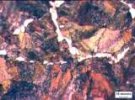
decarb penetrates beyond the easily visible blotchiness

th_1095-w-decarb_500x.jpg

I have better pics for illustrating this, but they are not on this computer

-Page
 
I used the tempilstiks in an unorthordox manner to suit my experiment. Make sure you use them right when training your eye. A common mistake is unknowingly measuring the forge/air temperature rather than the steel. I my experiment, that was my goal. You normally wouldn't break tabs off the markers like I did.

Rick
 
Rob,

The decarb is not scale. The decarb goes below the scale. The nice meeting of art and science with knife making is the science part where Time and Temperature are very reliable in their results, but the art of knowing the times and temps takes learning.
Try this. Heat a sacrificial piece of steel, quench, then put it in a vise and snap it off. You'll easily see if you are getting your steel hard. If it's 62-64 etc, it'll snap like my Mom's world famous peanut brittle!
 
Last edited:
Was Rick the engineer that did the calculations on the Mars Orbiter back in "99?
It wasn't my fault.... my abacus had a few beads missing... seriously, who counts their beads, man?:o Oh well, better to burn up than fade away.:thumbup:
 
**Update**

I had cut 2 coupons and tried heat treating again, one I left just quenched the other I tempered.. the one I quenched showed lower numbers :eek:the tempered piece was higher at 48... very weird...

now in the mean time, (last week) I had someone else heat treat a blank and one of the knives I tried HT before.... both registered 58-59 range, repeatedly..

so now we confirmed the steels not the issue, and I'm assuming my kiln is off calibration... by how much?? IDK, but I HT'ed a couple more coupons one (quenched and one tempered), and also several of the blades from before, they're in the second cycle tempering now..

I also HT'd a sacrificial knife that was warped from previous attempt, I put it in the vise after HT and easily snapped the tip off, no harsh grain structure looks nice and clean..

I set my kiln to 1595-1600 as I believe it is 100*f off calibration, I won't know for sure until I buy some tempilstiks and calibrate it..

we'll see tomorrow if my numbers come up, but I'm almost positive I've nailed it after snapping the knife, well at least it feels like it..

I'll post a pic of the broken knifes grain structure later...
 
Thanks for sharing Rob. I'm glad you're getting things squared away. It's problems like these that seem to be some of the best learning experiences.
Have you thought about getting a PID and thermocouple to help calibrate?
Looking forward to a happy ending to your nightmare!
 
I recently built an oven and had trouble getting knives to harden consistently at first. I determined that the temperature readings were inaccurate and decided to find a way to calibrate the oven. I tried tempilsticks but I can't for the life of me get an accurate read with them. They start to melt over a pretty broad range. Always the same temps but there is almost a 100 degree window from it melting a little bit to full blown watery melting all over the steel. Which one is the actual rating for? The markings are quite difficult to see on red hot steel and as Rick pointed out they have a tendency to melt when the surrounding air reaches temp even if the steel hasn't yet. So even though the lab tested accuracy of tempilsticks may be only a few degrees, I only trust them to get within about a hundred degrees or so in real world use.

I ended up using a similar technique with different materials in order to more accurately calibrate my oven. I learned that copper melts at 1984 degrees and most copper wire is over 99% pure copper so I gathered up some heavy guage copper wire and some 1/8" brazing rod with a melting point of 1620 degrees to test with.

First I tried putting a bar of steel in with small pieces of the wire set on top of it but I still had problems with the wire melting before the temperatures evened out. I tried many different configurations and ultimately settled on drilling holes the size of my wire every few inches along a piece of 1/4" steel the length of my oven. I placed 1/2" long pieces of wire and brazing rod in the holes and put the whole thing on edge in the oven just like a knife blade. I made a U shaped ceramic muffle with some high temp clay from the local pottery supplier to keep the blades from heating too fast due to the exposed coils.

Once everything was ready I fired up the oven and starting at about 1300 degrees I increased the temps 50 degrees at a time until everything was melted. I let the oven equalize for about ten minutes at each temperature before increasing and noted which wire pieces had melted (if any) before each change. With temp overuns taken into account this gave me about a 75 degree window to test more accurately for each of my alloys.

I removed the steel, re-drilled the holes and performed the experiment again. This time I only increased ten degrees at a time with 10 minutes between changes. My oven is a top opener so a lot of heat escapes each time the door is opened. After the temperature equalized I would check the wires, then close the lid and let it come back up to the same temp. It would usually overshoot about 5 degrees and when it peaked I would then reset the controller for the next temperature. Doing this the overshoot at each temp was only 1 to 2 degrees before the oven stabilized. Then I would check again and move on to the next temp.

When the melting temperature of the wire approached, the extra wire sticking out of the steel would ball up and at the next 10 degree increment it would be completely melted and run out of the hole. This showed me a couple of things. First that even ramping up this slowly, thin sections still get hotter than indicated temps, and second, it told me when I was within ten degrees of my true temperature. I also got a very accurate map of how the temps vary from one end to the other in my oven.

Because my oven is outside, I repeated the experiment a few times with different ambient temperatures ranging from about 30 degrees in the middle of the night (when I usually do my heat treating) to 70 at midday. I used an infrared thermometer to measure the controller temperature and the thermocouple to copper junction temperature.(Calibrated by measuring a piece of steel in ice water and boiling water) I found that the temp of the thermocouple connection to the copper wire was directly related to the error in indicated temperature and that temperature was almost directly related to outside air temperature. Since my first calibration was at 32 degrees (just happened to be the ambient temperature that night) if I run the oven in 60 degree weather my oven will read about 30 degrees hotter than it really is because the thermocouple only tells the DIFFERENCE between its two ends. (Note: It takes my oven about a half hour at 1500 for the thermocouple connection temperature to stabilize.)

All told, between the variance in controller temperature, thermocouple connection temperature, and the approximately 20 degrees my oven varies from end to end (the last two inches on each end are significantly cooler and are not counted) my temperature readings were initially off by well over a hundred degrees at austenitizing temps. Now, I am pretty confident that I can hold the entire knife within about a 30 degree range centered on the desired temperature.

Next year I plan to build a salt pot rig.
 
when i was working in the met lab we calibrated our thermocouples against the melting temperature of gold, and the melting temperature of silver (we used standards that were certified pure to 5 decimal places since we were testing to a hundredth of a degree accuracy)

http://www.engineeringtoolbox.com/melting-temperature-metals-d_860.html

I like your calibration setup and methodology, I will have to make a test bar like that for my students to use for their kilns. I will experiment with adding some silver soldering flux in closed bottom pockets for the wire which should eliminate any delays from oxidation.

-Page
 
Rob, at one point you mentioned not bringing it up to temp first, are you always doing it that way or do you normally let it get up to temp then put blades in? During the heat up phase you're blade is going to actually absorb a LOT more heat and fly past your intended temp, potentially creating a very deep decarb layer.
I know you've been spending a lot of time on this but try this as a simple test of your steel and quench.
Set the oven to what you think will give you around 1550-1600. You're going to treat it like a forge though. Let it get fully up to temp.
Put a piece of 1084 in, let it heat up for a few minutes. Pull it out with tongs, check with a magnet. If non magnetic for its full length (or just any spot really if it's not a ground knife) put it back in for another 30 seconds then quench.
If still magnetic at all, put it back in for another minute and repeat your check. The goal is magnetic plus a bit so if in doubt, a little more time.
If it never quite goes non magnetic then turn the heat up another 100 degrees. That gives you 50 degrees to get to or just past non magnetic then 50 more to get to the right range for 1084. I don't have my charts handy so if I've got my adjustment past the non magnetic point wrong, someone please correct me. For some reason I'm thinking 50 but also that it's a bit more than that for 1084.
Quench in whatever you plan to normally use, at a reasonable temp. Canola around 120-130, 11 sec M-C, Parks... whatever.
Grind off scale and a bit for decarb, but there shouldn't be much decarb unless you had to adjust temp several times. That's the beauty of 1080 and 1084, up to temp, quench, it shouldn't have time to do much decarb even if your forge or oven is over temp as long as you are checking the blade and not putting it in until your heat is stable in there. If you put the blade in THEN set the oven to heat up you're giving it a long soak with very high radiant heat.

Early on I had decarb issues but not lately. I've gotten a better feel for things and am more smooth at getting the whole blade up to temp together rather than letting the edge overshoot or soak at temp while I'm trying to get the spine up to temp. I have a fair number of "shop" knives because they just didn't hold an edge due to that. Once I got in the habit of, "give it what it needs and no more" in terms of heat things started working much better. I am able to use less propane and less time while getting much better results. I laugh at myself thinking back to how much propane I'd go through heat treating just over a year ago.
 
Last edited:
Skate test is semi worthless. Several months ago we wasted 2 weeks talking someone through this exact scenario with 1084, he refused to accept that he had heavy decarb so we took him through calibration of his kiln, thermocouples, etc. And I finally convinced him to grind down 2 thousandths and test, then another 2 thousandths and suddenly he was getting good numbers. At .006 if I remember he was safely through his decarb into good metal.

More later when I am not pinky typing on a phone

-Page

It was me, and yes Decarb was kicking my butt. Get to a 400 finish before heat treat, I have found this helps out greatly with decarb as well.
 
most excellent advice from all you guys I really appreciate the input.

last night I played around with the coupons and various blanks, I tested for nonmagnetic just for fun and would fluctuate the numbers my kiln was reading when it got to nonmagnetic, but heres the kicker...

last night (yes dark time :) ) I was able to see the color of the steel better in the kiln, and when I reached in to grab the pieces I knew I was dead on... they were more straw colored then I remembered, but then again I was treating in the day...

I think I will get a secondary thermocouple to help calibrate to where I'm spot on... I have an oven thermometer (700*F) that I use and it gets consistant results up to 450*F after that its all over the place, I've tested it various time to see just how sparatic it is after 450..

There is so much to learn about HT in general its not even funny but even much more fun to argue about HT :D

I took my blades and coupons in for testing today with excellent numbers.... 58-59 across the board, one coupon that wasn't tempered came in at 61-62.. so just the science behind tempering will get me experimenting with different numbers as I lower the RC points with various temps/times...

btw, my buddy whos in the HT business always goes to these auctions for ovens and everything related to HT, he's going to pick me up a RC tester for a couple hundred.... I think hes getting tired of me coming into his shop everyday :D, I even have his guys test for me when hes not there, his approval of course... just don't want to burn a bridge you know...

 
Woot, so you've got good results, now you just have to work out how to repeat it consistently in varying conditions. Sometimes the hassles you guys have with temp control and thermocouples in the electric ovens make me glad I'm using a propane forge and nothing more complex than 1084.
 
With all this talk about decarb. Does decarb attack all facets of the blade? And if so, how much should steel should be removed from the blade edge? Is this why people say knives get sharper with use, because after a few sharpenings the decarb is removed?

Sorry that's a lot of questions.
 
Jason,
that is indeed an excellent way to calibrate, and has the benefit of being inexpensive. I know how important kiln calibration is, not only for heat treating knives, but I also make silver/gold mokume in mine, and if my kiln is off I may wind up with a several thousand dollar puddle. (I had this happen once, but it was a broken thermocouple, not the controller) Thats not the kind of mistake you can forget in a hurry.
I will remember this one if I ever need to advise someone on calibrating.
Del
 
Back
Top