

- Joined
- May 17, 2006
- Messages
- 450
Ken and I decided to give a brine quench a try since my last attempt at heat treating 1095 was a mess. We tried to be as "scientific" as possible as to leave as many unexplained variables out as possible. Blade was 3/16" x 1.5" x 9" hollow ground. The first thing we did was to get the brine ready. We filled a metal bucket with water and mixed in some water softener salt. We heated that over a burner until the salt was disolved and the water was at approx. 150 degrees. The amount of salt at this point was around 70% according to a salinometer(i think that's what it is called...a little bobber type device that floats at different levels according to how salt saturated the water is) When the brine was just about ready we heated the blade to 1475 in a controlled oven and let it soak for about 5 minutes. At this point I was almost expecting a severe crack or ping to occur and had resigned myself to that idea since it was our first attempt and the 1095 horror stories are so abundent. Ken took the blade out of the oven and plunged it into the brine tip down until the whole thing was submerged. For those of you who have never done this, it is a site to see for sure. The reaction with brine is totally different from oil. The water boils instantly and it makes this bubbly gurgling sound and then about 4 seconds later it is over and goes back to a steaming bucket full of brine. At this point the blade had cooled a lot and the water had warmed some so we let it sit for a minute until it cooled enough to handle. Right away we knew that at least the blade didn't explode or crack. It did warp but only a small amount. The file skated over the edge along the whole cutting edge so that part was good. The weird thing is that the spine and about 80% of the blade behind the edge was soft. You can literally scribe most of the blade with a carbide point right up to about the last 1/4" from the edge. You can almost even see a hamon line which was totally unplanned.
At this point I am wondering a couple of things:
1. Maybe the brine was too hot when the blade went in.
2. Did the spine and the rest of the soft area undergo any transformation at all, even though it didn't harden completely?
Even though the results were unexpected (hamon goodness ), I would still consider this a success of sorts. What are your thoughts? Any ideas on why the blade didn't harden completely? Anyone think I am crazy to be trying 1095 when I know I can get near perfect ATS-34 results through Ken's heat treat methods...lol?
At this point I am wondering a couple of things:
1. Maybe the brine was too hot when the blade went in.
2. Did the spine and the rest of the soft area undergo any transformation at all, even though it didn't harden completely?
Even though the results were unexpected (hamon goodness
), I would still consider this a success of sorts. What are your thoughts? Any ideas on why the blade didn't harden completely? Anyone think I am crazy to be trying 1095 when I know I can get near perfect ATS-34 results through Ken's heat treat methods...lol?


 . The title of this book is "Tool Steel Simplified" , by Frank R. Palmer and George V. Luerssen, published by the Carpenter Steel Co. This printing is July 1968. I hope the attachments are readable.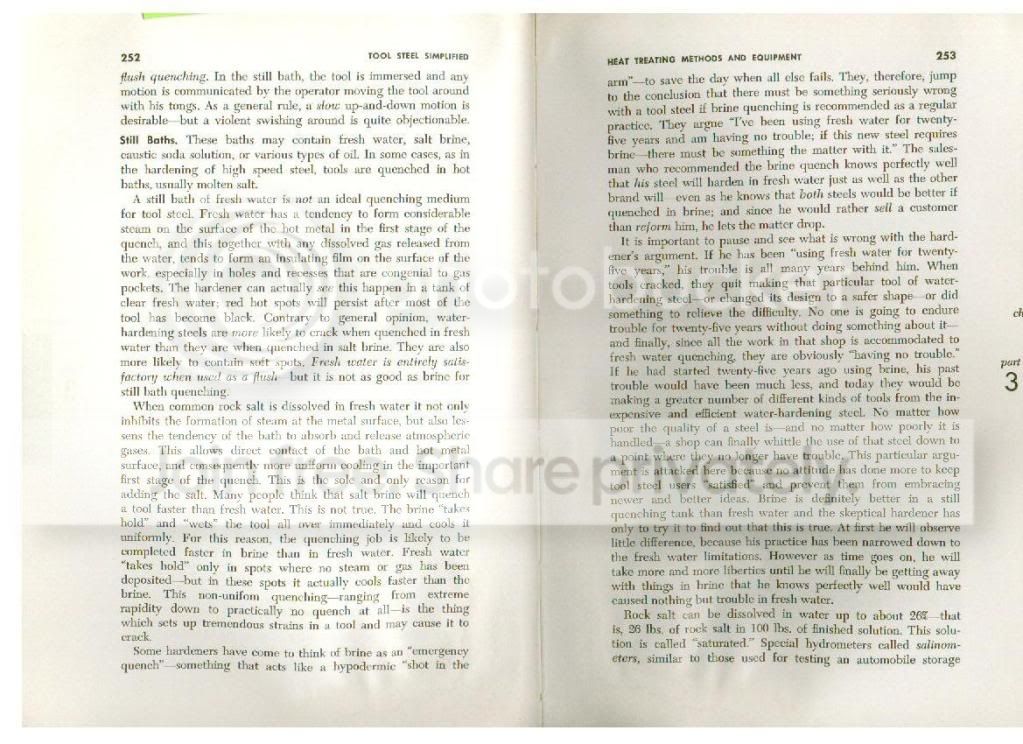
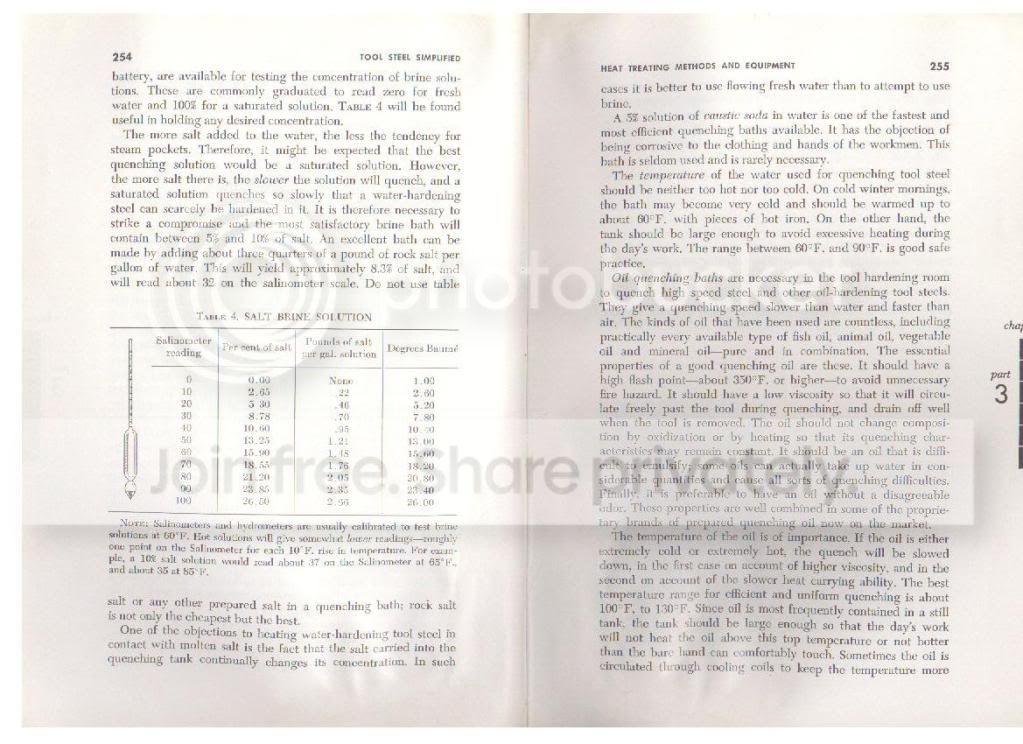
 (I wished I had the head bang emoticon here). Not everybody can set up water jets or J-tubes, but anybody can keep the blade moving in the quench. Water based quenchants may not matter as much since I am not sure if we can move the blade enough to evenly kill that vapor jacket, but oil is not only a breeze it is vital.
