#13 and #16 done, Opinions please!

Joined
Dec 8, 2014
Messages
814
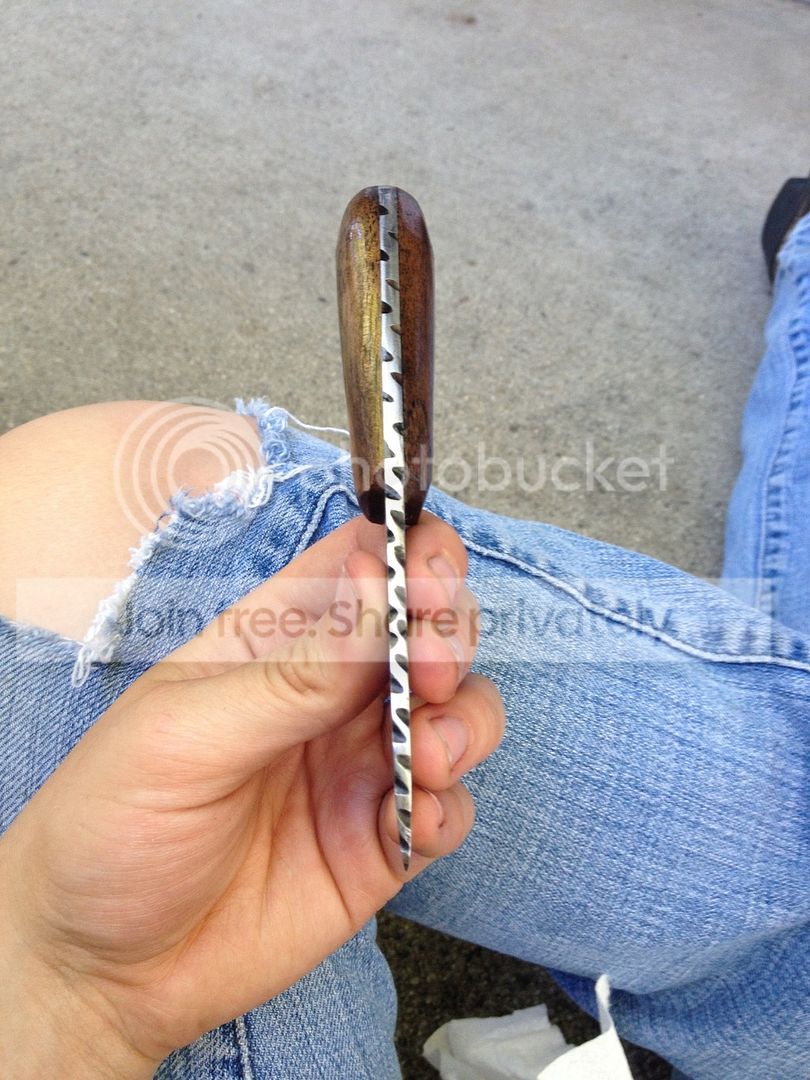
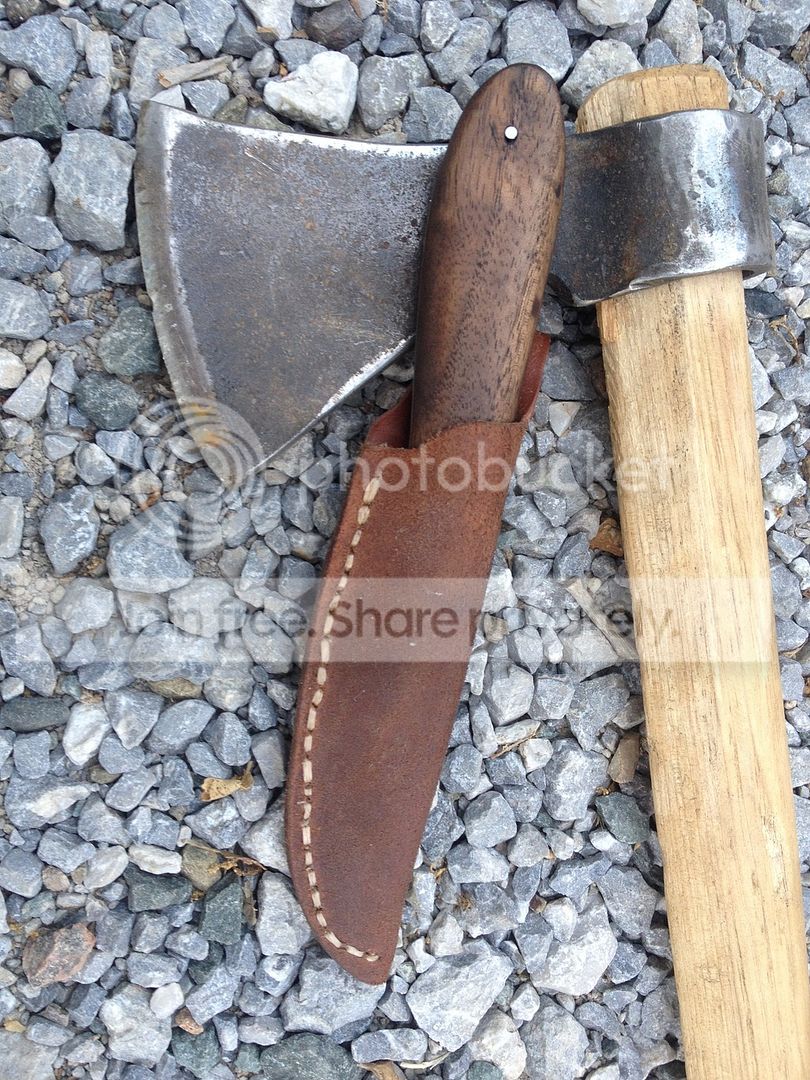
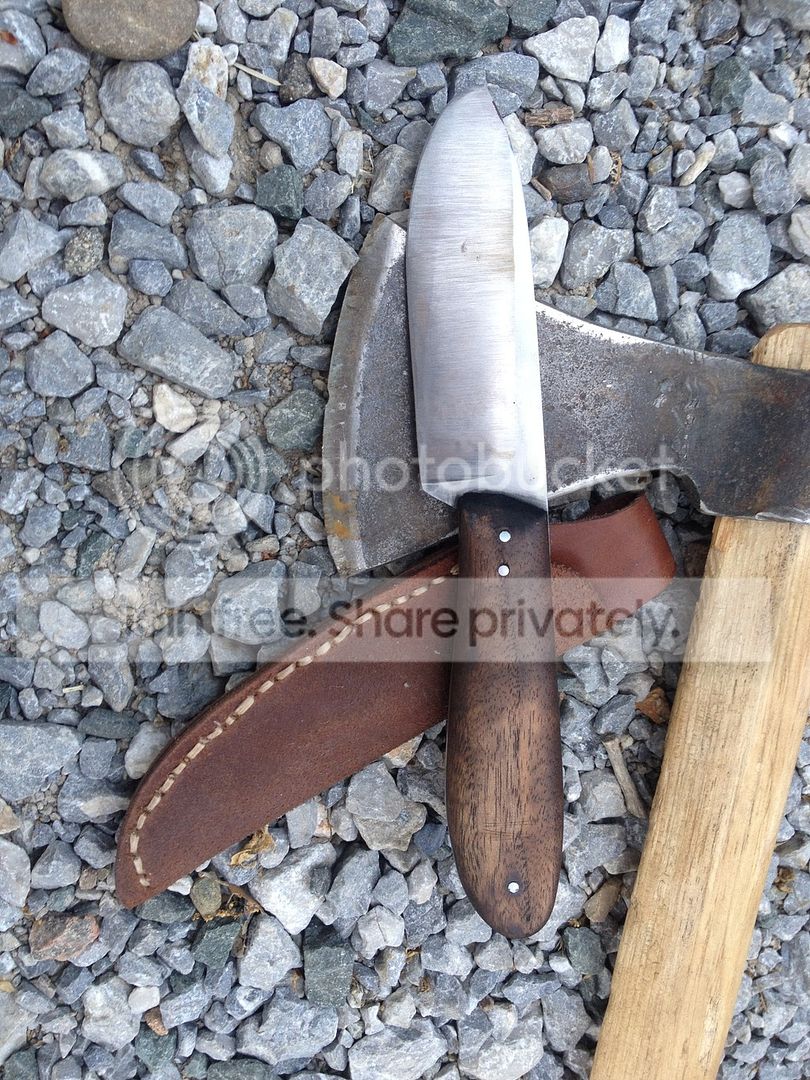
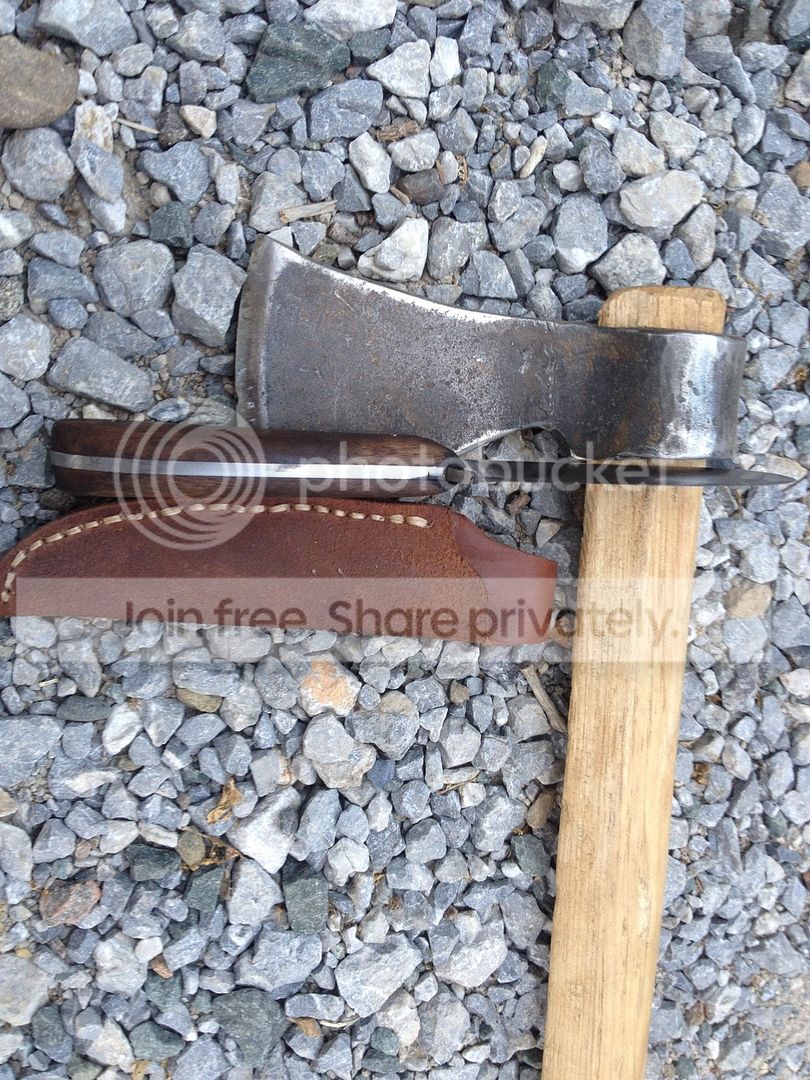
Hey all! Here are two new knives, both 1084 and walnut. Also, I started making sheaths, so there is some leather work in there too. The first one is a small 5 inch OAL knife... my first try with any filework. I was actually going to throw that blade in the scrap pile because of some imperfections, but then I wanted to try filework so I pulled it back out, After that, I liked it so i decided to actually make it into a knife..so now its my beater :). The other was a bushcraft knife that a gentleman ordered from me, OAL is just over 8 inches with a really tall grind, its a slicing machine! The sheath for this one was suede side out on request.


Congrats on getting two more done.


Comments and suggestions for areas of improvement:


The overall fit and finish need some work. You need a lot more sanding and evenness.

The filework up under the handle on the top doesn't fit. Maybe spend more time on the finish and less on the filework. Filework needs to "fit" the knife style...it really doesn't here. It is also a bit wide in the pattern. Tightening it up a bit would help. Also, filework should taper in spacing as the blade tapers toward the tip. By the time it gets to the tip it should be really tiny.

The tip looks like it broke off in the first photo?

The handle looks a bit "fat".
It also looks unfinished. A few coats of sanding sealer and then sanding to 1000 grit would make a big difference. Other choices would be Tru-oil or a similar finish.
On the last photo, the butt looks uneven from side to side?

The pin placement need to be re-thought. They also need to be installed much better. The holes are oval and blown out.

The blade looks quite thick. On a small knife like that 1/8" ( .125") is thick, .090" is about right, and .060" isn't too thin.

Look at a few sheath tutorials and learn how to "saddle stitch".
White thread shows the stitching boldly. If it isn't dead right it will show. Dark thread hides the stitching better.
The flesh side (suede is something different) doesn't really work well on the outside.
 
Congrats on getting two more done.


Comments and suggestions for areas of improvement:


The overall fit and finish need some work. You need a lot more sanding and evenness.

The filework up under the handle on the top doesn't fit. Maybe spend more time on the finish and less on the filework. Filework needs to "fit" the knife style...it really doesn't here. It is also a bit wide in the pattern. Tightening it up a bit would help. Also, filework should taper in spacing as the blade tapers toward the tip. By the time it gets to the tip it should be really tiny.

The tip looks like it broke off in the first photo?

The handle looks a bit "fat".
It also looks unfinished. A few coats of sanding sealer and then sanding to 1000 grit would make a big difference. Other choices would be Tru-oil or a similar finish.
On the last photo, the butt looks uneven from side to side?

The pin placement need to be re-thought. They also need to be installed much better. The holes are oval and blown out.

The blade looks quite thick. On a small knife like that 1/8" ( .125") is thick, .090" is about right, and .060" isn't too thin.

Look at a few sheath tutorials and learn how to "saddle stitch".
White thread shows the stitching boldly. If it isn't dead right it will show. Dark thread hides the stitching better.
The flesh side (suede is something different) doesn't really work well on the outside.

The file work was my first attempt on something fun to try....I'm practicing the climbing vine pattern. I had to re-establish the tip, but it has one. I sanded to 1500 and it has 5 coats of boiled linseed oil topped with paste wax...I'll try tru oil since it builds up better. Pins are something I'm hsving an issue with...the backside of my holes want to blow out. I need to peen them better to fill that I guess. Ok. That was done saddle stitching. I'll post pictures later of my better sheaths I have made, those were some of my first ones
Thanks!
 
Your knives are getting better each time. I like that you are bringing the bevel up higher. Drill your holes from the outside of the scales so when it blows out it is on the tang side. Drill them first before any shaping and you can sand them clean.
 
I don't like the handle wood, it's too boring. Is it just flat sawn walnut? I would try quartersawing it and/or hunt for prettier grain. And as Stacy says fill the grain and maybe an oil finish.
 
Hi Nic, I just wanted to chime in and say how cool it has been to watch you progress. I have very little actual knife making experience but I'm learning and I may have a few suggestions. When drilling the holes for your pins, use a backing block to help with the blow out. Sharp drill bits will help a lot too.
My other suggestion is based on pure conjecture, but I have a feeling that you might be rushing through the process to reach the goal of a finished knife. While I think your style right now is rustic utilitarian, they can look a bit too rustic. If such is the case then my finial suggestion would be to slow down and really take your time enjoying each step. I am a high school girls soccer coach and my team does something similar. They often look to quickly and directly attack the other teams goal, often head on down the center. Yes sometimes it works but usually even then it has more to do with a lucky deflection or a 50/50 challenge that we come out ahead in. What I have been trying to instill, is to enjoy the build up. Pass that ball around the field and draw some of the defenders into bad positions so there will be more space to work for the final couple passes before the shot or cross. Here is where I really see a similarity between playing and knife making, it is during those build up steps that the girls can feel a little nervous and afraid to make a mistake. An errant pass can lead to a give away much like a poor pass on the grinder can leave a deep scratch across the ricasso that you worked really hard to get clean and flat. So they tend to rush through those stages because it is less comfortable, and I have found myself doing the same on a knife that I was working on. What I have to tell myself is not to worry about it, take my time, and enjoy the step at hand. When mistakes happen, accept that it is part of the process and just restart from what ever point is most appropriate. Practice patience and try to enjoy every step. It makes for a more relaxed and better preforming soccer player where mistakes can more easily turn into opportunities. I believe the same holds true for making knives.
Hope this was applicable and not too drawn out. Good luck and I will continue to enjoy watching your progression.

 
I like the walnut but would suggest the filler and a better finish oil. I have also used teak oil which works well. It doesn't shine like truoil but it would fit your style. Just rub it in, let sit for 30 min and wipe off the excess. Continue for 4-5 coats. Let dry for 24 hours and buff.
 
Your knives are getting better each time. I like that you are bringing the bevel up higher. Drill your holes from the outside of the scales so when it blows out it is on the tang side. Drill them first before any shaping and you can sand them clean.

Thank you! Its pretty neat to see just how bringing the bevel up higher allows the knife to cut so much better. That makes total sense, thank you. Question about that though, when I drill my holes, I already have the holes drilled in the blade and then clamp my scales to the wood and drill through the existing hole in the metal.... so how do you mark where to drill the holes at if comming from the opposite direction?
 
I don't like the handle wood, it's too boring. Is it just flat sawn walnut? I would try quartersawing it and/or hunt for prettier grain. And as Stacy says fill the grain and maybe an oil finish.

I use figured and burl woods, but sometimes a plainer wood is nice to have in my opinion. There was a 1/4 thick piece sawn off a rifle stock blank my friend was making so he gave it to me to use for scales.
 
Hi Nic, I just wanted to chime in and say how cool it has been to watch you progress. I have very little actual knife making experience but I'm learning and I may have a few suggestions. When drilling the holes for your pins, use a backing block to help with the blow out. Sharp drill bits will help a lot too.
My other suggestion is based on pure conjecture, but I have a feeling that you might be rushing through the process to reach the goal of a finished knife. While I think your style right now is rustic utilitarian, they can look a bit too rustic. If such is the case then my finial suggestion would be to slow down and really take your time enjoying each step. I am a high school girls soccer coach and my team does something similar. They often look to quickly and directly attack the other teams goal, often head on down the center. Yes sometimes it works but usually even then it has more to do with a lucky deflection or a 50/50 challenge that we come out ahead in. What I have been trying to instill, is to enjoy the build up. Pass that ball around the field and draw some of the defenders into bad positions so there will be more space to work for the final couple passes before the shot or cross. Here is where I really see a similarity between playing and knife making, it is during those build up steps that the girls can feel a little nervous and afraid to make a mistake. An errant pass can lead to a give away much like a poor pass on the grinder can leave a deep scratch across the ricasso that you worked really hard to get clean and flat. So they tend to rush through those stages because it is less comfortable, and I have found myself doing the same on a knife that I was working on. What I have to tell myself is not to worry about it, take my time, and enjoy the step at hand. When mistakes happen, accept that it is part of the process and just restart from what ever point is most appropriate. Practice patience and try to enjoy every step. It makes for a more relaxed and better preforming soccer player where mistakes can more easily turn into opportunities. I believe the same holds true for making knives.
Hope this was applicable and not too drawn out. Good luck and I will continue to enjoy watching your progression.

Hey, I really appreciate that, thank you! That makes sense. I like the more rustic style I guess, but when people say my knives are rustic, what exactly do you mean? Is it because on these knives im not using micarta or a acid wash finish or what makes these so rustic? Not too drawn out at all, thank you very much!
 
I like the walnut but would suggest the filler and a better finish oil. I have also used teak oil which works well. It doesn't shine like truoil but it would fit your style. Just rub it in, let sit for 30 min and wipe off the excess. Continue for 4-5 coats. Let dry for 24 hours and buff.

Ok, cool. Ive heard good things about teak oil, so ill give it a try!
 
Once you drill through the tang and handle material, install a temporary pin. Then drill the other hole and put in another temporary pin. Now trace it on the handle material and cut it out. Use this for the other side and your hole will be drilled the right way. If you sand enough it shouldn't matter which way you drill it. If you are using 1/8" pins I would recommend using a #30 bit which is .0035" bigger so you don't have to force the pin. The function of your knives are getting better and better. Now, focus on the finish and you will have it!
Thank you! Its pretty neat to see just how bringing the bevel up higher allows the knife to cut so much better. That makes total sense, thank you. Question about that though, when I drill my holes, I already have the holes drilled in the blade and then clamp my scales to the wood and drill through the existing hole in the metal.... so how do you mark where to drill the holes at if comming from the opposite direction?
 
Once you drill through the tang and handle material, install a temporary pin. Then drill the other hole and put in another temporary pin. Now trace it on the handle material and cut it out. Use this for the other side and your hole will be drilled the right way. If you sand enough it shouldn't matter which way you drill it. If you are using 1/8" pins I would recommend using a #30 bit which is .0035" bigger so you don't have to force the pin. The function of your knives are getting better and better. Now, focus on the finish and you will have it!

Ok, thanks, that helps!
 
Back
Top