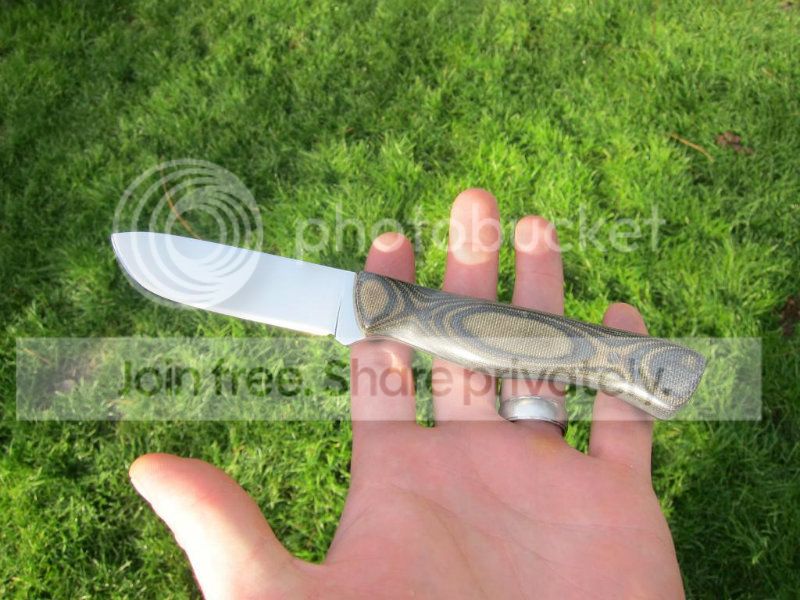
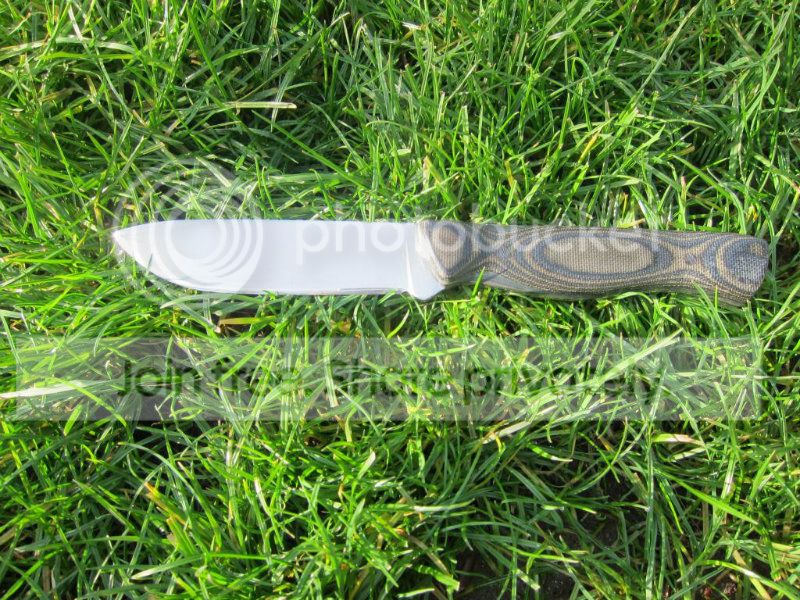
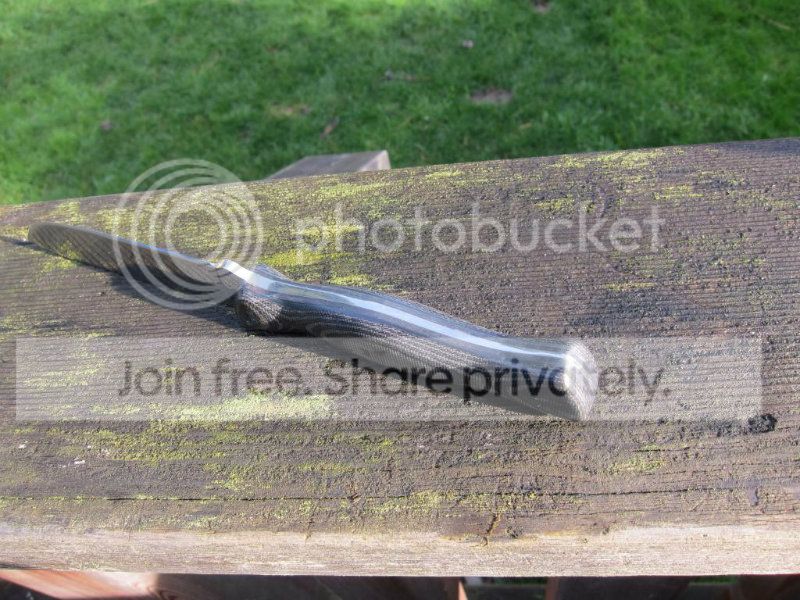
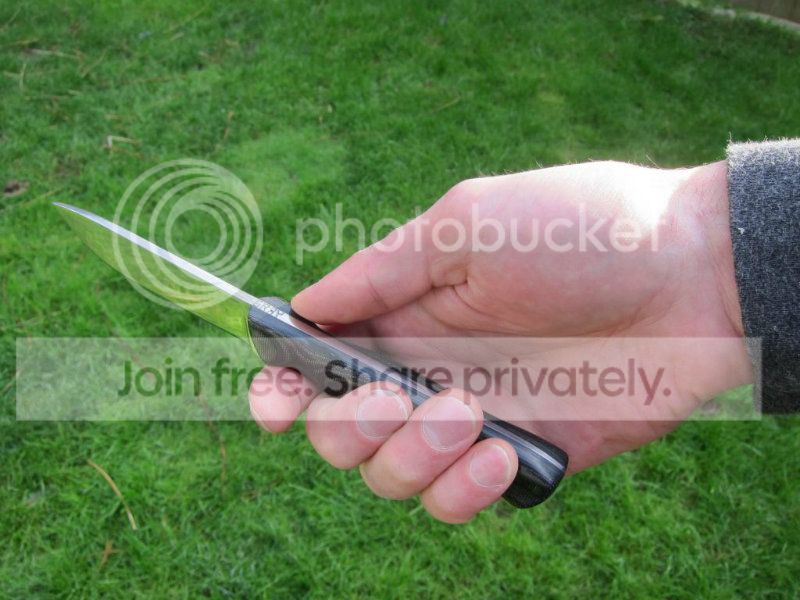
1st File Knife - Bushcraft Style

Joined
Jan 17, 2012
Messages
276
A couple of months ago I decided to tackle making my own knife, while at the same time clearing the mind a bit while grinding away metal. I read that to make a knife you simply take a piece of metal and grind away anything that doesn't look like a knife, which I found to be largely true. I've followed BladeForums for some time and picked up my first handmade custom knife last year (a folder by Ray Laconico), whose work at least partly inspired my own. This creation was also heavily inspired by Fiddleback Forge's work, who I've admired for some time.

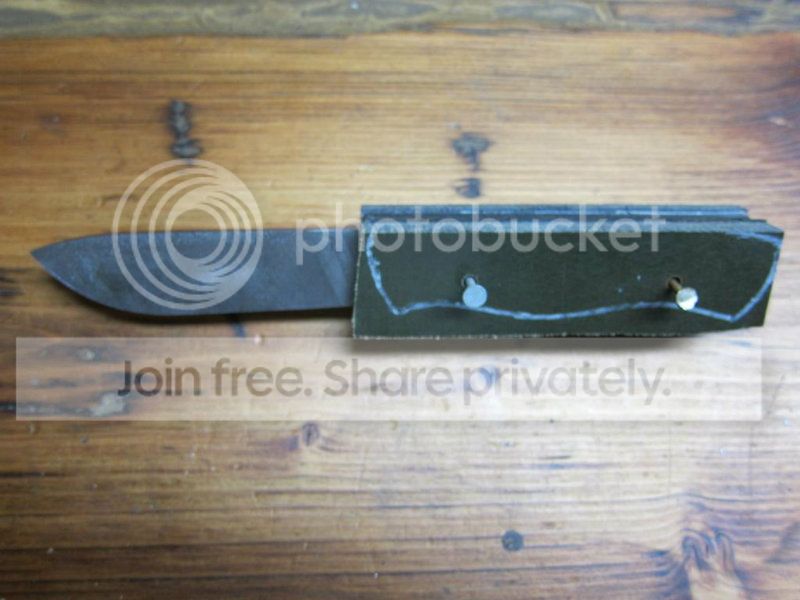
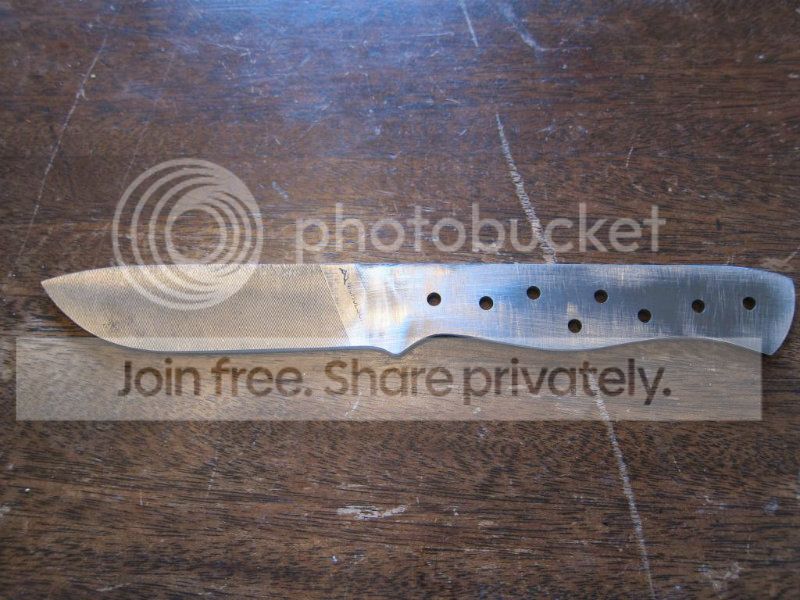
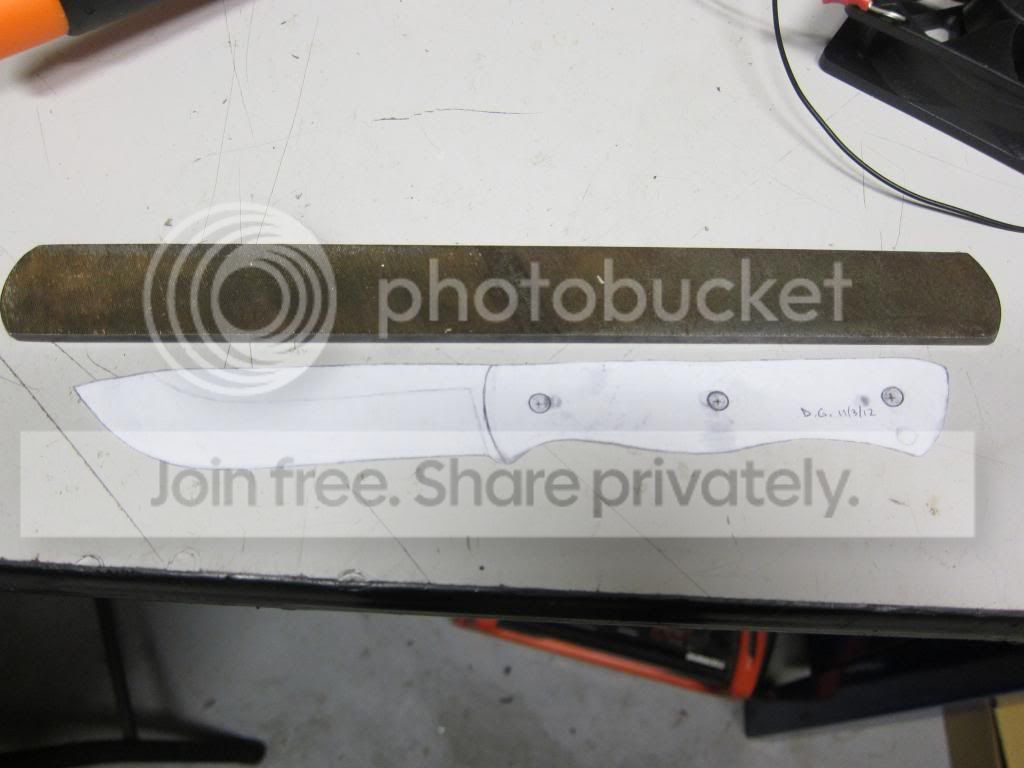
The project started as a very old rusty Nicholson file. I sketched the shape up on paper, cut and glued it to the file, and worked the overall outline down on my bench grinder, going slow to avoid excess heat. I used a 3"x21" belt sander to remove most of the file facing and start the bevel, finishing with a wood block and sandpaper.

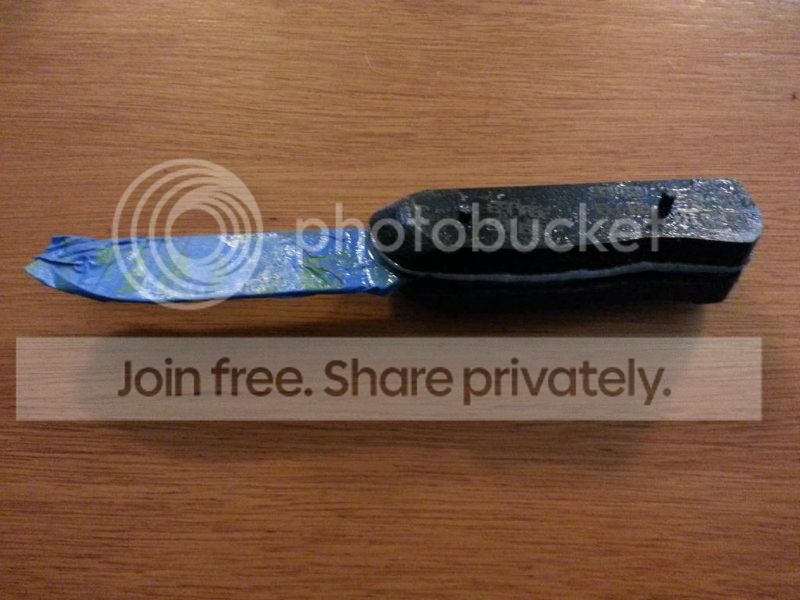
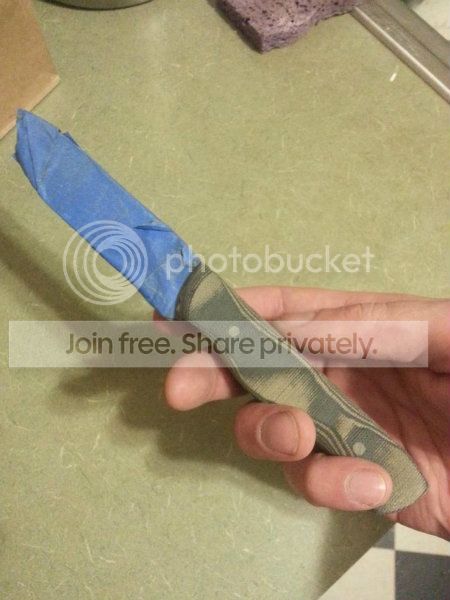
The specs on this one are: 4 ½” handle with 4” blade, drop point with full flat grind and full tapered tang. Handle is composed of a black liner on jade G-10 with black/green canvas micarta, pinned with two black micarta rods.

I etched my last name in using a fingernail polish mask with a regulated DC power supply/salt water/cotton ball. That's a bit tricky - room for improvement for sure, but amazingly simple and effective. The handle is epoxied up with Loctite E-20HP.

All sanding and shaping was done in the hardened sate, so required frequent dips in water and slow-going. Handle shaping was equally time-consuming for me however, having never done this I had a hard time with the three dimensional shape and had to work slow so as not to remove too much material in the wrong place.

The blade could still use some work on the final bevel to produce a perfect edge, I really struggled in setting the proper final angle and ended up a bit concave.

Thanks for taking a peak, it's been a fun project and I've already started on a second design for a hunter for my father. All feedback and advice is greatly appreciated.

Cheers,
David
1_zps35ef0572.jpg

3_zpsbe62af47.jpg

2_zpsc2202757.jpg

4_zpsc5c223f9.jpg

5_zpsf986ad58.jpg

7_zpse0eba43a.jpg

8_zps70d2d9d2.jpg

6_zps5a7ca049.jpg

9_zps94c83c5b.jpg

10_zps4b3587b7.jpg
 
Nice, never made a file knife before, although using a Crosscut saw blade (The old ones) work out great on a finished product. Also got one going on with a lawn-mower blade. My grandpa made a knife out of a file though (Never got to finish it) But he took the temper out of it by baking it in a batch of cornbread, and letting it set over night. Ive heard that to put a good temper back in it, you should heat it cherry red, and submerge it in used motor oil. Adds carbon.
 
For your first knife or your tenth knife, it looks like you did a fine job working with what you had! I appreciate that even though this was your first blade, you spent the time necessary to make a clean product. Great job on the handle/blade transition, and nice job shaping the handle as well. It looks comfortable. Just a thought: I always prefer a slight tear drop shape on the handle profile when looking at it form the butt, with the handle near the spine being slightly wider than the handle near the edge. This seems to fit my hand a bit better. How does it perform? Working with old and unknown steel can be hit and miss, but many of the older Nicholson files were decent stuff.

Keep it up!

--nathan
 
Racoon, first, welcome to the forums! That's a great story from your grandfather. Cherish those, but don't necessarily take them at face value. The temperatures needed to cook a loaf of cornbread my very slightly soften the file, but you'll still have a very hard piece of metal to work with. Also, the last process you describe sounds similar to a type of case hardening or carburizing, but is typically not used much in the knife industry, and it is entirely different than a temper which is the act of creating a controlled stress relief in a heat treated piece of steel to acheive a desired hardness.

There is some great information in the sticky threads at the top of this forum, and I'd recommend spending some time reading through information about heat treating (hardening, quenching, tempering). It will really help things click in your mind and help you become a more fundamentally sound maker. That said, have fun with it and experiment.

--nathan
 
That is a great looking knife. Hard to believe it was once a file. I'm just getting started in making knives and I hope I have a fraction of the talent that you guys have!
 
Looks good. As Silver Pilate said, to get the most out of your next one you should properly heat treat it. Read the stickeys, particularly the one about working with the two steel types, you have some misinformation about heat treating that might be a good thing to replace with solid info. Your work looks clean and well done

-Page
 
write2dgray,
Nice job of making that knife. Well shaped and well done.
The one major concern is that you never mentioned tempering the file down to a usable hardness. If it was left as it was, the blade will be way too hard. It will chip on the edge, and may break in half in use. You should have baked the file in the oven for two hours at 400F, cooled it off in water, and then repeated the baking.


Also got one going on with a lawn-mower blade. My grandpa made a knife out of a file though (Never got to finish it) But he took the temper out of it by baking it in a batch of cornbread, and letting it set over night. Ive heard that to put a good temper back in it, you should heat it cherry red, and submerge it in used motor oil. Adds carbon.

The quoted info above is completely to be ignored by any readers. While Grandpa's stories are good memories, they are bad knife making advice.

Raccoon,
First, lawn mower blades make a poor knife. Not enough carbon, and designed to be tough, not hard. They are alloyed to bend, not break.
Second, a 325 bake in the oven will not drop the hardness of a file sufficiently. A bake of two hours (twice) is needed to drop the hardness to a usable level.
Heating a blade red-hot and dipping in used motor oil would be a rather iffy hardening ( not tempering) attempt. It would make a piece of knife steel somewhat harder, but if done to a file, it would greatly soften it. It would add no carbon that was detectable in the finished blade.

(Enabling PM and email would have allowed me to edit the post and send you an email about why.)
 
Nice, never made a file knife before, although using a Crosscut saw blade (The old ones) work out great on a finished product. Also got one going on with a lawn-mower blade. My grandpa made a knife out of a file though (Never got to finish it) But he took the temper out of it by baking it in a batch of cornbread, and letting it set over night. Ive heard that to put a good temper back in it, you should heat it cherry red, and submerge it in used motor oil. Adds carbon.
Thanks! It is certainly rewarding to shape a material to the shape you envision.

For your first knife or your tenth knife, it looks like you did a fine job working with what you had! I appreciate that even though this was your first blade, you spent the time necessary to make a clean product. Great job on the handle/blade transition, and nice job shaping the handle as well. It looks comfortable. Just a thought: I always prefer a slight tear drop shape on the handle profile when looking at it form the butt, with the handle near the spine being slightly wider than the handle near the edge. This seems to fit my hand a bit better. How does it perform? Working with old and unknown steel can be hit and miss, but many of the older Nicholson files were decent stuff.

Keep it up!

--nathan
Very kind of you Nathan. I've always felt like if something's worth doing, it's worth taking the time to do right. If I was a garbage man I'd damn well give it 110%. I hadn't noticed my omission of the slight rear teardrop and may very well have to go back for some subtle shaping (this will be round 4 on the handle, after I thought I was done). I appreciate you picking up on this subtle detail.

The blade cuts well and has not shown signs of chipping yet, having only been completed a day or two I've only used it to cut a few straps/tape and open a few dozen large boxes around the shop.

I often pass through Lubbock and will have to look your shop up.

Sweet little user!
Much appreciate, sir. It's compact and I intend to keep it in the vehicle for occasional use and camping here in the Pacific NW.

That is a great looking knife. Hard to believe it was once a file. I'm just getting started in making knives and I hope I have a fraction of the talent that you guys have!
Thanks Croc. If I can say this without sounding like too much of a douche, it surprises me a little as well. This is my first run at it and I spent more on sandpaper than anything else. Patience, perseverance, and desire can go a long way. This one took me around 2 months from concept to completion, with a regular job, an infant child, and a generally busy life in the mix.

Nicely done. Congrats on your first!
Thank you Shawn, it feels good to have it done and to put it to use. Hopefully she holds up well to use and I certainly learned a lot along the way, with plenty of time for introspection as well :).

Looks good. As Silver Pilate said, to get the most out of your next one you should properly heat treat it. Read the stickeys, particularly the one about working with the two steel types, you have some misinformation about heat treating that might be a good thing to replace with solid info. Your work looks clean and well done

-Page
Page, I greatly appreciate your kind words on my first attempt. I've done my homework on heat treating, but wanted to try to perform everything myself. I looked at some forge set-ups, but I couldn't rationalize it as of yet. I did read many reports of people having a history of success with Nicholson files in their hardened state, so I decided to give it a go. I've got three old (~1960) files that I intend to convert, and if I continue from there it's on to good known steel, sent away for hardening. Your advice is appreciated.

write2dgray,
Nice job of making that knife. Well shaped and well done.
The one major concern is that you never mentioned tempering the file down to a usable hardness. If it was left as it was, the blade will be way too hard. It will chip on the edge, and may break in half in use. You should have baked the file in the oven for two hours at 400F, cooled it off in water, and then repeated the baking.
I appreciate the kind words, hopefully it proves to be a useful blade despite my ignorance. Your sage words on hardness are invaluable, I’ve started on a second file knife already and largely shared my attempt in the hopes that I might be educated on just such an unknown.

To be perfectly clear (for file blades 2 and 3 before moving to Aldo’s or similar known steel): I should preheat the oven to 400F and set the file on the rack for two hours, cool in water, and repeat. This will leave the file in a slightly softened state, but still hardened, for final use. Please confirm and I’ll get to tempering this second round.

I must say that was some slow going on my first blade that chewed through sandpaper like, well like a hardened file.

Thanks to all,
David
 
Thanks! It is certainly rewarding to shape a material to the shape you envision.

Very kind of you Nathan. I've always felt like if something's worth doing, it's worth taking the time to do right. If I was a garbage man I'd damn well give it 110%. I hadn't noticed my omission of the slight rear teardrop and may very well have to go back for some subtle shaping (this will be round 4 on the handle, after I thought I was done). I appreciate you picking up on this subtle detail.

The blade cuts well and has not shown signs of chipping yet, having only been completed a day or two I've only used it to cut a few straps/tape and open a few dozen large boxes around the shop.

I often pass through Lubbock and will have to look your shop up.
David

With that attitude, you will do just fine in knife making. The majority of things I've ever done that I was not happy about were the result of me not taking the time to get it done right. Tenacious attention to detail and the un-willingness to compromise or accept anything less than your best is what separates GERAT knife makers from run-of-the-mill makers. Do exactly that with every knife you make, and you will improve immensely with each effort.


Lubbock is a long way from Seattle, but feel free to let me know if you are ever in town. I'm not actively making at the moment, but I always love talking shop.

You can temper the blade as you suggested before putting the handle on. If you still notice chipping with testing, you can raise the temperature by 25-50F and do it again. The exact temperature for proper temper depends on both the steel and the intended use. Known steel is always a great way to go as you can send it out for heat treatment and get it tested to verify hardness.

--nathan
 
Thanks Nathan. I'm originally from TX and make it back through frequently with lots of family scattered around.

I'll look to temper the steel on round 2 as suggested to knock the hardness down. I greatly appreciate your patience and advice.
 
As a small update, I sent my knife away to Richard J to put on a final edge. He did fantastic work on this knife as well as a few other blades – highly recommended!

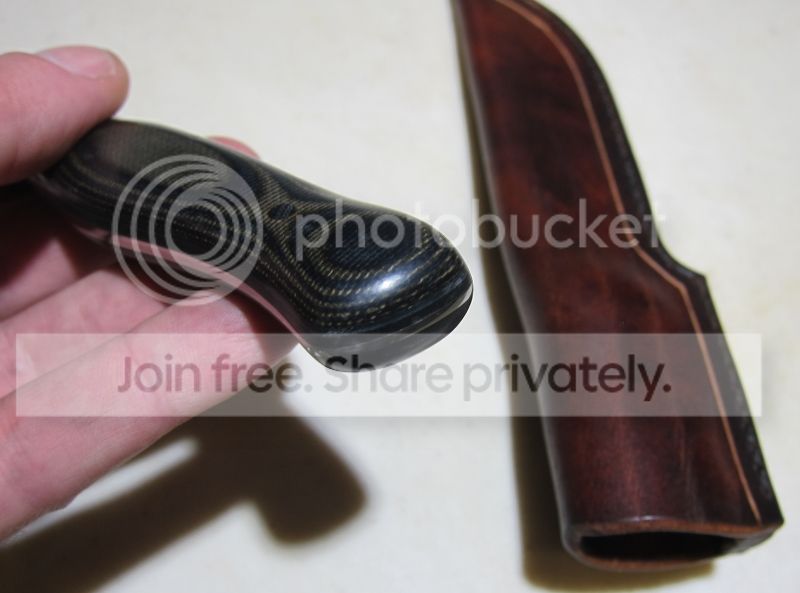
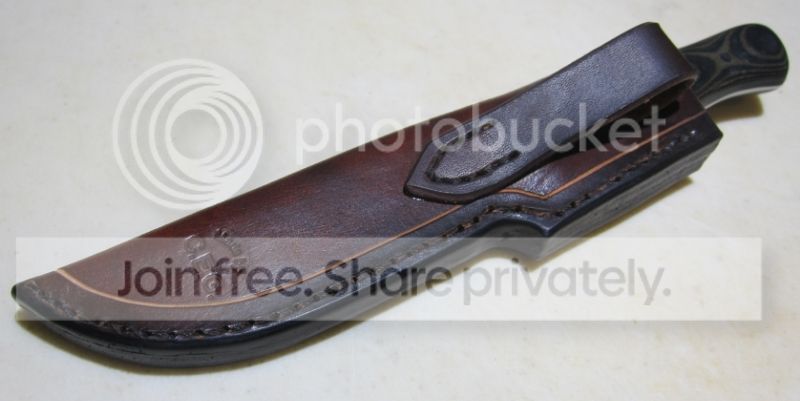
I also took the time to have a nearby sheathmaker, Chuck Geyer, help in setting me up with a terrific piece of leatherwork.

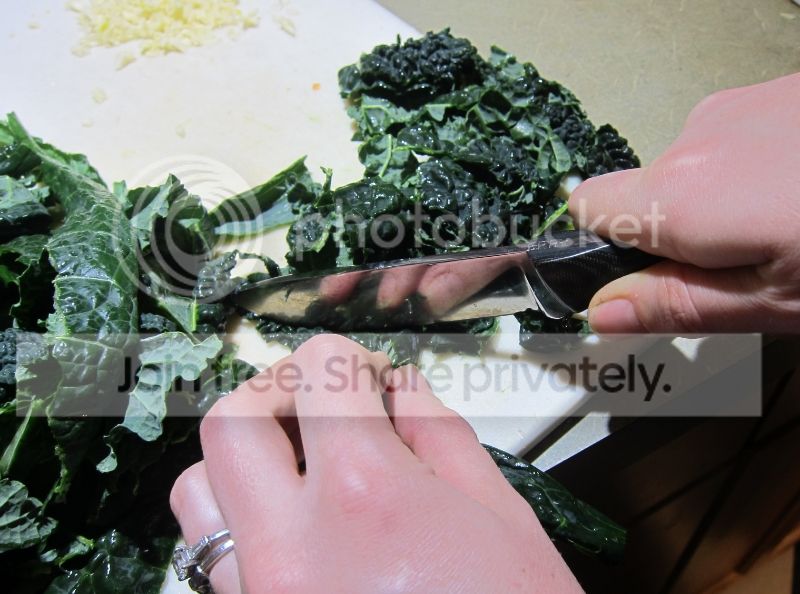
Here are a few photos of the finished products, including one of the wife performing some light dinner chopping:
6ad9be77-f186-4c86-8e75-d6cc71e8e05f_zpsc21c9279.jpg

IMG_3985_zps72f388f9.jpg

IMG_3975_zps39a3b929.jpg

IMG_3989_zpsa3856460.jpg


A keen eye will note the reworked and more “teardropped” end. I’m learning :o.

Cheers,
David
 
Last edited:
Back
Top