Hello,
I am new into knife making (at 42), just starting out with my first fixed blade. First off, thanks to this community for the wealth of information posted here. I have spent many hours trying learn and get started in this what can be a bit overwhelming- hobby. From my first knife experience, a few things came up I'm hoping to get some feedback on...appreciate any responses.
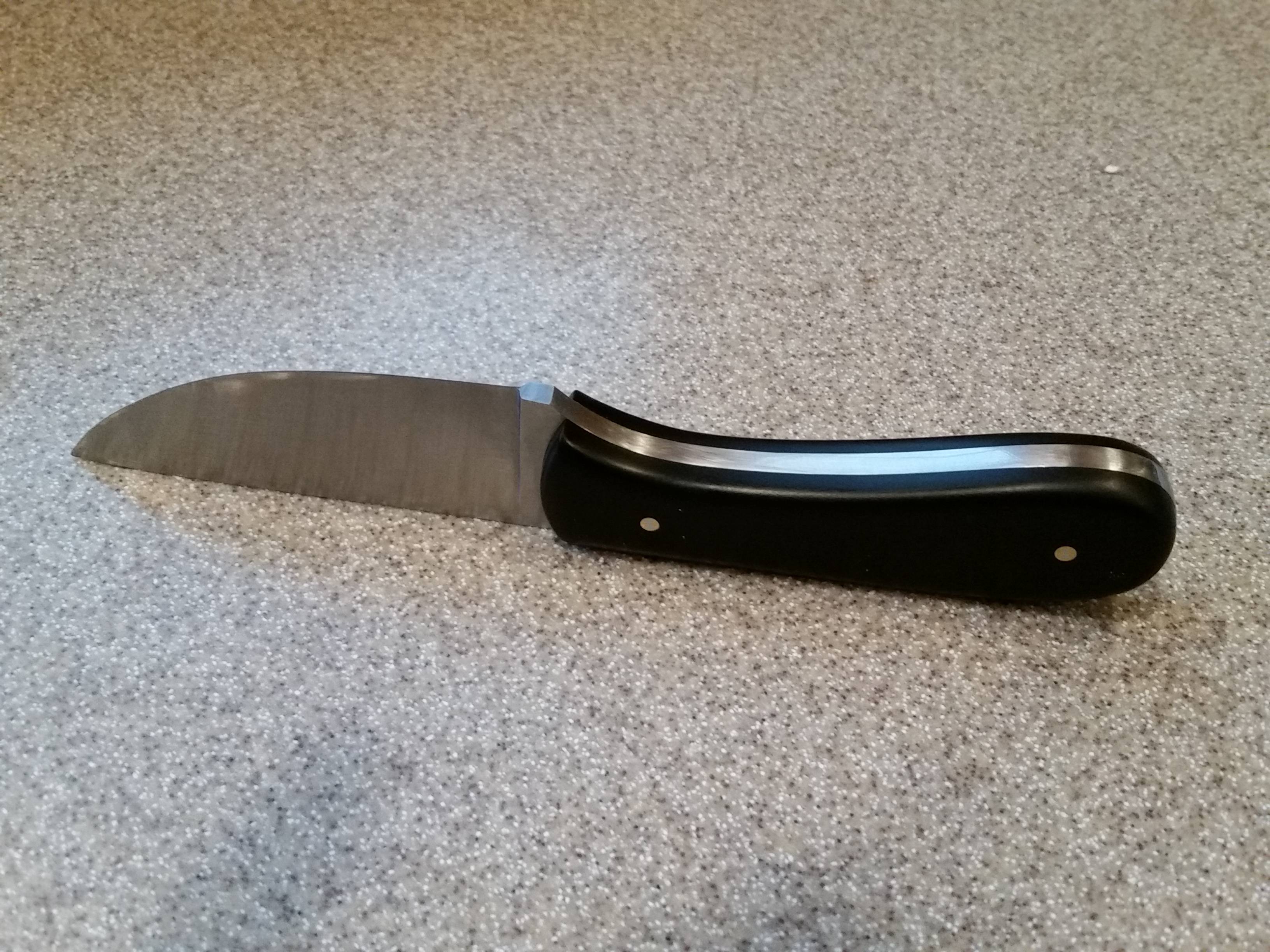
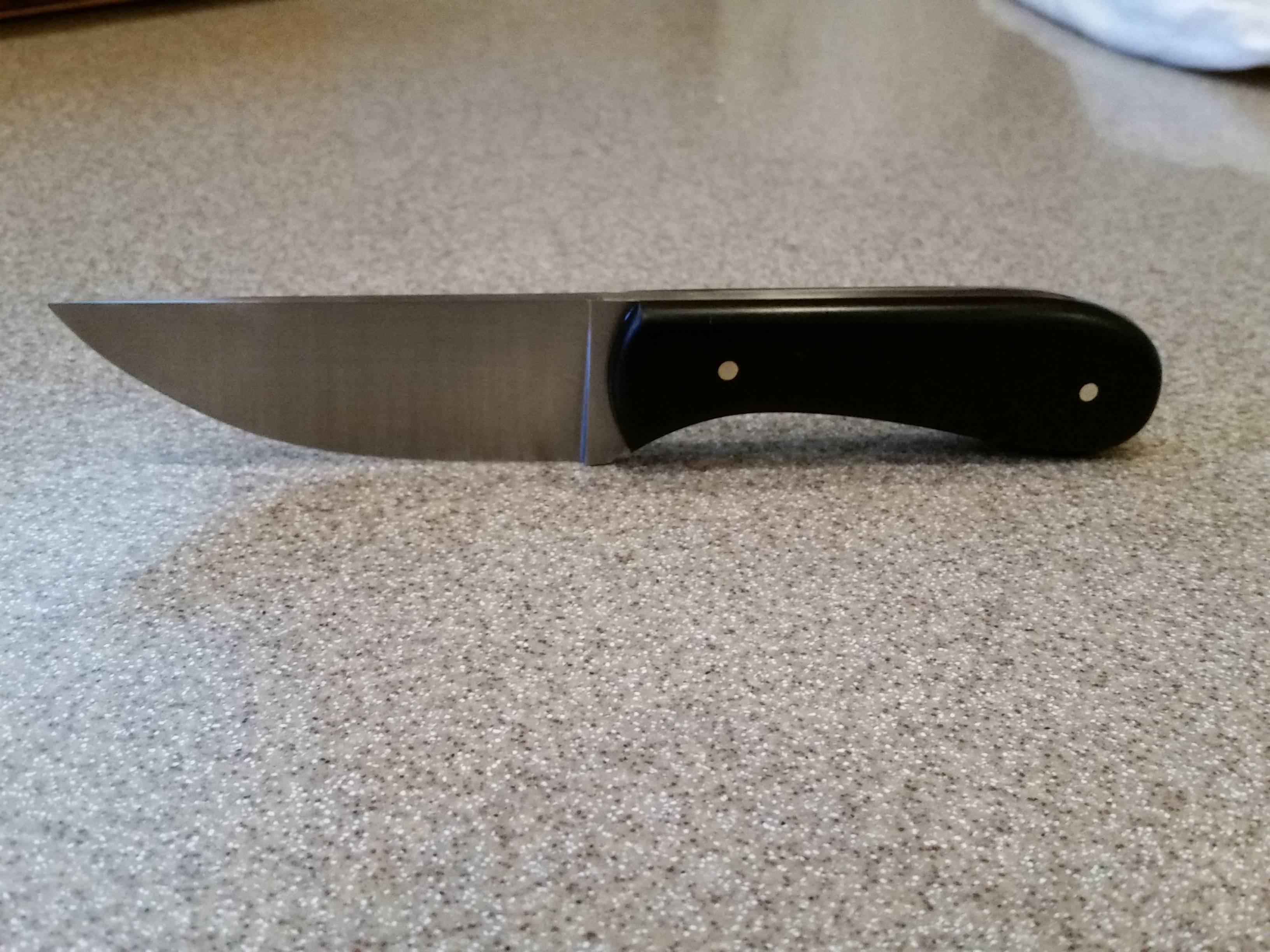
This knife is 6.75 long, made of 1084 with G10 scales and brass rod pins. I have a pretty decent tooled shop, including a 2x72 grinder I made based on Moe's Grinder plans, and a propane forge made out of a standard backyard grill bottle. The homemade forge is what I used for heat treating, following a forum post from Stacey how to heat treat 1084. I probably have 25 hours in this knife.
Questions:
1) Testing the blade for toughness and flexibility There seems to be a number of ways of going about this, brass rod, rope cutting, 2x4 chopping. As a beginner, I'd like to make knives I can give to family and be confident they will hold up to average hunter / outdoorsman use. Any suggestions on developing a straight forward blade testing process?
2) Following #1, when do you test a new blade? Right after HT? Or, do you clean up the blade and put an edge on it, then test? If a blade fails, can it successfully be re-heat treated?
3) Pins...from the pics you can see I didn't peen the pins. Is this needed?I used Loctite 2part heavy duty epoxy from Menards. If peening is necessary, how do you do thismeaning, my pins/scales are epoxied..but then as I shape the handle and sand it I am also sanding the pins..not sure how to do this.
4) If I were to electrically etch the blade... when is the best time? It hasn't been clear to me if you totally finish your blade, then etch. Or, if you etch then work through your final finish (i.e. satin finish for me, dang mirror polish is beyond me at this point)
I have many more questions, but will limit to this. My plan moving forward is to take advice from others, plan, go slow, put it down when things get aggravating. I have a 3.5 bar of 1084 remaining, so am thinking of creating another 6 blades of same profile,.... trying to apply some type of testing process, and start using liberally (i.e. heavy use) to get an idea of how good or bad they really are. Once I feel like I've got a good one, then spend the time on nice handle and sheath. I also may send one to someone else to HT, although not sure to whom and cost for just 1-2 blades.
Appreciate any suggestions, advice, .
Regards,
Ben
BTW... I live in Ohio, just south east of Columbus.


I am new into knife making (at 42), just starting out with my first fixed blade. First off, thanks to this community for the wealth of information posted here. I have spent many hours trying learn and get started in this what can be a bit overwhelming- hobby. From my first knife experience, a few things came up I'm hoping to get some feedback on...appreciate any responses.
This knife is 6.75 long, made of 1084 with G10 scales and brass rod pins. I have a pretty decent tooled shop, including a 2x72 grinder I made based on Moe's Grinder plans, and a propane forge made out of a standard backyard grill bottle. The homemade forge is what I used for heat treating, following a forum post from Stacey how to heat treat 1084. I probably have 25 hours in this knife.
Questions:
1) Testing the blade for toughness and flexibility There seems to be a number of ways of going about this, brass rod, rope cutting, 2x4 chopping. As a beginner, I'd like to make knives I can give to family and be confident they will hold up to average hunter / outdoorsman use. Any suggestions on developing a straight forward blade testing process?
2) Following #1, when do you test a new blade? Right after HT? Or, do you clean up the blade and put an edge on it, then test? If a blade fails, can it successfully be re-heat treated?
3) Pins...from the pics you can see I didn't peen the pins. Is this needed?I used Loctite 2part heavy duty epoxy from Menards. If peening is necessary, how do you do thismeaning, my pins/scales are epoxied..but then as I shape the handle and sand it I am also sanding the pins..not sure how to do this.
4) If I were to electrically etch the blade... when is the best time? It hasn't been clear to me if you totally finish your blade, then etch. Or, if you etch then work through your final finish (i.e. satin finish for me, dang mirror polish is beyond me at this point)
I have many more questions, but will limit to this. My plan moving forward is to take advice from others, plan, go slow, put it down when things get aggravating. I have a 3.5 bar of 1084 remaining, so am thinking of creating another 6 blades of same profile,.... trying to apply some type of testing process, and start using liberally (i.e. heavy use) to get an idea of how good or bad they really are. Once I feel like I've got a good one, then spend the time on nice handle and sheath. I also may send one to someone else to HT, although not sure to whom and cost for just 1-2 blades.
Appreciate any suggestions, advice, .
Regards,
Ben
BTW... I live in Ohio, just south east of Columbus.