
nothing special, started life as a file from where i work. Since i've began my journey into knifemaking i've opened up a whole new world. One of the machinists offered me a small handfull of old nicholson files with chipped teeth and just generally worn out... So i figured, let's try a good old fashioned file knife... nothing fancy... just wanted to take what i had learned thus far and make as nice a blade as i possibly could...
started by annealing the file, i slowly got it up to heat and stuck it in a metal bucket of sand which i had pre-heated on my turkey fryer burner
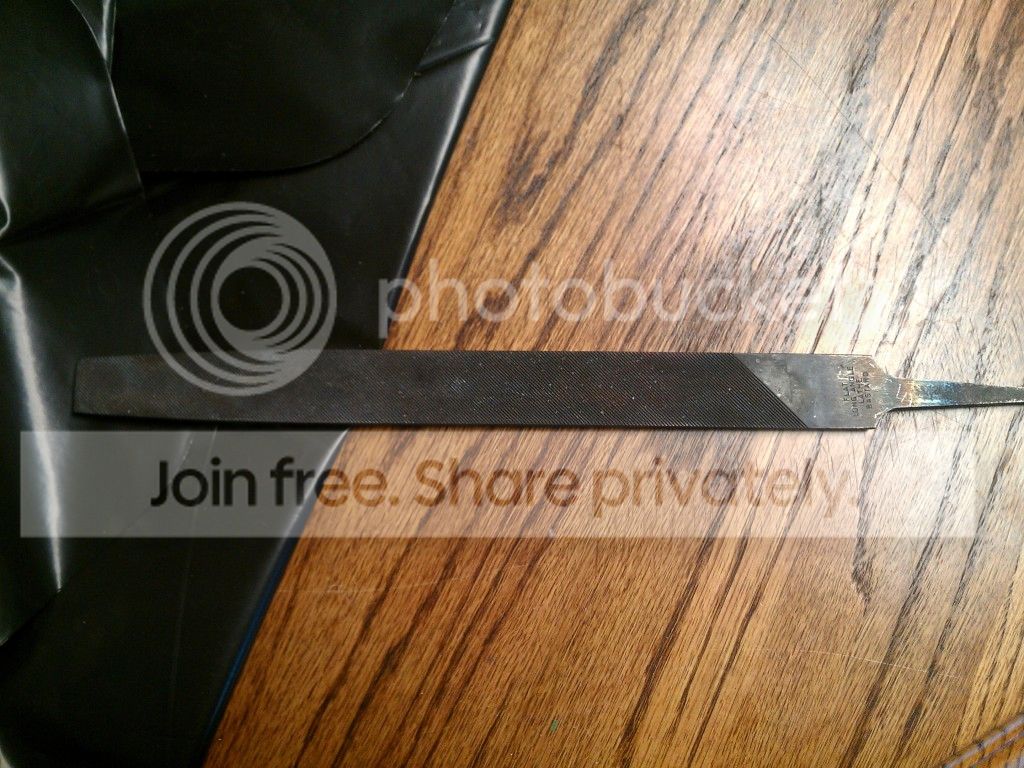
then i used a 4.5" grinder and took the teeth off to give it a workable surface and sketch out a possible blade
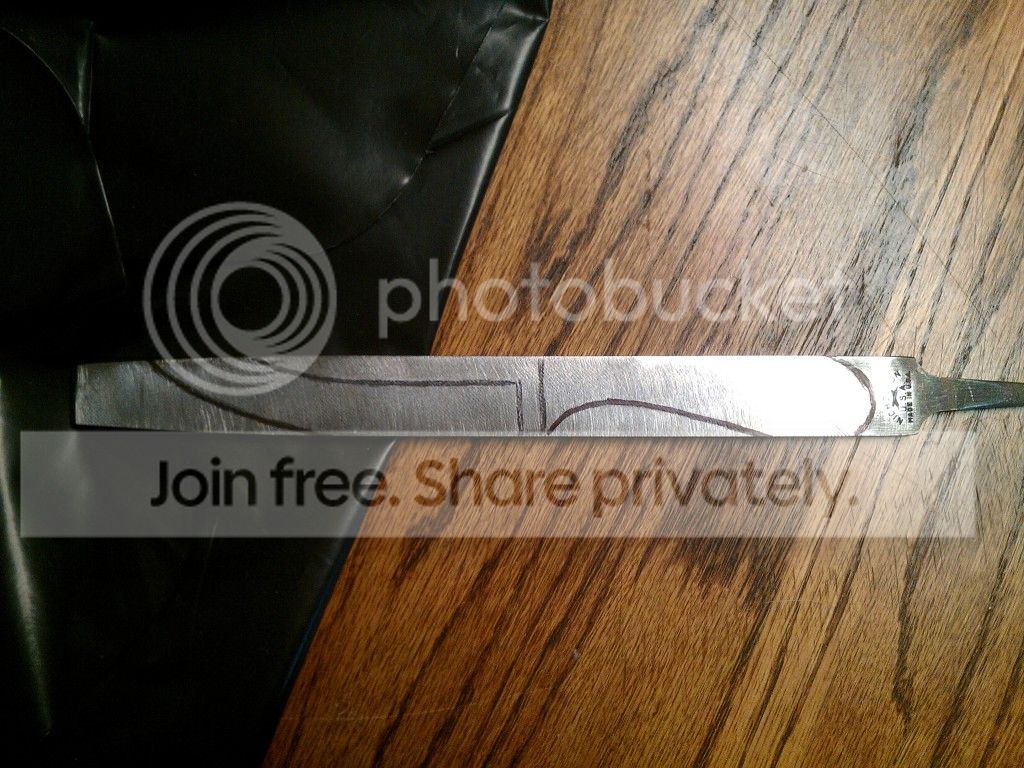
i then cut out the shape with a basic cutoff wheel on the same grinder and used my bench grinder to clean up the shape... at this point i cut out and drilled the scale halves... i wanted to hold it in my hand, and decide if it needed something more... which i decided it did...
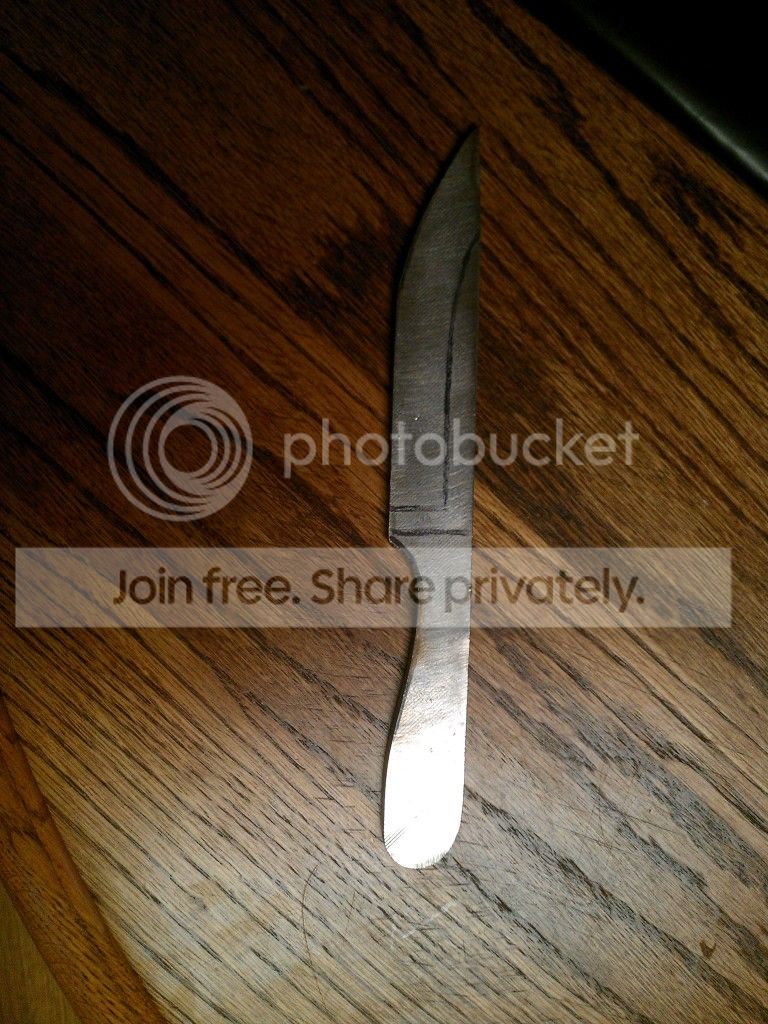
so i ground in a finger choil just to make it more comfortable with detail type work, and drilled the tang and handle scales for my pieces of curly maple.
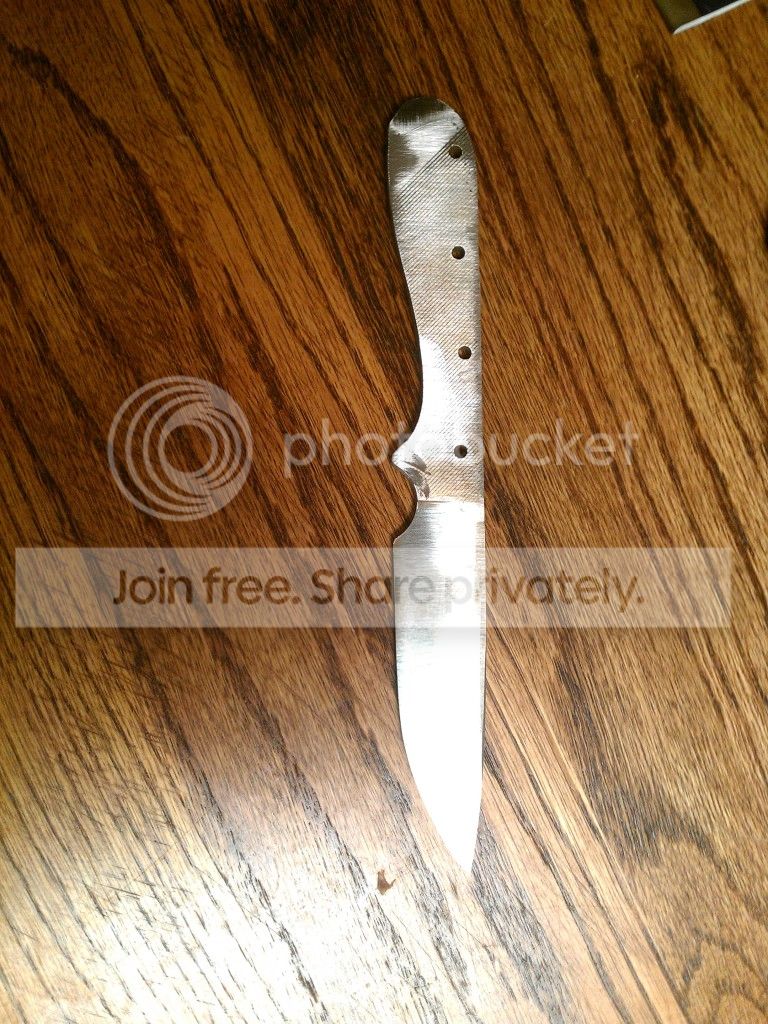
got my bevels ground and the edge down to about a dime's thickness, then drilled some extra holes in the tang for glue and lightening, ready for heat treat.
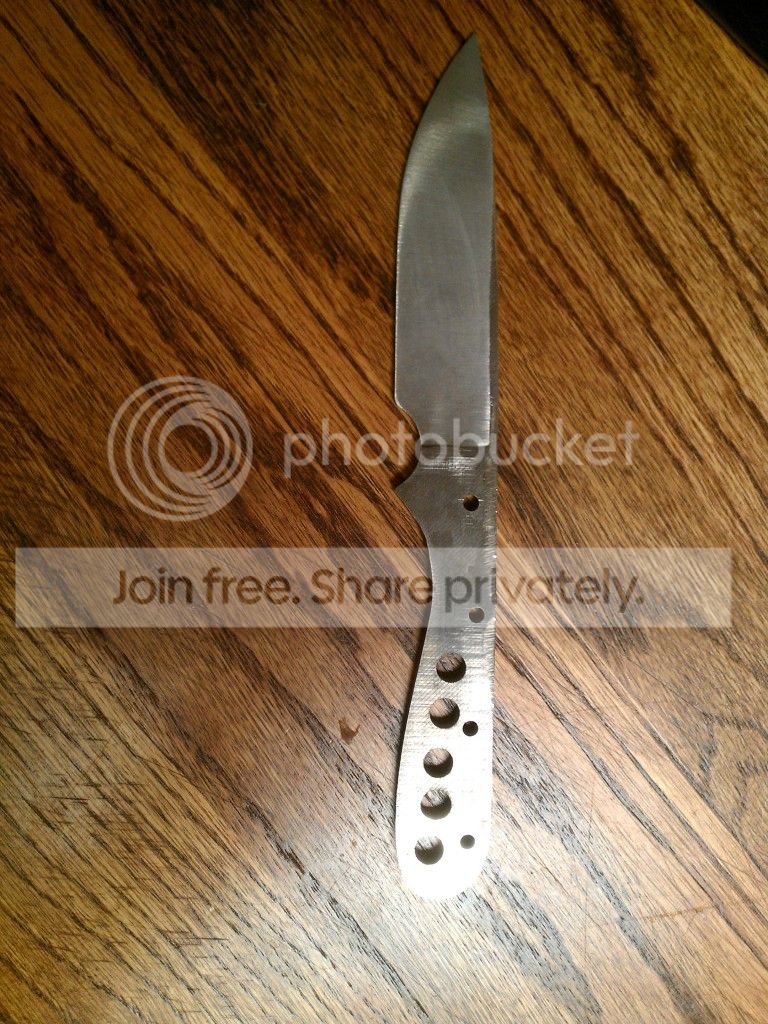
while talking to my boss at work i mentioned that i wish i had some thing to coat the back of the blade to try for a differential heat treat. i was worried about the blade being brittle after the heat treat, so he mentioned that we had this old stuff called flame hold, it's hydrated magnesium silicate in a putty form. so i tried it... i coated the spine of the blade and tapered it out towards the edge, leaving about 1/4 inch of the edge visable. i hadn't done much research on the techniques yet, because i didn't expect to have anything with which to coat the blade. Didn't figure i could hurt the blade though, so i brought it up to heat with a very large rosebud held at nearly a foot away and kept it at a dull glow, then quenched it in 130 degree canola oil.
here's the blade after heat treating and two tempering cycles at 450. Didn't have a camera at work when i was doing the clay coating.
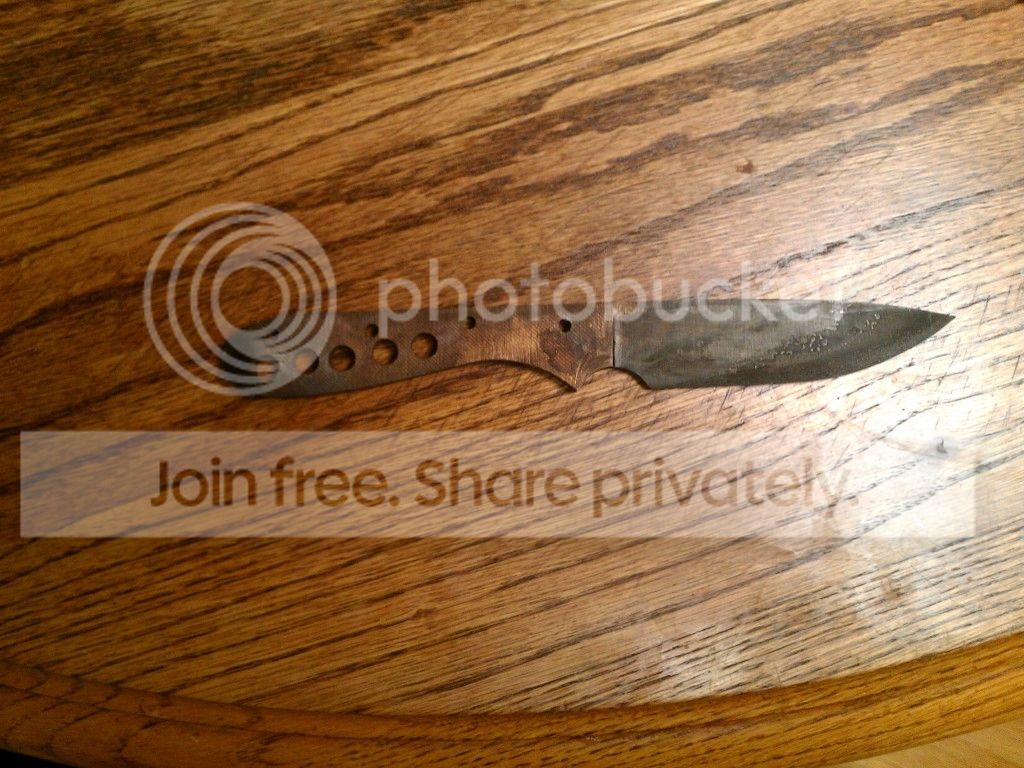
took about 10 hours after the heat treat to finish off my grind... it turned out very hard to grind... was using a 120 grit ceramic belt on it and it still didn't want to remove much any material.. but i got the grind done up to 600 grit and then used a scotch brite pad to finish the polish, i wanted to keep my grind lines a bit. after that i taped the blade, then started applying epoxy and the scales... then i put the pins in with the epoxy still wet and peaned them over.
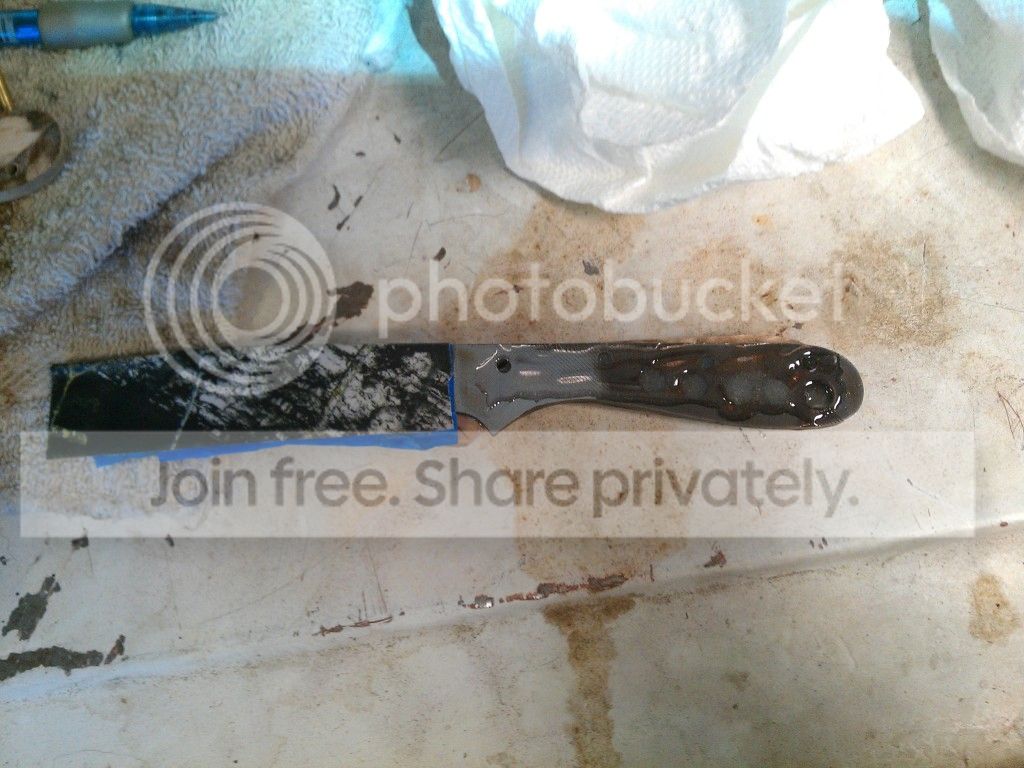
after letting that set overnight i came in and started shaping the handle scales. i realised after i had them shaped that i never actually took a pic of the rough scales... but it's too late now... here's the pic of the scales roughed out and glued on.
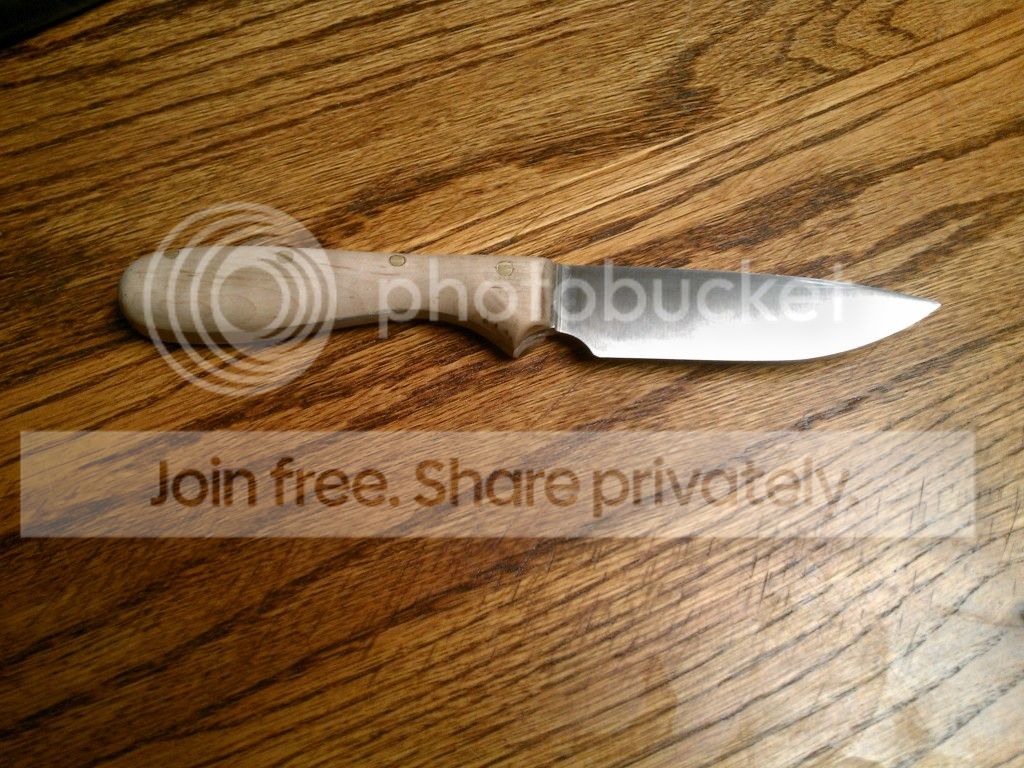
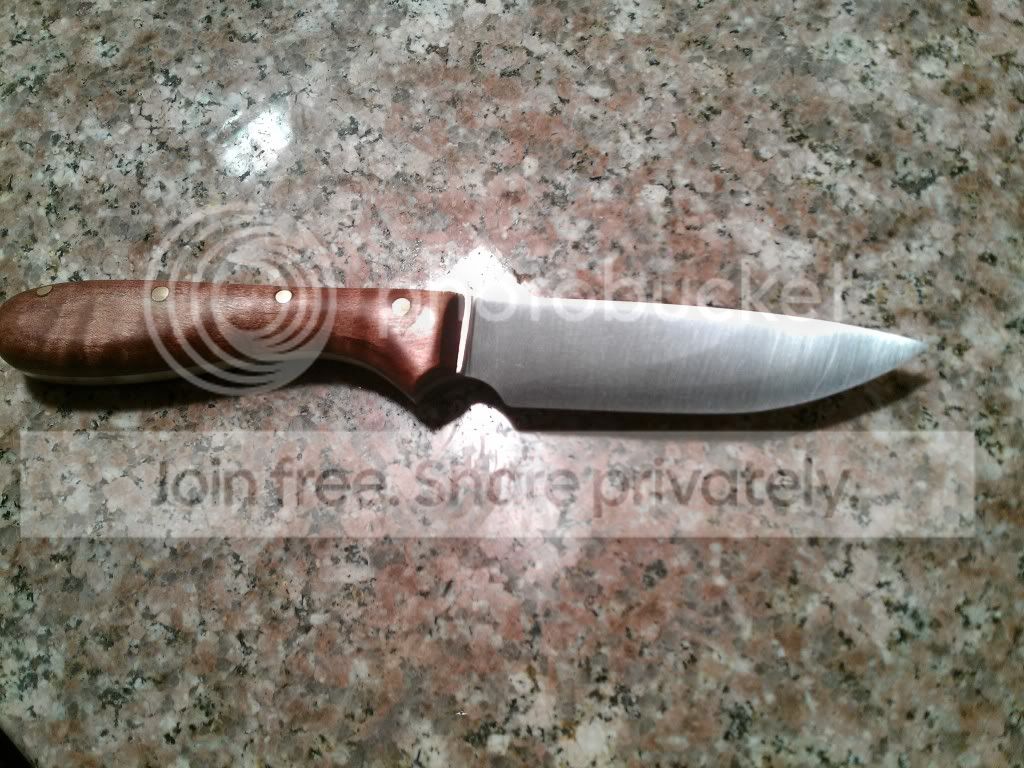
it was after this step that i started noticing faint lines in the blade... along where the original clay coating was... i really like the look... i finished sanding the scales down to 400 grit, then applied some red mahogany stain to the curly maple and after that set i soaked it in some watco danish oil and left it to dry overnight... then i used my buffing wheel to put a bit of a polish on the handle scales...
here's the phone pic where you can really see these (hamon maybe) lines...
and here's the final product...
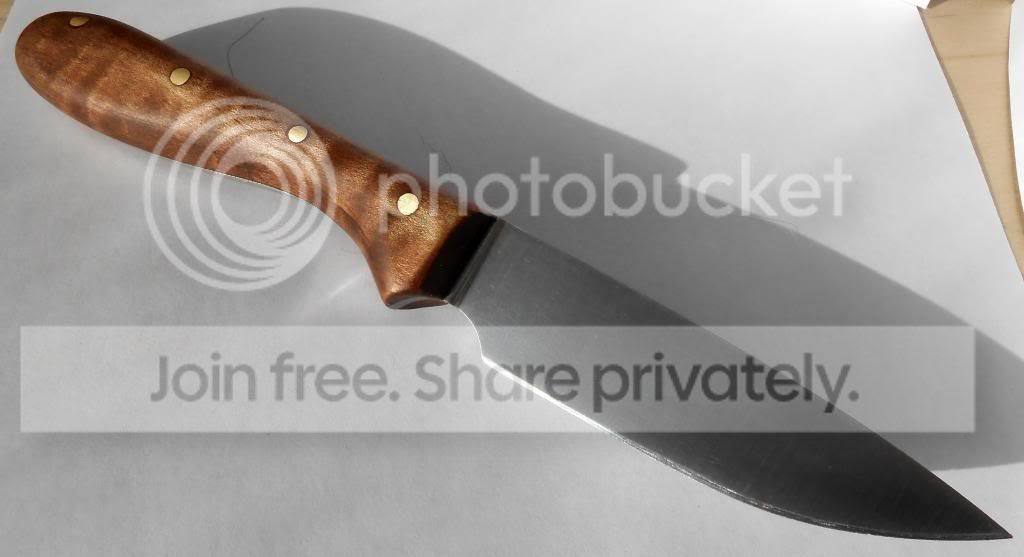
thanks for looking... See... I was paying attention! lol... i'm much much happier with this knife... now i want to experiment with making a sheath for it...
started by annealing the file, i slowly got it up to heat and stuck it in a metal bucket of sand which i had pre-heated on my turkey fryer burner
then i used a 4.5" grinder and took the teeth off to give it a workable surface and sketch out a possible blade
i then cut out the shape with a basic cutoff wheel on the same grinder and used my bench grinder to clean up the shape... at this point i cut out and drilled the scale halves... i wanted to hold it in my hand, and decide if it needed something more... which i decided it did...
so i ground in a finger choil just to make it more comfortable with detail type work, and drilled the tang and handle scales for my pieces of curly maple.
got my bevels ground and the edge down to about a dime's thickness, then drilled some extra holes in the tang for glue and lightening, ready for heat treat.
while talking to my boss at work i mentioned that i wish i had some thing to coat the back of the blade to try for a differential heat treat. i was worried about the blade being brittle after the heat treat, so he mentioned that we had this old stuff called flame hold, it's hydrated magnesium silicate in a putty form. so i tried it... i coated the spine of the blade and tapered it out towards the edge, leaving about 1/4 inch of the edge visable. i hadn't done much research on the techniques yet, because i didn't expect to have anything with which to coat the blade. Didn't figure i could hurt the blade though, so i brought it up to heat with a very large rosebud held at nearly a foot away and kept it at a dull glow, then quenched it in 130 degree canola oil.
here's the blade after heat treating and two tempering cycles at 450. Didn't have a camera at work when i was doing the clay coating.
took about 10 hours after the heat treat to finish off my grind... it turned out very hard to grind... was using a 120 grit ceramic belt on it and it still didn't want to remove much any material.. but i got the grind done up to 600 grit and then used a scotch brite pad to finish the polish, i wanted to keep my grind lines a bit. after that i taped the blade, then started applying epoxy and the scales... then i put the pins in with the epoxy still wet and peaned them over.
after letting that set overnight i came in and started shaping the handle scales. i realised after i had them shaped that i never actually took a pic of the rough scales... but it's too late now... here's the pic of the scales roughed out and glued on.
it was after this step that i started noticing faint lines in the blade... along where the original clay coating was... i really like the look... i finished sanding the scales down to 400 grit, then applied some red mahogany stain to the curly maple and after that set i soaked it in some watco danish oil and left it to dry overnight... then i used my buffing wheel to put a bit of a polish on the handle scales...
here's the phone pic where you can really see these (hamon maybe) lines...
and here's the final product...
thanks for looking... See... I was paying attention! lol... i'm much much happier with this knife... now i want to experiment with making a sheath for it...


