- Joined
- Aug 6, 2007
- Messages
- 5,060
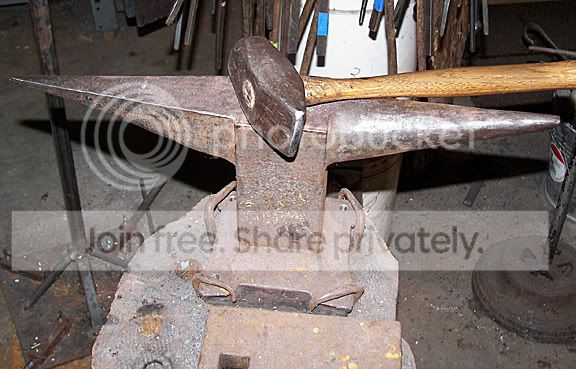
Got this block from Chuck of 52100, roughly 5.5 inches square, 6.5 inches long. Technology at my disposal, forge that could heat atleast 1 inch of depth of the face of the 5 inch side, possibly a 55 gallon drum of regular waste oil, and the massive desire to pull this off . Not going for anything serious like knife stuff, just enough hardness all over the face to not ding, increase the rebound a bit and make a hard lasting tool. Any help and/or advice is welcome, just going to go with the standard heat and soak, a bit past non magnetic as evenly as the forge will allow, soak for as long as is needed for about an inch depth of non magnetic heat then lift with a hook eye on the bottom and dunk in the vat of 120F oil and pump it up and down and side to side agitating as much as possible. Would a faster quench be be more beneficial to get hardness even in the middle of the face? By only heating up a certain rough depth of 1 inch of the face with the heat trailing off, will the hardness decreas as you go farther away from the face, giving a sort of soft base to support the hard face? Planning on either drawing the temper colors to temper, or soaking in a hot bath for a couple hours. Please keep in mind I am working on the no tech basic only tools, thanks.
. Not going for anything serious like knife stuff, just enough hardness all over the face to not ding, increase the rebound a bit and make a hard lasting tool. Any help and/or advice is welcome, just going to go with the standard heat and soak, a bit past non magnetic as evenly as the forge will allow, soak for as long as is needed for about an inch depth of non magnetic heat then lift with a hook eye on the bottom and dunk in the vat of 120F oil and pump it up and down and side to side agitating as much as possible. Would a faster quench be be more beneficial to get hardness even in the middle of the face? By only heating up a certain rough depth of 1 inch of the face with the heat trailing off, will the hardness decreas as you go farther away from the face, giving a sort of soft base to support the hard face? Planning on either drawing the temper colors to temper, or soaking in a hot bath for a couple hours. Please keep in mind I am working on the no tech basic only tools, thanks.