
-
The BladeForums.com 2024 Traditional Knife is available! Price is $250 ea (shipped within CONUS).
Order here: https://www.bladeforums.com/help/2024-traditional/
You are using an out of date browser. It may not display this or other websites correctly.
You should upgrade or use an alternative browser.
You should upgrade or use an alternative browser.
72" Leather Belts
- Thread starter robwil
- Start date

NJBillK
Custom Leather and Fixed Blade modifications.
- Joined
- Mar 27, 2014
- Messages
- 9,594
I don't have much experience with a leather belt on a 72x2, but I would run it Slow.
With such a fine abrasive, and with as much contact you would have, heat generated through friction would very likely be high.
With such a fine abrasive, and with as much contact you would have, heat generated through friction would very likely be high.

Nathan the Machinist
KnifeMaker / Machinist / Evil Genius
Moderator
Knifemaker / Craftsman / Service Provider
- Joined
- Feb 13, 2007
- Messages
- 19,184
I don't have much experience with a leather belt on a 72x2, but I would run it Slow.
With such a fine abrasive, and with as much contact you would have, heat generated through friction would very likely be high.
^this
Even if you run it as slow as you would stropping by hand, heat is going to build up because there is no pause to lift.
It's easy to get an edge sharp through powered tools, but just because an edge is sharp doesn't mean the apex is full hardness and is going to stay sharp. It would be a shame to run high end knives as hard as we do in pursuit of edge retention, and then draw back the last few thousandths of an inch of the edge sharpening it.
The edge angle, the conductivity of the alloy and the tempering temperature used all affect how far back that heat affected zone goes back. If it's half a tenth of a thou who cares? If it's ten thou you have a big problem.
A thick rough use knife in A2 is going to be little danger because it keeps good hardness up close to 1,000 degrees, it doesn't need to hold a very sharp edge so if a few thou of the edge is soft it won't be noticeable and it has a higher coefficient of thermal conductivity so heat doesn't build up as much as higher chrome steels. A thick edge has thermal mass behind it to help keep it cool. Some knives like that will tolerate some carelessness sharpening.
A thin stainless steel kitchen knife at HRC 61 tempered at 400 degrees is going to be a much different story. You'd need to be very careful with something like that. Remember, you can't see minor heat damage in the edge with your eye, it shows up in use.
I make hundreds of knives a year, most of which fall between those two examples and they all need to be sharpened. I wish there was a safe shortcut but my own testing revealed to me that there isn't one. You need to be very careful with powered sharpening of any kind. It is a necessity, but without testing your process you're flying blind.

- Joined
- Feb 17, 2009
- Messages
- 7,310
I have one and use it on occasion. It has a bump in the splice which is annoying.
It does work, but I prefer the leather belt on 1x30
The key is to barely touch the edge on the belt. Do NOT put pressure on like you would normally stropping.
Just touch the edge on both sides and it comes out razor sharp.
The key is understanding the time and pressure. If you spend to much time and to much pressure it can cause problems. With minimum time and minium pressure you can produce a great edge quickly.
My last hunter is in Sweden and the owner is so thrilled how it processed 2 bull moose and held the edge not needing to be sharpened at all in the process.
The key to using power tools is of course using them correctly.

It does work, but I prefer the leather belt on 1x30
The key is to barely touch the edge on the belt. Do NOT put pressure on like you would normally stropping.
Just touch the edge on both sides and it comes out razor sharp.
The key is understanding the time and pressure. If you spend to much time and to much pressure it can cause problems. With minimum time and minium pressure you can produce a great edge quickly.
My last hunter is in Sweden and the owner is so thrilled how it processed 2 bull moose and held the edge not needing to be sharpened at all in the process.
The key to using power tools is of course using them correctly.

- Joined
- Dec 13, 2008
- Messages
- 2,986
I had one a long time for the 2 x 42..Worked very well you just have to be careful because it can get too hot. I used it mostly on my personal stuff because for a long time I sharpened knives by hand, bevels and all no power tools of any kind but that got old..I find sharpening fun and relaxing, I didn't want that ruined so went to setting bevels on the machine and then finishing by hand..
I loaded my belt with green compound but not to thick. Just enough to turn the color.Light touch, no pressure and it worked great. Sharpened a personal knife before processing last deer and finished with that leather belt. Plain old 1095, nothing fancy. I completely skinned and deboned a large 10 point and it was still very sharp afterwords. One pass on my belt(the one holding my britches up) and it would clean shave arm hair again.
I loaded my belt with green compound but not to thick. Just enough to turn the color.Light touch, no pressure and it worked great. Sharpened a personal knife before processing last deer and finished with that leather belt. Plain old 1095, nothing fancy. I completely skinned and deboned a large 10 point and it was still very sharp afterwords. One pass on my belt(the one holding my britches up) and it would clean shave arm hair again.

- Joined
- Nov 27, 2013
- Messages
- 1,626
I wonder if a felt belt, loaded with polishing compound, could accomplish the same?
- Joined
- Jan 2, 2006
- Messages
- 564
I've used a leather belt for years with a Beaumont rotary platen. Never an
issue with overheating. You just have to pay attention to the pressure
used. It will remove any small edge burrs and leave a polished edge
very quickly.
issue with overheating. You just have to pay attention to the pressure
used. It will remove any small edge burrs and leave a polished edge
very quickly.

- Joined
- Jan 10, 2015
- Messages
- 1,673
The key to using power tools is of course using them correctly.
That sir is disgusting. Wonderfully disgusting.


- Joined
- Feb 17, 2009
- Messages
- 7,310
That sir is disgusting. Wonderfully disgusting.
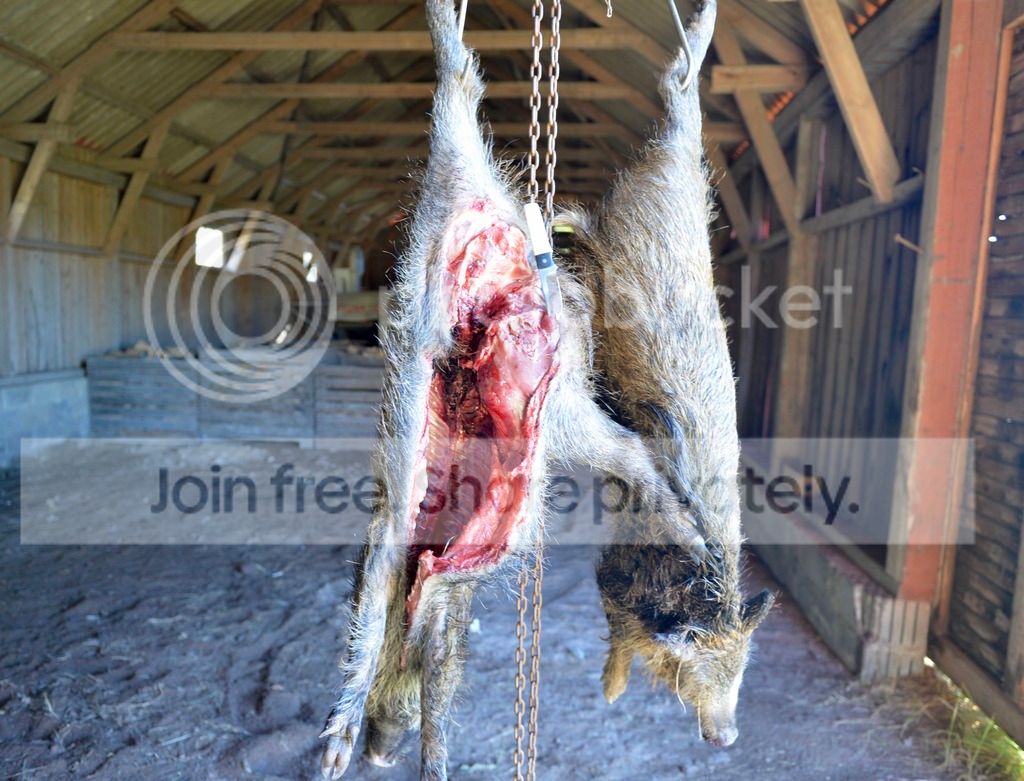
I won't post the picts of all the hogs he processed with it.
- Joined
- Jan 10, 2015
- Messages
- 1,673
I won't post the pics of all the hogs he processed with it.
You could at least post some bacon pics.
- Joined
- Feb 17, 2009
- Messages
- 7,310
You could at least post some bacon pics.
Will do. And yes this had the edge put on by a belt grinder and edge on a leather belt
The owner is an avid hunter, collector and in the knife buisness and really is putting the knife through its passes and is thrilled how it holds an edge
Last edited: