There was a thread back a while ago that brought up the strength of narrow tangs like the Mora, USMC MkII, etc. It was pointed out that with a stick/hidden tang, you never really know what's in there unless you take the knife apart or (as some industrious individuals did) have it x-rayed. After reading and seeing some of the skeletonized "full" tangs on knives, I think this problem also exists for them as well. Heavily drilled/skeletonized tangs would not offer an overall strength advantage over a hidden tang, and might actually be weaker due to the inherent issues with making holes (radius, stress concentration, etc.). Now, I would not know about this if the makers did not show it, just as many makers will show a cross section of their hidden tangs. In general, I think its worth it to do some research before buying if strength is a concern in the use of a knife, and seeing steel with slabs on the sides doesn't always represent what is really under the slab.

-
The BladeForums.com 2024 Traditional Knife is available! Price is $250 ea (shipped within CONUS).
Order here: https://www.bladeforums.com/help/2024-traditional/
You are using an out of date browser. It may not display this or other websites correctly.
You should upgrade or use an alternative browser.
You should upgrade or use an alternative browser.
A Different Take on Narrow vs. Full Tang
- Thread starter me2
- Start date
- Joined
- Jun 26, 2005
- Messages
- 555
interesting point about the holes. i prefer the full tang but never considered the holes in my bm fixed resistor.
- Joined
- May 23, 2004
- Messages
- 1,496
How many fixed blades are really having broken tangs in an area that is covered by handle or slabs though? It's rare to see or hear about it. A lot develop or even start out with some bend.
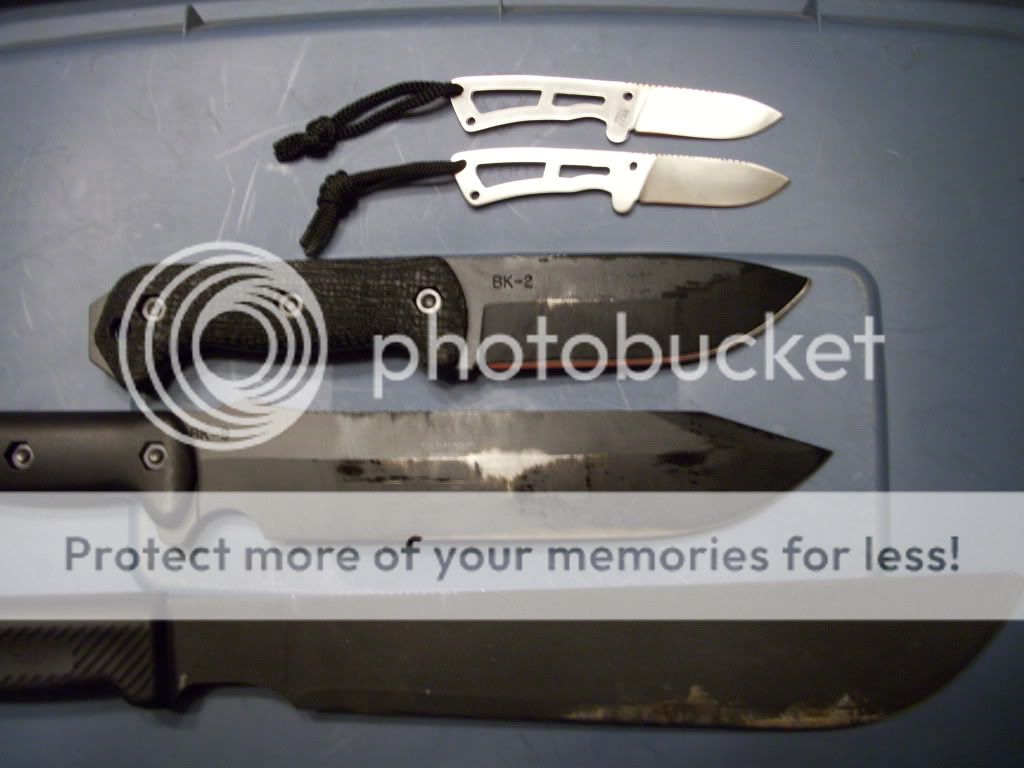
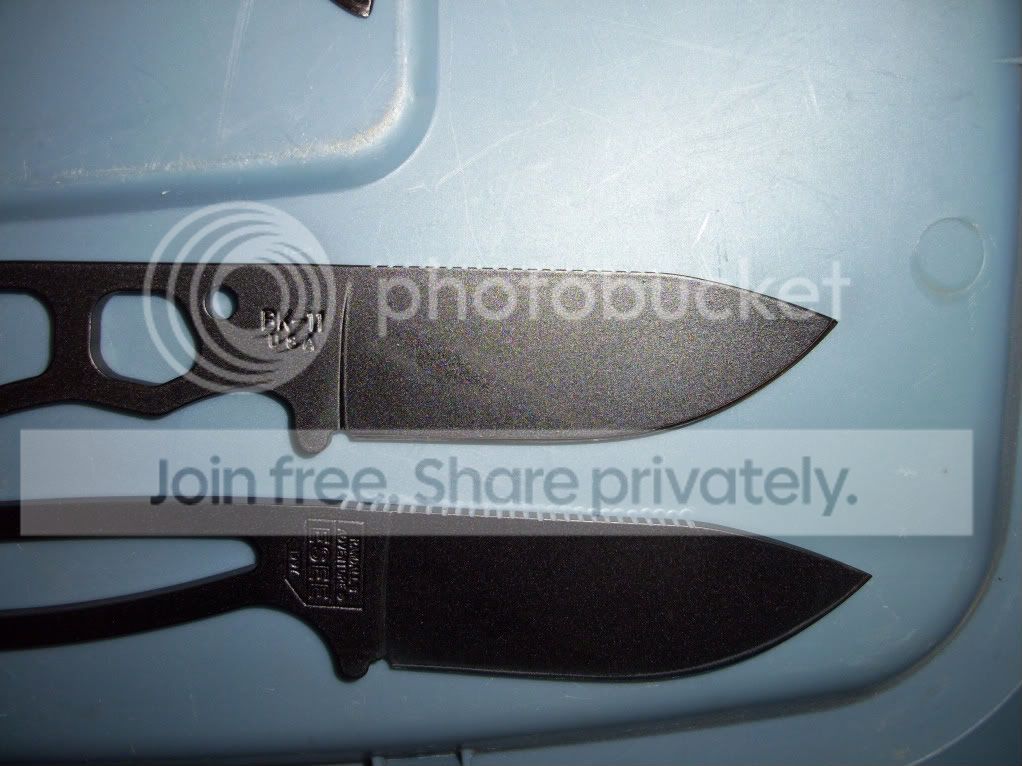
I simply prefer full width, full tang knives. I have broken at least 3 M7 bayonet's, chopping wood, while on active duty. Thats what brought me to BK&T. Full width, full tang. There is holes/spaces under the handles on them, but until i break one, i am satisfied with thier rugged construction. I have even batoned wood with the little BK11 & BK14. IMHO, the OKC M7 bayonet is not even close to being HD enough for a soldier. I would not even trust it to not break doing what it was designed for---dispatching the enemy. They break pretty easy IMHO.
I don't think BK&T have the kind of tang I'm talking about. Once the scales are removed, are there a lot of holes drilled there? Their handle scales are hollow, from my understanding, but that's easy enough to fix if you break one, which you probably won't unless somehow need to hit the handle with a baton, or throw the knife a lot.

Ankerson
Knife and Computer Geek
- Joined
- Nov 2, 2002
- Messages
- 21,094
It's very doubtful that a knife will break inside the handle before something else happens first.
The strength of the tang has more to do with how wide it is when compared to the rest of the blade so the holes wouldn't really matter all that much.
We see this problem with some knives that have been snapped in half, they usually have pretty thin tangs compared to the rest of the blade.
The strength of the tang has more to do with how wide it is when compared to the rest of the blade so the holes wouldn't really matter all that much.
We see this problem with some knives that have been snapped in half, they usually have pretty thin tangs compared to the rest of the blade.
I don't think BK&T have the kind of tang I'm talking about. Once the scales are removed, are there a lot of holes drilled there? Their handle scales are hollow, from my understanding, but that's easy enough to fix if you break one, which you probably won't unless somehow need to hit the handle with a baton, or throw the knife a lot.
Drilled---NO, but there are factory spaces with no metal. They are kinda like the Remoras & BK11 & BK14 only a little different.
I'll say this:
A hidden tang, or stick tang, is plenty strong if the width is sufficient at the ricasso and the geometry is right.
I have a circa 1989 Camillus version of the Kabar. I've used it, virtually every day, for over 22 years. It's always been a top performer for me. I'm wearing it right now.
The tang is the proportion I like to see: at least 1/3 the width of the blade.
Not all hidden tangs are the chintzy "rat tails" you might find on cheap BudK imports.
I also have a number of Himalayan Imports Khukris. Most are hidden tangs and these tangs are very substantial: about 3/4 the width of the blade at the bolster. That's really close to a full scale tang. I've used them to chop firewood. I don't see those tangs ever failing.
A hidden tang, or stick tang, is plenty strong if the width is sufficient at the ricasso and the geometry is right.
I have a circa 1989 Camillus version of the Kabar. I've used it, virtually every day, for over 22 years. It's always been a top performer for me. I'm wearing it right now.
The tang is the proportion I like to see: at least 1/3 the width of the blade.
Not all hidden tangs are the chintzy "rat tails" you might find on cheap BudK imports.
I also have a number of Himalayan Imports Khukris. Most are hidden tangs and these tangs are very substantial: about 3/4 the width of the blade at the bolster. That's really close to a full scale tang. I've used them to chop firewood. I don't see those tangs ever failing.