BogdanS
Knifemaker / Craftsman / Service Provider
- Joined
- Jan 11, 2015
- Messages
- 1,000
Hello dear friends,
First of all i would like to thank you all for being so very nice and supportive to us - due to your generosity and kind manners today we are still here and hoping for a better future that i really do hope and plan to start with this next batch of folders for which i added some new and very nice features for you to enjoy and to offer even more value for the buck
All phases involved into building a custom folder are done by me in my shop, less the waterjet/laser initial materials cutting, things that i found to ease the work very much (and hence lowering the production costs/sell price) without compromising anything in terms of quality and attention to detail that are expected from a handmade folder.
For you to better understand where you 'invest' your hard earned money and how much work such a knife involves i decided to make a 'WIP documentary' of the main phases through which the Ti and steel become a dependable tool.
These being said let's begin:
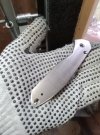
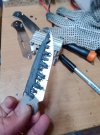
1. In this first pic are the scales and blade as they come from the waterjet/laser cutting (these exact ones are not the ones of the knife ill work on in this WIP but i simply forgot to take pics of those before the initial grinding and i still wanted you to see how the look in their original form ).
).
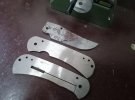
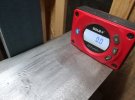
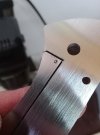
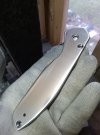
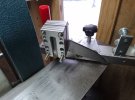
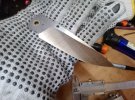
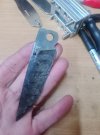
2. First step is for both the blade and the scales to be flat ground (i use my grinder's platen which has heat resistant glass glued on it for a close to perfect plane surface) - of course that a surface grinder would be cool but only in terms of 'technology' as a well designed grinder with an adequate platen does exactly the same job without any difference in final quality. This step is CRUCIAL because any slight warping will later translate in centering issues and a jerky action (ask me how i learned it ) - blade and scales after the initial surface grinding.
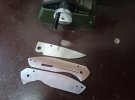
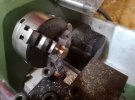
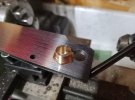
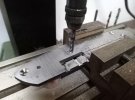
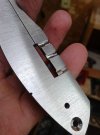
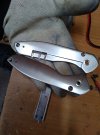
3. next phase is to ream pivot holes and get all other holes to quote (they are initially cut undersized to leave space for fine tuning). I learned that when working with Titanium, carbide drills and mills are your best friend in terms of time saving and mistakes minimization. Although Titanium is not a hard material to cut or drill, due to it's low heat conductivity it tends to heat up very fast, work harden and to 'grip' on the tool. Using cobalt HSS or cobalt drill bits/mills is not impossible but it will guarantee you some 'adventures' that you'll not forget to easy
Using carbide and some patience and learned skills on the other way, makes all these operations a simple walk in the park. So spending some money here on carbide drills/mills is a very good investment.
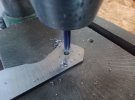
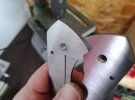
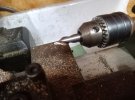
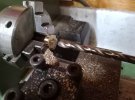
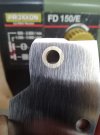
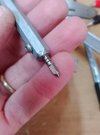
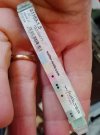
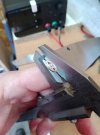
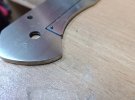
4. for the countersunk body screws i use a 118 degree 'all material' carbide tipped drill bit that work wonders; it fits perfectly the screws head, is not so expensive as a solid carbide one and readily available in almost every tools store.
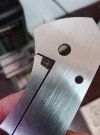
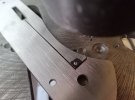
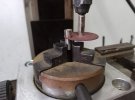
For the pivot hole, i start the hole with the same drill bit but with the proper dimensions just because i could not find a countersunk mill with the dimensions i need so i use a two step method in here. I do this because the carbide end mill does not have the ability to self center so it would wobble and ruin the scales but once the hole is started with the self centering bit the carbide end mill will be easily guided and will finish the seat for the pivot screw head.
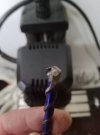
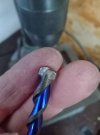
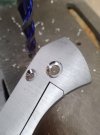
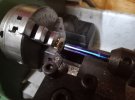
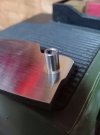
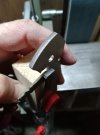
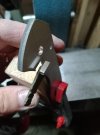
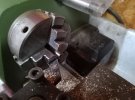
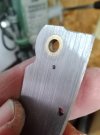
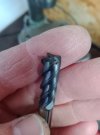
5. The 4 flue carbide end mill will now finish pivot screws head seat to a perfectly flat base and 'walls'
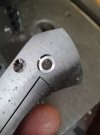
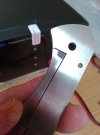
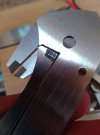
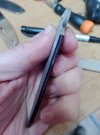
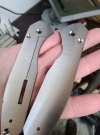
6. Some fine grinding of the scales and we are ready for the next steps
First of all i would like to thank you all for being so very nice and supportive to us - due to your generosity and kind manners today we are still here and hoping for a better future that i really do hope and plan to start with this next batch of folders for which i added some new and very nice features for you to enjoy and to offer even more value for the buck
All phases involved into building a custom folder are done by me in my shop, less the waterjet/laser initial materials cutting, things that i found to ease the work very much (and hence lowering the production costs/sell price) without compromising anything in terms of quality and attention to detail that are expected from a handmade folder.
For you to better understand where you 'invest' your hard earned money and how much work such a knife involves i decided to make a 'WIP documentary' of the main phases through which the Ti and steel become a dependable tool.
These being said let's begin:
1. In this first pic are the scales and blade as they come from the waterjet/laser cutting (these exact ones are not the ones of the knife ill work on in this WIP but i simply forgot to take pics of those before the initial grinding and i still wanted you to see how the look in their original form
).2. First step is for both the blade and the scales to be flat ground (i use my grinder's platen which has heat resistant glass glued on it for a close to perfect plane surface) - of course that a surface grinder would be cool but only in terms of 'technology' as a well designed grinder with an adequate platen does exactly the same job without any difference in final quality. This step is CRUCIAL because any slight warping will later translate in centering issues and a jerky action (ask me how i learned it
) - blade and scales after the initial surface grinding.3. next phase is to ream pivot holes and get all other holes to quote (they are initially cut undersized to leave space for fine tuning). I learned that when working with Titanium, carbide drills and mills are your best friend in terms of time saving and mistakes minimization. Although Titanium is not a hard material to cut or drill, due to it's low heat conductivity it tends to heat up very fast, work harden and to 'grip' on the tool. Using cobalt HSS or cobalt drill bits/mills is not impossible but it will guarantee you some 'adventures' that you'll not forget to easy
Using carbide and some patience and learned skills on the other way, makes all these operations a simple walk in the park. So spending some money here on carbide drills/mills is a very good investment.
4. for the countersunk body screws i use a 118 degree 'all material' carbide tipped drill bit that work wonders; it fits perfectly the screws head, is not so expensive as a solid carbide one and readily available in almost every tools store.
For the pivot hole, i start the hole with the same drill bit but with the proper dimensions just because i could not find a countersunk mill with the dimensions i need so i use a two step method in here. I do this because the carbide end mill does not have the ability to self center so it would wobble and ruin the scales but once the hole is started with the self centering bit the carbide end mill will be easily guided and will finish the seat for the pivot screw head.
5. The 4 flue carbide end mill will now finish pivot screws head seat to a perfectly flat base and 'walls'
6. Some fine grinding of the scales and we are ready for the next steps