26. Now we have to make it work so the next step is to make the lock face on the blade to correctly close with the lock bar.
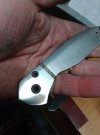
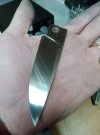
First i mark with a marker the area where the lock will engage, then i fully assemble the knife.
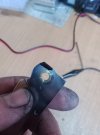
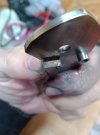
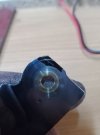
27. With the knife fully assembled and the blade in the open position, using a very thin cutter blade i scribe the lock face line onto the tang as seen in the pic below.
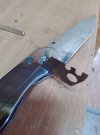
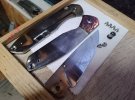
28. Disassemble and here we go - we have the exact geometry that we need to follow when grinding the lock face on the blade.
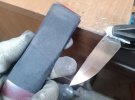
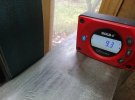
29. I set grinder table to 9.3 degrees (this works best for me) and proceed with the grinding. There are two 'tricks' here that can ruin the whole project if not taken care of:
- grind on speed up until near the marked line and then grind only very, very little at once - the tolerances are so tight in here that a slight push on the grinder will immediately make the lock bar over travel. If this happens (happen to me quite a few times) the only way to repair is to make a thicker stop pin to compensate but you will also need to adjust the the stop ping groove depth on the blade to accommodate the new thicker pin and allow the blade to correctly engage with the detent. Old Chinese work - few times i did it was enough to turn my beard white

- so take your time and grind SLOWLY!
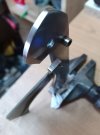
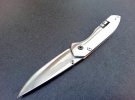
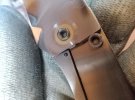
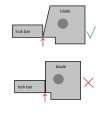
- the lock bar should only touch the lock face on the blade in it's lower spot or else you will have a sloppy lock (i tried to make a drawing for this and is also visible in the pic below).
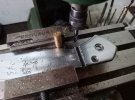
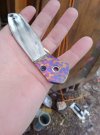
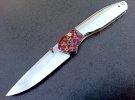
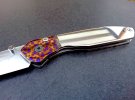
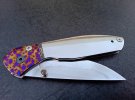
30. Now some decorations - i milled a narrow channel for a Gold FAT carbon insert and then did my 'nebula' anodizing on the bolster for a nice contrast.