How To A little pastime for anyone: date this Opinel.

Joined
Feb 15, 2026
Messages
142
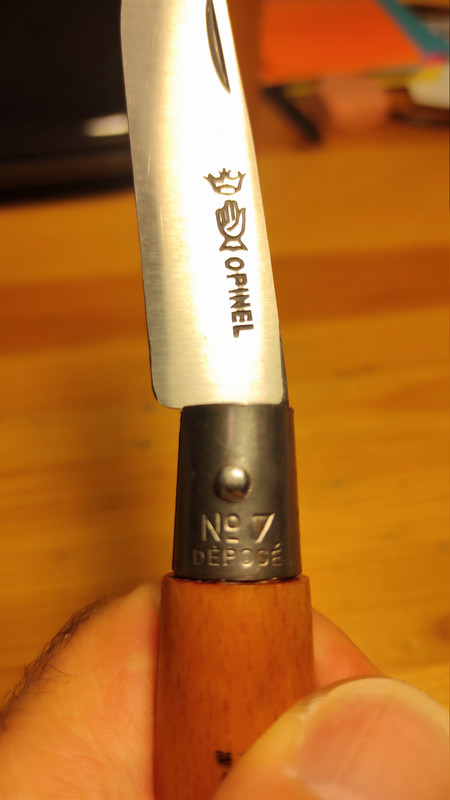
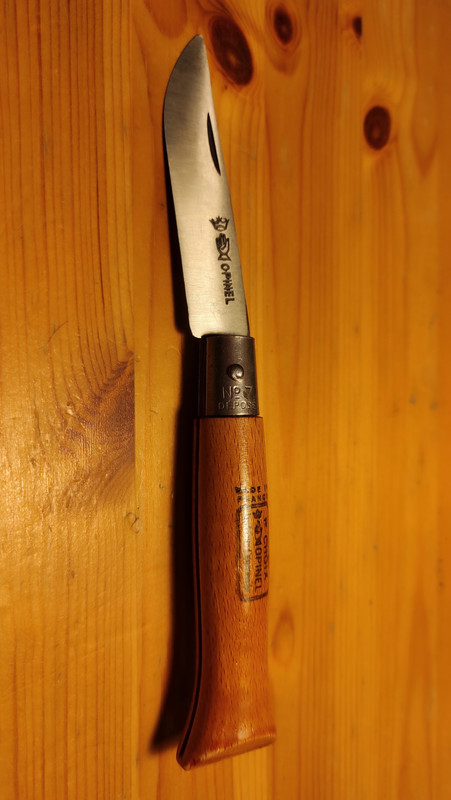
Got a spare moment, Sherlock? I have a challenge for you: date this Opinel.

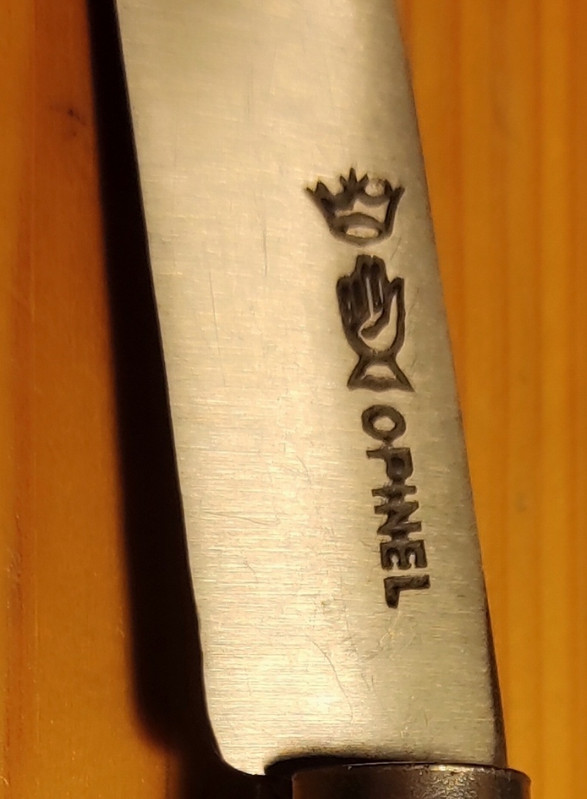
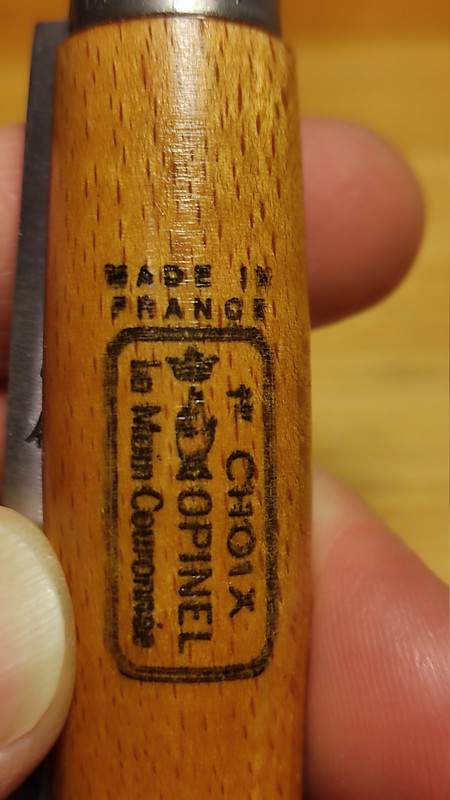
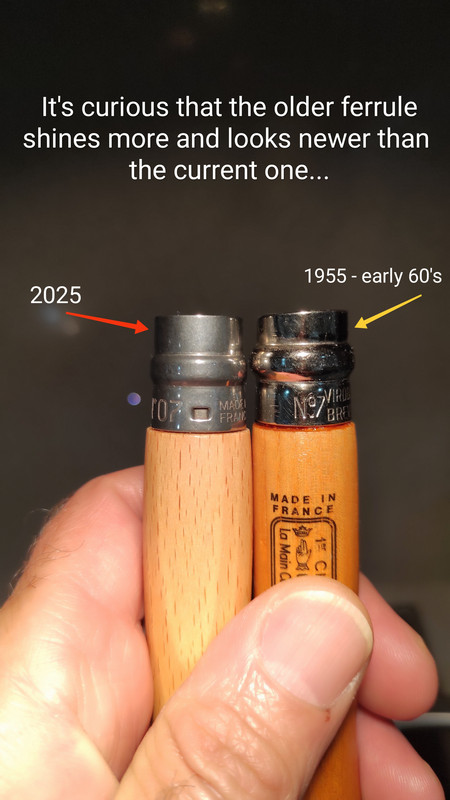
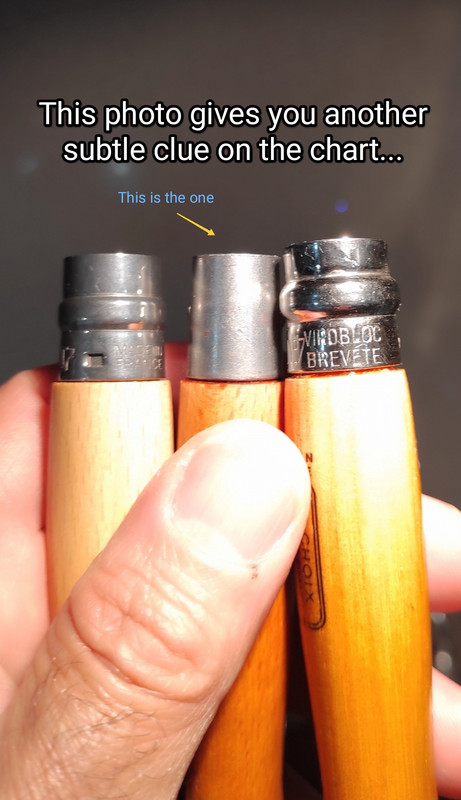
To help you become a bit of an expert on the brand, I’ve put together a post with some clues. Use the table and my notes below. Focus on the main elements: the markings on the collar and the blade, the stamp on the handle, and of course, your own powers of deduction.

Post your findings... I’ll reveal the answer soon!

P.S. The blade is not stainless steel.
IMG-20260510-234242.jpg


IMG-20260510-234120.jpg

IMG-20260510-234225.jpg

IMG-20260510-234412.jpg

IMG-20260510-234420.jpg


Good luck!

1778451135048.png
 
No, no! It's tricky because it is a transitional piece, made before mechanization (hand-finished), and it reuses elements from previous years... The secret is in the chart (careful study and solution).
 
I get the whole spirit of the thing, but how authoritative is The Chart™? I've never seen a knife dating chart that didn't have some built-in problems. Add to that the fact that cutlers never throw anything away, and most people date things as being older than they really are, and the whole exercise becomes suspect.

So... Late 1590, possibly '91?
 
I get the whole spirit of the thing, but how authoritative is The Chart™? I've never seen a knife dating chart that didn't have some built-in problems. Add to that the fact that cutlers never throw anything away, and most people date things as being older than they really are, and the whole exercise becomes suspect.

So... Late 1590, possibly '91?
No, and you are right. The chart isn't perfect, but it gives three great clues: the blade's steel, the ...., and the ..... Look at the photos I posted above.
 
Anyone? Shall I explain it now? It’s difficult without the knife in hand, but it can be figured out even without this last clue about the color…
 
YEEEEEESSSSS!

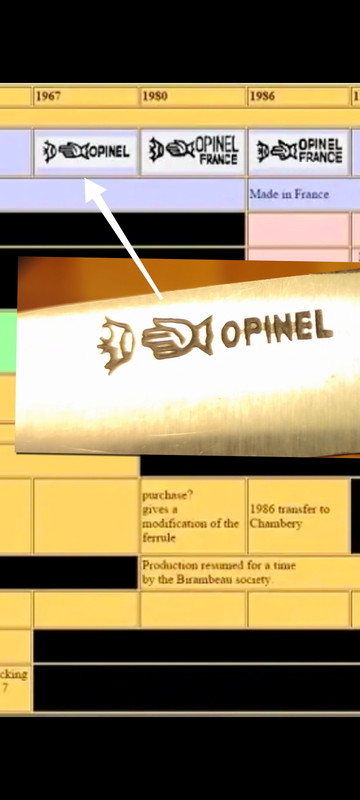
Alright, I’ll explain it. The blade engraving is the main clue, along with its composition (stainless or not).

IMG-20260511-040236.jpg


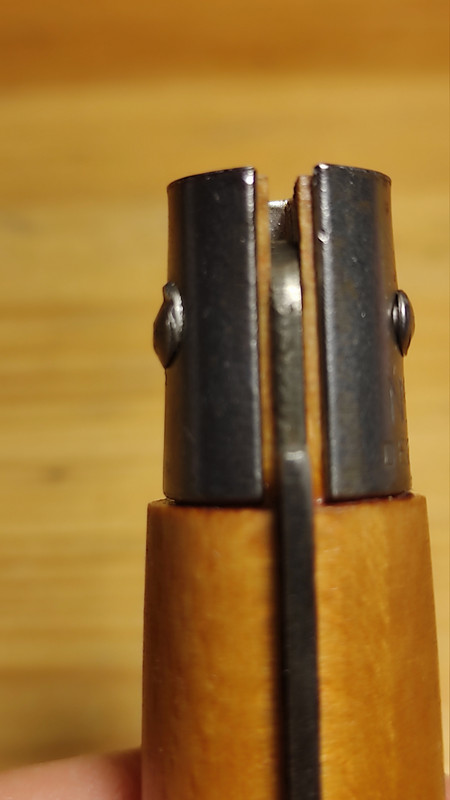
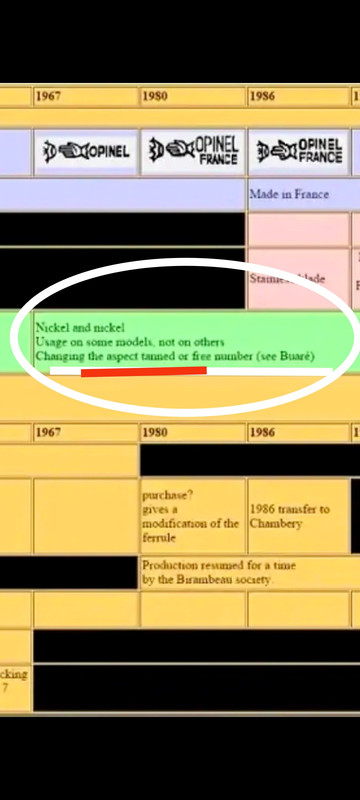
Excluding some special series, we can see that from its origin until 1986 the blades were not stainless, and they did not require any marking on the handles or blades to indicate it. And the small detail of the buraé, that’s why I added the other clue, since without having it in hand…

IMG-20260511-040439.jpg
 
In the table there are missing details: when “Déposé”, “Breveté” or “Breveté SGDG” are used on the ferrule, for example. “Déposé” and “Breveté” are very common markings, while “Breveté SGDG” was used only rarely in marking (they are the most sought-after).

This knife is transitional, but with new elements: the “Déposé” and the absence of a Virobloc (it was an economy model), together with the buraé detail and the typical blade marking that appears from around 1967 onwards. The absence of the Virobloc on models from number six and above was prohibited in 2000 due to mandatory safety regulations.

The rough finish of the pivot pin, which appears to have been reworked, shows the transition between the 1960s and the 1970s, hand assembly versus mechanized assembly.
 
Last edited:
In the table there are missing details: when “Déposé”, “Breveté” or “SGDG” are used on the ferrule, for example. “Déposé” and “Breveté” are very old markings in French cutlery, while “SGDG” was used only rarely in marking (60's).

This knife is transitional, but with new elements: the old “Déposé” and the absence of a Virobloc (it was an economy model), together with the buraé detail and the typical blade marking that appears from around 1967 onwards. The absence of the Virobloc on models from number six and above was prohibited in 2000 due to mandatory safety regulations.

The rough finish of the pivot pin, which appears to have been reworked, shows the transition between the 1960s and the 1970s, hand assembly versus mechanized assembly.

Beat me to it.
 
Back
Top