A question for slip joint makers

Joined
Oct 27, 2010
Messages
8,721
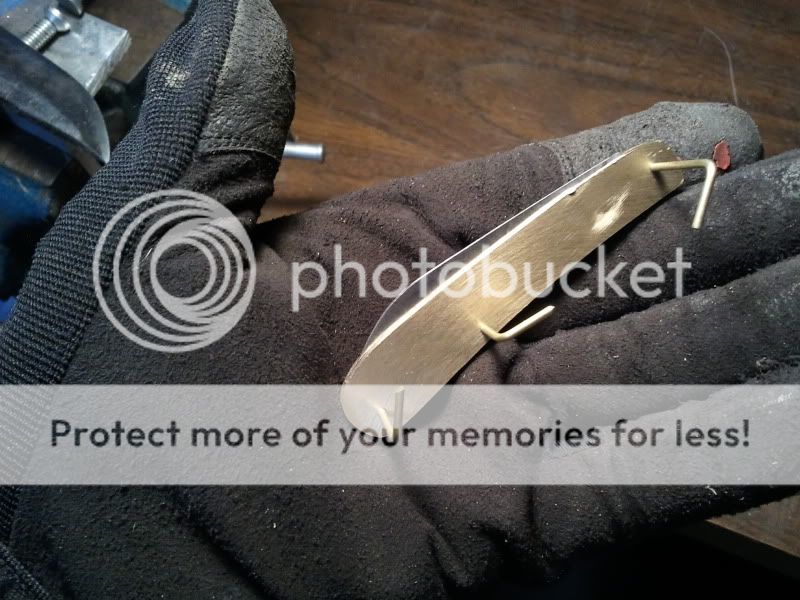
I am now working on my first slip joint and was wondering how much sanding is done with the temporary assembly pins in place? I am cleaning up the profile and bringing the liners down to the spring, but when trying to hold it, opens up the gap between the spring and liner allowing all the sanding dust to collect and then when I try to blow it out I don't get it all out and can't get the liners tight against the spring.

This is a sway back pattern so the profile has to be done assembled to bring the spring into position to get the curve right. I think the next one I will just copy an old beater I have instead of starting from scratch, this is a serious test of mental fortitude!
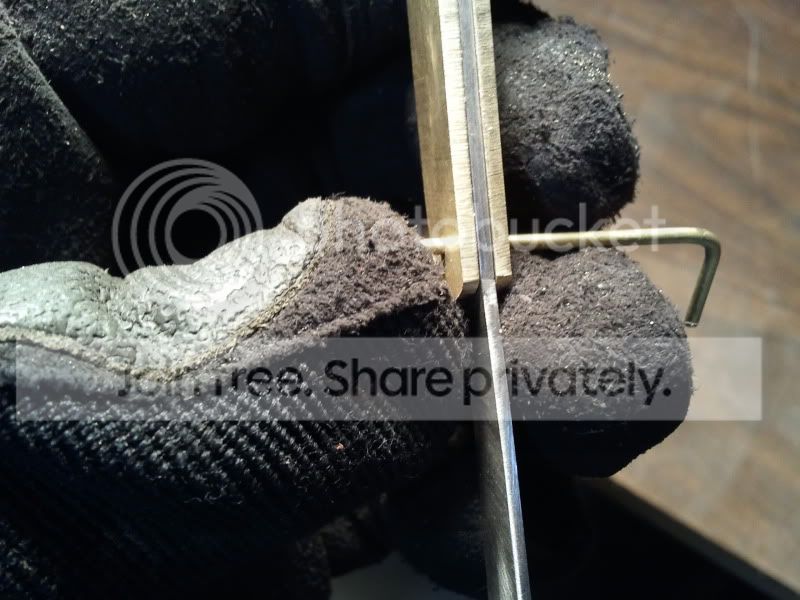
2012-01-31084258.jpg


This is the area I am working on and imagine the liners having a bigger gap between them and the spring. ( when clean it does fit very nicely!)


Any help or ideas are appreciated!


-Xander
 
Grind all countour about 90%,then put in some sacrifical pins and take the knife to very close to finish,take it apart,clean every thing up very good.Then assemble the knife,pien it all together and do your finish work.When I get ready to pien it together it is basicly finished.Then it's just finishing off the pins and final touch up.
Stan
 
I guess I really need to get a belt grinder with a small radius wheel. I am doing this with just a non reversible disc grinder and drill press. Lots of hand work going into this one. I suppose a sanding drum on the drill press would be good too.

Stan, do you lightly peen the sacrficial pins? Or would the ones I am using be ok?

I may have more questions as I go along...


-Xander
 
No don't pien the sacrifical pins ,The ones that are in there are fine,just clip them off close and go to town.
 
Also soft as brass is you can do 90% of your handle shaping with a file.
Stan
 
Also, I currently have only three pins, pivot and two spring pins. Should I add more pins for the handle material? I know I need one more that will go directly below where the bolster will stop, but will that be enough with epoxy? Handle material is still undecided, but will be natural. Either wood or antler.

2012-01-31084337.jpg


-Xander
 
Everything Stan said is good, a slipjoint can have many,many, assemblies. If you've got
a compressor air shot into the blade channel will blow most of it out the spring side.
How much do you trust your glue? The mechanical fastening of pins is hard to beat.
Ken.
 
Last edited:
I trust my glue very much! Its the same glue my raceboats are made with, WestSystems. I think I will go with just the one more pin behind the bolster location to hold the scales with three pins and glue.


Thanx for the help. I may be back with more questions.


-Xander
 
Xander, thanks for posting this question. I just got my steel in for my first slip-joint. I'm going to do what you alluded to in your post and copy an existing pattern before trying to kill myself with a brand new design.
 
Cool, good luck! Just remember, drill your pivot hole FIRST and the shape the tang around it. That will help keep the blade and spring mating better. Oh and all the shaping and grinding I did to hardened steel.


-Xander
 
What I do is make a screw the same diameter as the pivot pin and use a nut to bolt the pivot together for grinding. I also use it to grind the blade to make sure its centred between the liners. The alternative is use narrow nose Mole Grips to clamp the pivot area but thats a bit cumbersome which is why I use the first method.
 
Back
Top