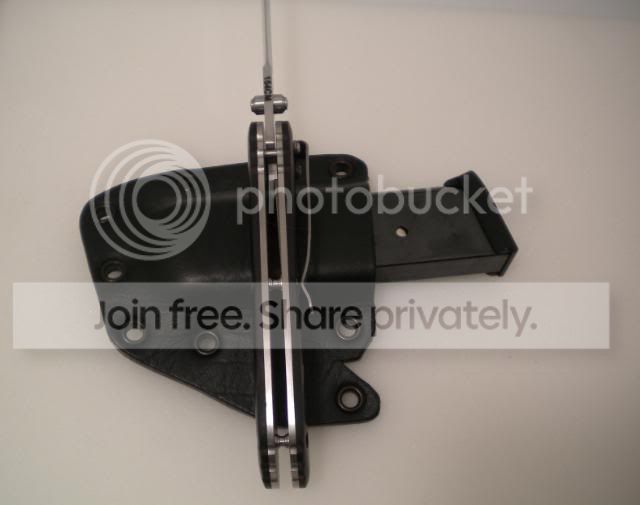
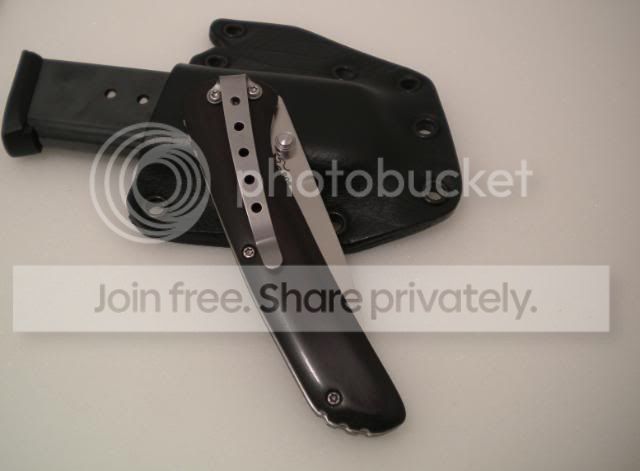
A quick WIP- custom linerlock folder

Joined
Apr 18, 2007
Messages
327
This is a custom designed folder, and the owner was interested in some work-in-progress pics. I thought I would share them here as well!
I didn't want to slow down production too much, so this won't be as in-depth as my fixed blade WIP. The pics may not be the best quality, for the same reason. Hopefully in the future I can do a more detailed walkthrough of how I build my folders.
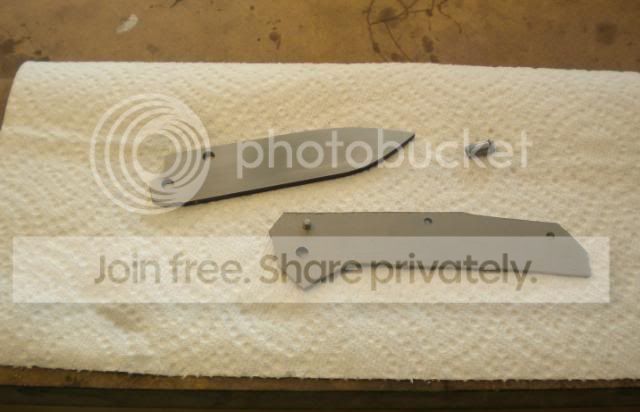
1roughshapedlinerandprofiledblade.jpg

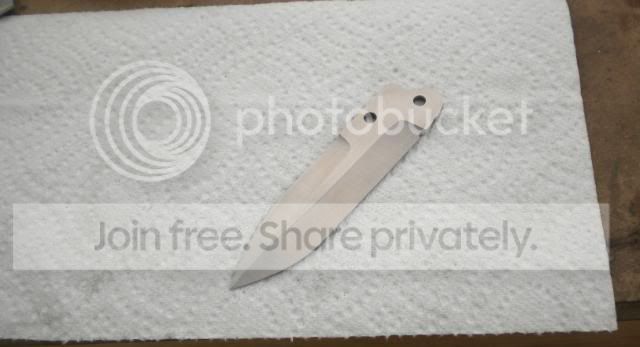
The rough profile of the blade and liners, with the holes drilled undersize and then reamed to size. The blade is .125" precision ground 154CM (it's really a few thousanths over, which allows the flats to be finished), and the liners .08" thick titanium. The dimensions and hole placement were taken from my shop drawing.
The edge is also coated in layout fluid and scribed for a .030" thick edge, which I will thin out as the finishing progresses. The lockup area on the blade is also ground at a 10-degree angle in this step and polished down to 400 grit.

2Bladebevelgrinding.jpg

Rough grinding the blade bevels in by hand, for the cutting edge and false edge on top. They are taken to 120 grit here for now.
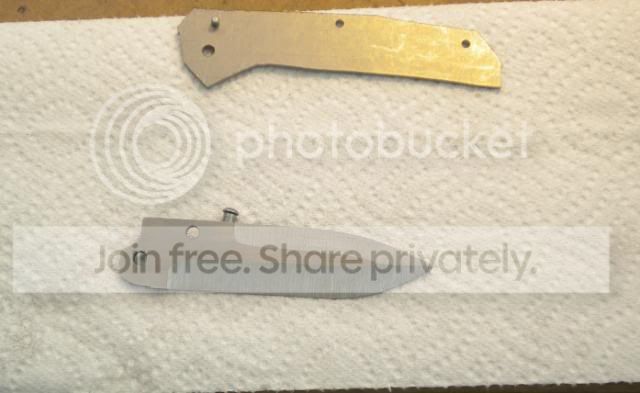
3Roughgroundblade.jpg

The roughed in bevels, and the flats are also carefully sanded- just enough to get an even scratch pattern on a ceramic plate attachment. The blade thickness measures around .127" now, and should be perfect after the final polishing. Calipers and micrometers are handy things to have when building a folder!
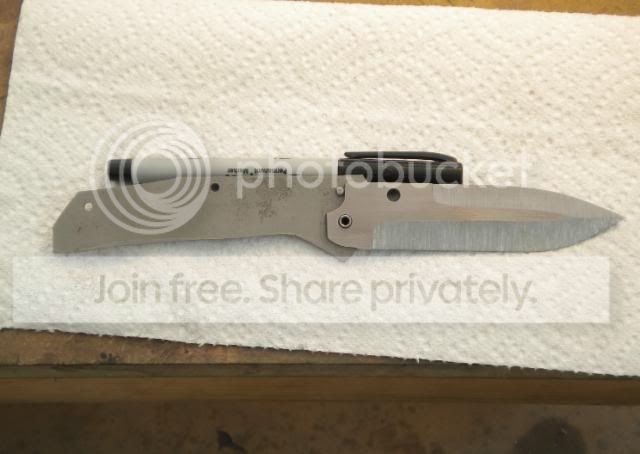
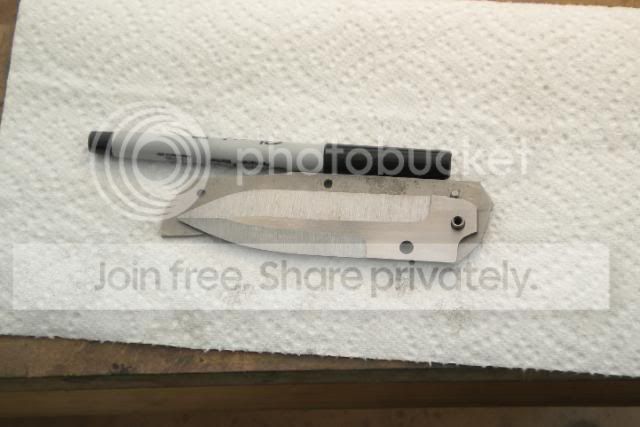
4Openpositionfitadjusted.jpg

5Closedpositionfitadjusted.jpg

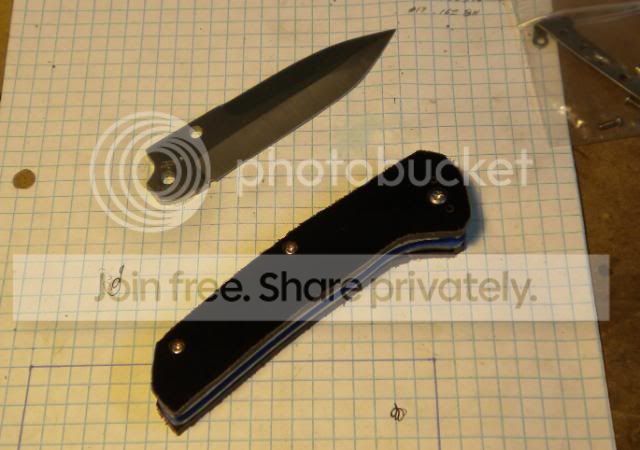
Checking the fit in the open and closed position. I leave the stop pin surfaces on the blade oversized at first and remove metal slowly to get the fit I want. This is done with the blade between both liners, one is removed for clarity. If your holes are not straight and round, it will usually show here.

To be continued!
 
6Detentlocationdrilledinlineranddimpledintobladelockbarcutscribed.jpg

The lockbar cuts are scribed, and the detent ball location drilled in the locking liner. Next, the knife is assembled, held in the closed position, and the detent location marked on the blade. This is then drilled just enough to give the detent ball something to catch.
The final profile of the handles is also marked out so that it blends into the open blade.

7Bladereadytoheattreat.jpg

The blade, bevels and flats polished up to 400 grit and ready to ship to Paul Bos for heat treating.

8Linersshapedbladehardenedmaroonmicartamilledtothickness.jpg

The blade is back, and is hardened to 58-60rc. Paul Bos does an excellent job, the blade is nice and straight and ready to finish. The liners are final shaped and polished up with sandpaper on a flat surface, and the materials are all here. Time to assemble!
 
9Scalesroughcutandattachedtolinerstrialassemblyopen.jpg

The handle scales are rough cut, drilled, and countersunk for assembly. I use .165" tall standoffs, which when used with a .125" thick blade and 2 .020" thick bronze washers fit perfectly. The hardened stainless steel stop pins I use are slightly longer than the thickness of the assembled liners, blade, and washers; so I have an extra step to add: drilling a small divot into the handle scales on the inside to clear the stop pin.

10Trialassemblyclosed.jpg

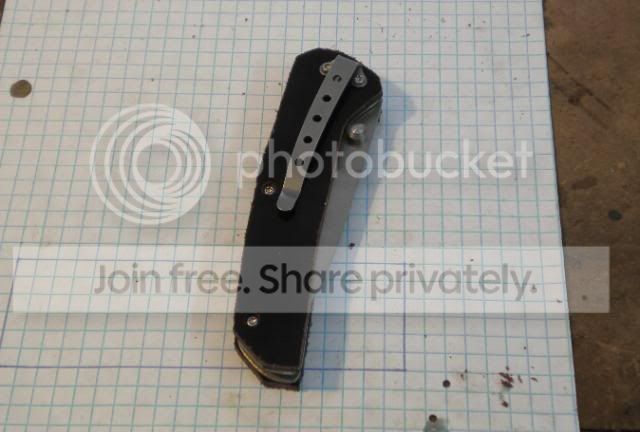
The assembled handle scale is also drilled for the pocket clip, and the liners tapped for the screws. These holes in the scales are drilled just large enough to clear the pocket clip screws, and the whole knife is assembled for another check.
 
11Handleassembledwithspacersreadyforshaping.jpg

Everything checks out, so I remove the blade and put in its its place a spacer- a small square of the blade material scrap with a hole drilled for the pivot. This lets me shape the handles together and keep them the same size.

12Handfilingtractiongroovesinhandle.jpg

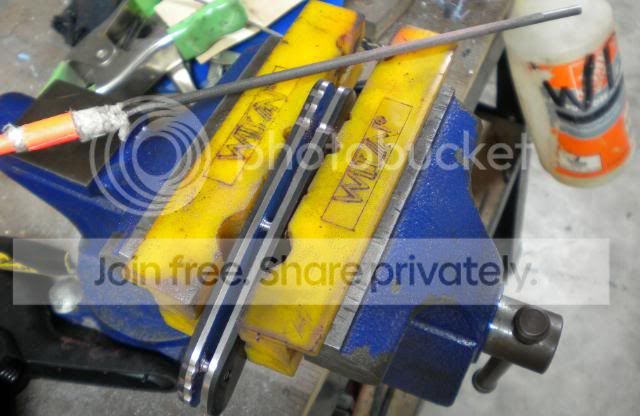
Once the handle is rough shaped, the thumb grooves are cut. I use a file by hand, but the mill works also. Grooves are also cut near the butt of the handle for the thumb when holding the knife in a reverse grip. The grooves are polished up with sandpaper once they are even and straight.

13Scalesroughshapedlockbarcutmilledlinersandlocksandedandtapedoff.jpg

The rough ground scales, and liners with the lock bar cut. I cover the liners with tape to avoid scratches in these final machining steps after they are polished. I cut my locks in with a 1/16" or 3/32" diameter TiN coated carbide end mill using my Sherline variable speed mini mill.
The lock engagement surface is left a few thousanths oversize and will be filed and stoned to the final fit.
 
14Scalereliefmilledforlockbarclearanceobverselinerrelievedforlockaccess.jpg

The outside edge of the lockbar cut is scribed on the inside handle scale surface. The scales are put in the mill at a slight upward angle (pivot end higher than the butt) and the area under the lockbar milled out slightly. This angled cut allows the lockbar some clearance when closing the blade. The non- locking handle is cut back in profile some where it covers the lock area, and I bevel the scale here also. This provides easier access to the lock.
15Scalesfinishedlockbarfittedtobladeanddetentinstalledbladefinishedandtaped.jpg

The scales are finished, the lockbar hand fitted, detent ball is pressed into place, and the blade is polished and etched. Everything is ready for final assembly.

16Bladesharpeningfrom400to1200gritandfinalhonedtomirrorfinish.jpg

The almost finished knife being sharpened. You can also see on the lock the filework I added for a sure thumb purchase. Once the edge is hair-splitting sharp, the thumbstud is installed and it's finished!
 
Finishedknife1.jpg


Finishedknife2.jpg


Finishedknife3lockup.jpg


Finishedknife4closedalignment.jpg


Finishedknife5spine.jpg


Finishedknife6closed.jpg


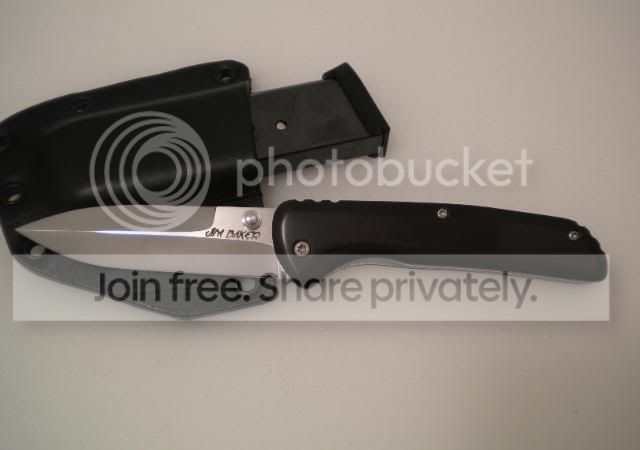
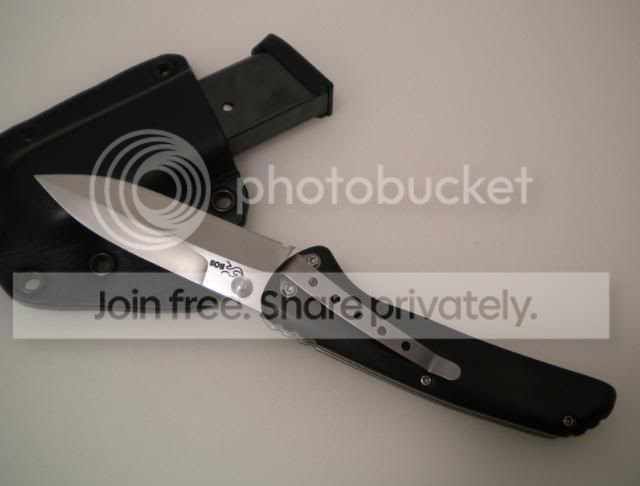
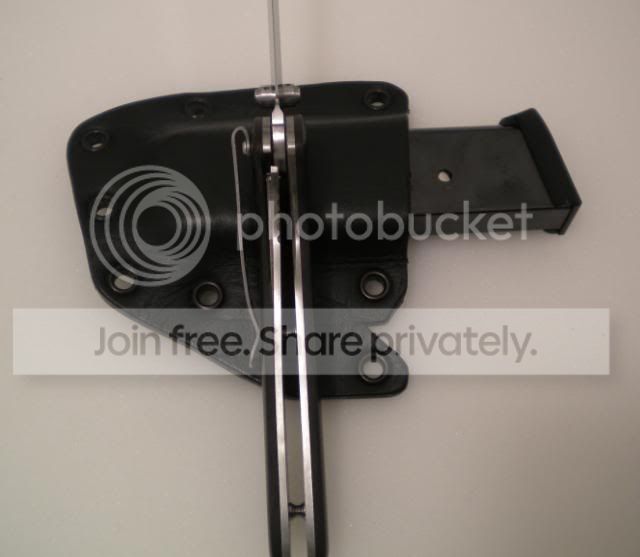
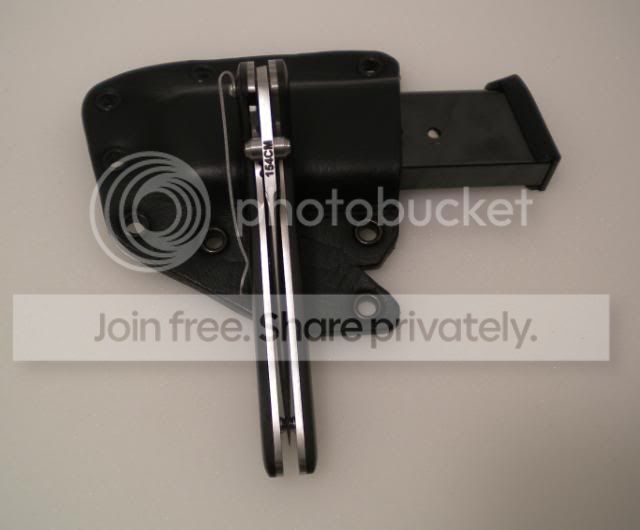
The finished project, ready for its new home! The lockup is solid and free of play, and has plenty of engagement but still has room to cover eventual wear. The blade is held securely closed by the detent but still flips open easily, and the blade is centered in the handle when closed. The handle scales are actually maroon micarta, but the color was so deep that it looks almost black in the pics.
A very nice knife- I was very happy with it, and more importantly the owner is as well:D
Thanks for looking!
 
I think it's a great work in progress. Now people can ask their questions. The folder looks to be very well done too. Frank
 
How much did it cost you for Paul Bos to heat treat that knife for you? I'm thinking about making a folder with CPM-M4 and sending it to him for heat treatment. Thanks in advance :D
 
Back
Top